When you think of therapy, you probably picture a couch, a notebook, and someone talking through their feelings. But what if healing didn’t start with words at all? What if it began with a brushstroke, a drumbeat, or the simple act of moving your body to music? Creative arts therapies aren’t just nice distractions-they’re powerful, evidence-backed tools that help people process trauma, manage anxiety, and find voice when words fail.
What Exactly Are Creative Arts Therapies?
Creative arts therapies use art, music, dance, drama, and writing as clinical tools to support emotional, cognitive, and physical healing. Unlike taking a painting class or joining a choir for fun, these therapies are led by certified professionals trained in both the art form and psychology. They’re not about creating masterpieces-they’re about expressing what can’t be said out loud.
Art therapy, for example, helps people with PTSD draw their memories instead of describing them. Music therapy lets someone with autism regulate emotions through rhythm. Dance movement therapy gives survivors of abuse a way to reclaim control over their bodies. These aren’t metaphors. They’re real, measurable interventions.
In New Zealand, the New Zealand Association of Art Therapists reports a 40% increase in referrals for creative arts therapies over the last five years. Schools, hospitals, and mental health clinics are starting to see what research has known for decades: when language breaks down, creativity steps in.
How Art Therapy Helps When Words Aren’t Enough
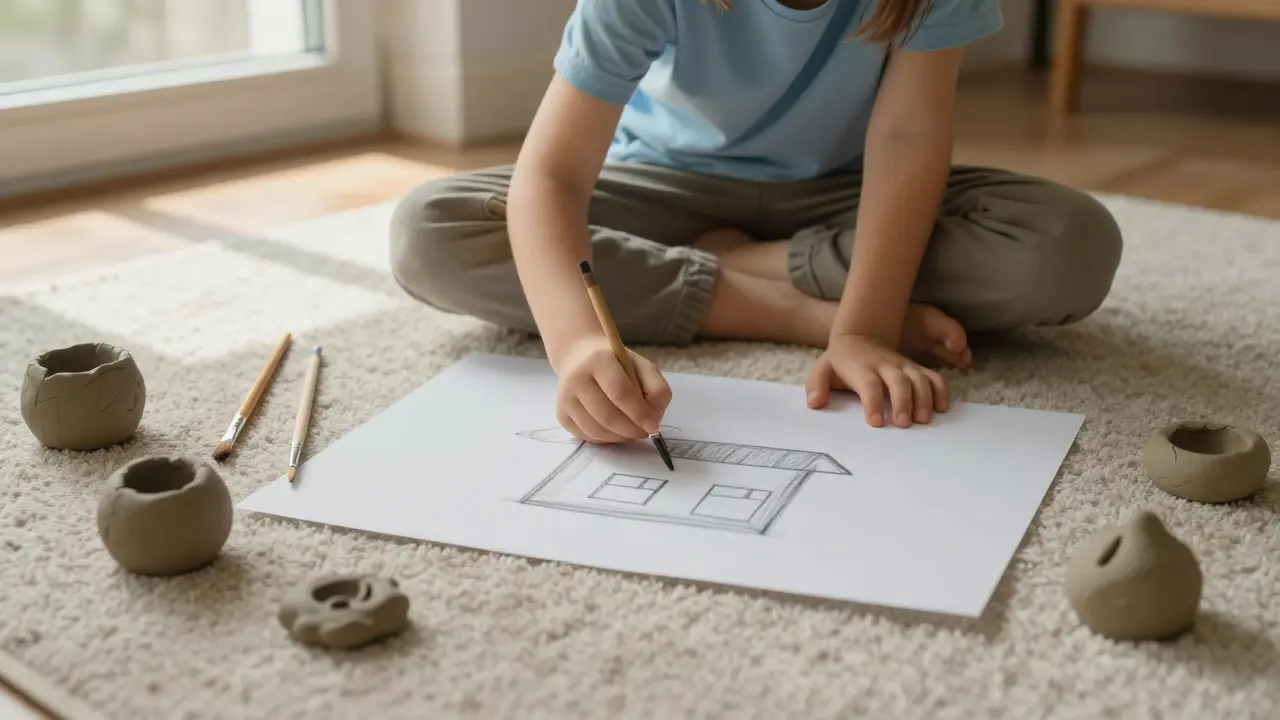
Imagine a child who witnessed domestic violence. They can’t say, ‘I feel unsafe’-they don’t have the words, or they’re too scared. But they can draw a house with no windows. Or a figure with no face. A trained art therapist doesn’t interpret the drawing as a puzzle to solve. They sit with it. They ask, ‘What’s happening in this picture?’ and let the child lead.
Studies from the American Art Therapy Association show that just eight sessions of art therapy reduce anxiety symptoms by up to 68% in children with trauma histories. Adults with depression show similar results. One 2024 meta-analysis of 32 clinical trials found that art therapy improved emotional regulation in 89% of participants, regardless of age or diagnosis.
It works because art bypasses the language centers of the brain. Trauma gets stored in the body and the emotional brain-not the part that talks. Drawing, sculpting, or collaging gives the nervous system a safe way to release what’s stuck.
Music Therapy: More Than Just Listening to Songs
People often assume music therapy means playing calming tunes to help someone relax. That’s not it. Music therapy is structured, goal-oriented, and often involves active participation.
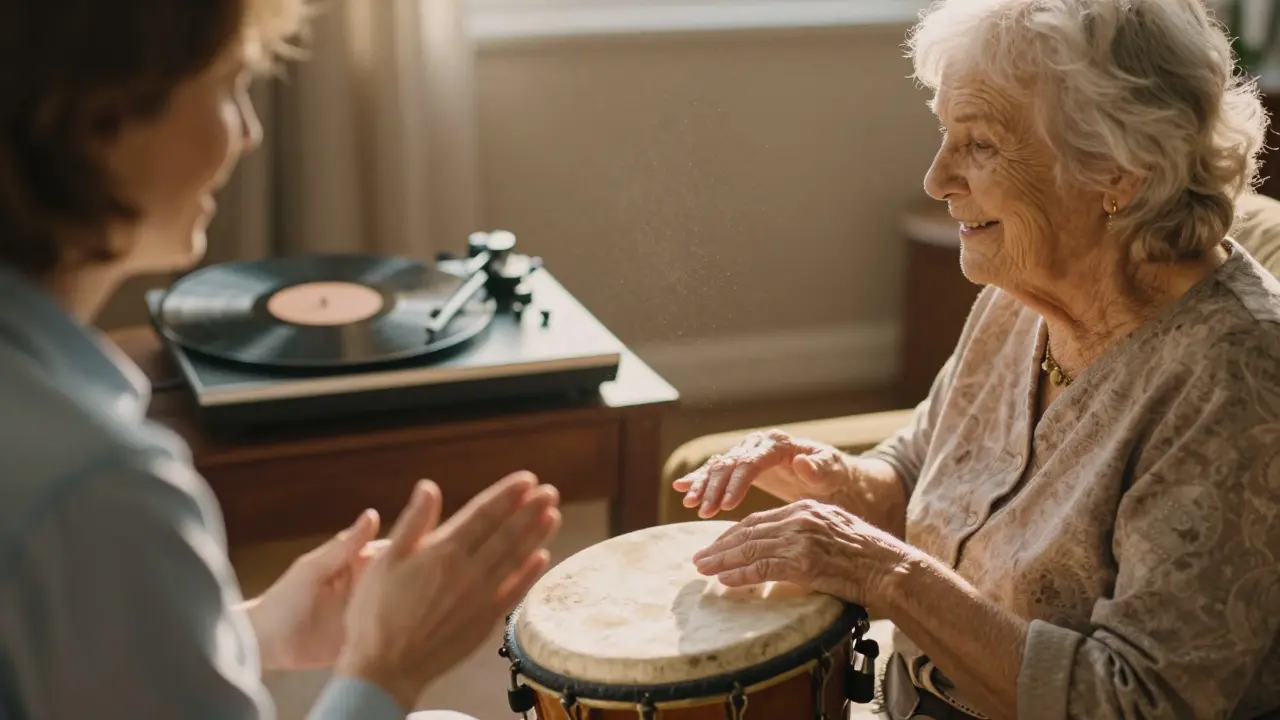
A therapist might use drumming to help someone with Parkinson’s improve motor coordination. They might use songwriting to help a teenager with depression articulate feelings they can’t speak. Or they might use guided music imagery-where a person listens to carefully chosen music and describes what they imagine-to help someone with PTSD process memories without retraumatizing.
In dementia care, music therapy has shown dramatic results. A 2025 study in the Journal of Neurology and Geriatric Care found that personalized playlists reduced agitation in 76% of patients with advanced dementia. One woman, who hadn’t spoken in two years, began singing along to a song from her wedding day. Her family cried. The therapist didn’t make her talk-she just played the right music at the right time.
The science is clear: music activates multiple brain regions at once-memory, emotion, motor control. That’s why it’s so effective for conditions where language or movement is impaired.
Dance and Movement Therapy: Healing Through the Body
When trauma happens, the body remembers. People with chronic anxiety often hold tension in their shoulders. Survivors of assault may avoid eye contact or shrink into themselves. Dance movement therapy helps reconnect mind and body without ever saying a word.
A therapist might ask someone to move like a tree in the wind, or to mirror their own movements in a mirror. These aren’t dance lessons-they’re tools to rebuild trust in the body. One woman recovering from an eating disorder described how, after six weeks of movement therapy, she finally felt ‘at home’ in her skin for the first time since she was 12.
Research from the American Dance Therapy Association shows that dance therapy reduces cortisol levels (the stress hormone) by an average of 32% after 10 sessions. It’s especially effective for people with PTSD, depression, and body dysmorphia. Unlike talk therapy, where you sit still, dance therapy asks you to move-and in moving, you release what’s trapped.
Why These Therapies Break Traditional Barriers
Traditional talk therapy requires verbal fluency, self-awareness, and the ability to reflect. That’s a tall order for many: children, people with developmental disabilities, refugees who don’t speak the local language, or those too overwhelmed to speak at all.
Creative arts therapies remove those barriers. You don’t need to be ‘good’ at art. You don’t need to know how to sing. You don’t need to be flexible. All you need is the willingness to try.
They also work across cultures. A Māori elder might use weaving to tell a story of loss. A refugee child might draw their journey across borders. A non-verbal adult with Down syndrome might communicate joy through rhythmic clapping. These therapies honor different ways of being and knowing.
And they’re inclusive. No one gets judged for a messy painting or an off-beat rhythm. The focus isn’t on output-it’s on process. That’s why they’re so powerful for people who’ve been told their voice doesn’t matter.
Who Can Benefit? Real Stories, Real Results
You don’t have to be diagnosed with a condition to benefit. Creative arts therapies help people in all walks of life:
- Teachers dealing with burnout use painting to reset their nervous systems.
- First responders who can’t talk about what they’ve seen find relief through drum circles.
- Teenagers with social anxiety write songs instead of speaking in class.
- People with chronic pain use movement to reduce reliance on medication.
- Seniors with loneliness connect through group storytelling and puppetry.
In Wellington, a community program called ‘Art in the Park’ pairs veterans with local artists. One veteran, a former soldier, spent months painting the same dark red shape over and over. His therapist didn’t push. After six months, he added a single yellow line across it. He said, ‘That’s the light I didn’t think I’d see again.’
How to Find a Qualified Therapist
Not everyone who calls themselves an ‘art therapist’ is certified. Look for credentials. In New Zealand, registered creative arts therapists are accredited by the New Zealand Register of Art Therapists (NZRAT) or the New Zealand Music Therapy Association (NZMTA). These professionals hold postgraduate degrees and complete supervised clinical hours.
Start with your GP or mental health provider. Many public clinics now offer art or music therapy as part of their services. Community centers, hospices, and schools often run low-cost or free programs. If you’re paying privately, expect rates between $80-$150 per session-similar to other licensed therapists.
Don’t be afraid to ask: ‘What’s your training? What kind of clients do you work with? What does a typical session look like?’ A good therapist will welcome those questions.
What to Expect in Your First Session
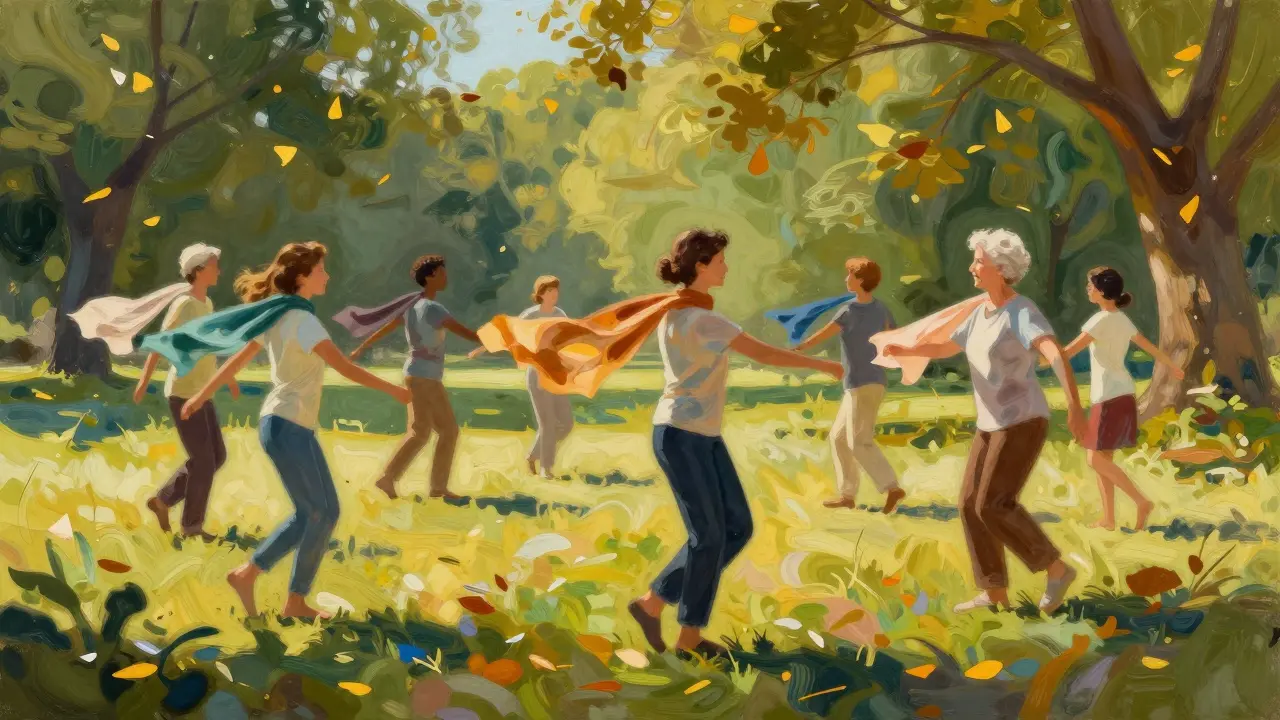
There’s no pressure to create anything ‘good.’ The room might have paints, clay, instruments, scarves, or journals. The therapist will ask what you’re feeling and offer a few options. You might choose to scribble. Or sit quietly. Or hum a tune.
They won’t analyze your art. They’ll ask open questions: ‘What surprised you about that?’ or ‘How did your body feel while you were doing that?’
The goal isn’t to fix you. It’s to help you reconnect with parts of yourself you may have shut down.
Why This Isn’t Just ‘Alternative’-It’s Essential
Creative arts therapies aren’t fringe. They’re backed by decades of peer-reviewed research. They’re used in hospitals from New York to Sydney. The World Health Organization recognizes them as part of integrated mental health care.
And in a world where mental health services are stretched thin, they’re cost-effective. One session can do the work of several talk therapy visits. They reduce hospital readmissions. They cut down on medication use. They help people stay out of crisis.
More than that-they restore dignity. When you’re told you’re ‘too broken’ to speak, someone hands you a brush and says, ‘Show me what you need to say.’ That’s not therapy. That’s a lifeline.
Are creative arts therapies only for people with mental health diagnoses?
No. While they’re often used in clinical settings, creative arts therapies help anyone dealing with stress, grief, burnout, or life transitions. Teachers, caregivers, retirees, and even high-performing professionals use them to stay grounded. You don’t need a diagnosis to benefit.
Do I need to be artistic to try these therapies?
Absolutely not. These therapies aren’t about talent-they’re about expression. A shaky line, a wrong note, or a messy collage can be just as meaningful as a polished piece. The focus is on your experience, not the outcome.
How long does it take to see results?
Some people feel relief after one session. For deeper issues like trauma or chronic anxiety, most therapists recommend 8-12 weekly sessions. Progress isn’t always linear, but changes in mood, sleep, or self-awareness often show up within the first month.
Can children benefit from creative arts therapies?
Yes-children often respond better to creative therapies than talk therapy. Play, drawing, and music let them express complex emotions without needing advanced language skills. Schools in Auckland and Christchurch now include art and music therapy in their student support programs.
Is there scientific proof these therapies work?
Yes. Over 150 peer-reviewed studies published since 2020 show measurable improvements in anxiety, depression, PTSD symptoms, and emotional regulation. Major institutions like the Mayo Clinic and the NHS include them in treatment guidelines. They’re not pseudoscience-they’re evidence-based.
Where to Go From Here
If you’ve ever felt stuck, unheard, or too overwhelmed to talk-there’s another way. You don’t need to be brave. You don’t need to be perfect. You just need to be willing to try something different.
Try a free community session. Ask your counselor if they offer art or music therapy. Pick up a crayon and draw how you feel right now. Don’t think. Just move. The healing doesn’t start when you have the right words. It starts when you let yourself make a mess.



Aug 4 2023