

You’re staring at your screen. It’s 7:30 PM on a Tuesday. Your inbox has three urgent flags, Slack is pinging with non-essential updates, and your partner just asked if you want to watch that new series tonight. You say yes, but your brain is already drafting the reply email. That tight feeling in your chest? That’s not just stress. That’s the absence of calmness.
Most advice on work-life balance focuses on time management. We block calendars, set boundaries, and try to squeeze more hours into the day. But here’s the thing: you can perfectly manage your time and still feel chaotic. Why? Because balance isn’t just about where your clock hands point; it’s about how your nervous system responds to them. Calmness isn’t a luxury or a personality trait you’re born with. It’s a skill. And without it, true balance is impossible.
The Myth of Perfect Time Allocation
We’ve been sold a lie that balance equals an even split. Eight hours for work, eight for sleep, eight for life. Sounds neat, right? In reality, this rigid structure often creates more anxiety than relief. If you finish work at 5:00 PM but spend the next two hours mentally rehearsing tomorrow’s meeting, you haven’t switched off. You’re physically present at dinner, but psychologically absent.
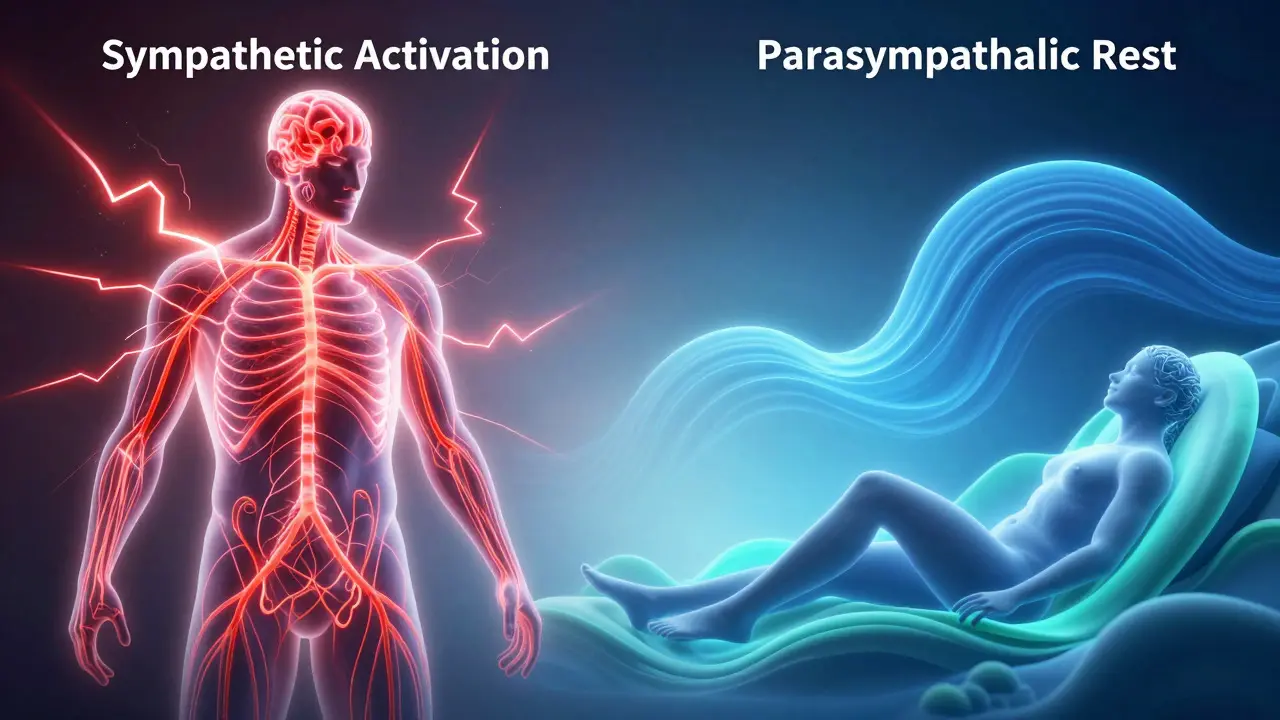
This disconnect happens because our brains are wired for threat detection. When we’re stressed, our bodies flood with cortisol and adrenaline. This state, known as sympathetic nervous system activation, keeps us alert but also anxious. Trying to "balance" your schedule while your body is stuck in fight-or-flight mode is like trying to drive a car with the parking brake on. You’re burning fuel, going nowhere, and overheating.
Calmness acts as the release valve. It shifts you into the parasympathetic state-often called "rest and digest." In this state, your heart rate slows, your thinking becomes clearer, and you can actually enjoy the time you’ve carved out for yourself. Without this physiological shift, leisure time feels like stolen time from work, creating guilt rather than relaxation.
Why Calmness Drives Better Decisions
Let’s get practical. How does being calm actually help your career? It comes down to cognitive bandwidth. When you’re agitated, your prefrontal cortex-the part of your brain responsible for planning, decision-making, and emotional regulation-goes offline. You start reacting instead of responding.
Think about the last time you sent an email while angry. Did you reread it ten times before sending? Probably. Now think about a time you felt truly centered. You likely made faster decisions with fewer regrets. Research in organizational psychology consistently shows that employees who practice regular stress-reduction techniques report higher job satisfaction and lower burnout rates. It’s not magic; it’s biology.
When you maintain a baseline of calmness, you protect your mental energy. You stop leaking energy on minor irritations-a rude comment in a meeting, a printer jam, a delayed train. These small stressors accumulate. By staying calm, you keep those resources available for the things that actually matter: creative problem-solving, deep connection with family, and genuine rest.
Practical Strategies to Cultivate Calmness
So, how do you build this skill? You don’t need to meditate for an hour every morning (though if you want to, go for it). Here are three low-friction strategies that fit into a busy schedule.
- The Two-Minute Transition: Create a ritual between work and home. If you commute, use the last five minutes to listen to instrumental music or simply breathe. If you work from home, take a walk around the block before closing your laptop. This signals to your brain that the "work mode" is over.
- Single-Tasking Sprints: Multitasking is a myth. It’s just rapid task-switching, which drains glucose from your brain. Pick one task. Set a timer for 25 minutes. Do only that task. No phone, no tabs. When the timer goes off, take a five-minute break. This method, often associated with the Pomodoro Technique, reduces the mental clutter that causes anxiety.
- Physical Grounding: Stress lives in the body. When you feel overwhelmed, drop your shoulders away from your ears. Unclench your jaw. Feel your feet on the floor. This simple physical reset interrupts the stress loop faster than trying to "think" your way out of it.
These aren’t abstract concepts. They are tools. Try one for a week. Notice how much less exhausted you feel by Friday evening.
Redefining Success Through Presence
Society tells us success looks like being busy. If you’re not rushing, you’re not important. This mindset makes calmness feel suspicious, like you’re slacking off. But consider the alternative: a life where you are always rushed is a life where you never arrive.
Achieving work-life balance through calmness means redefining success. Success isn’t checking every box on your to-do list. It’s having the presence of mind to appreciate the moment you’re in. It’s listening to your child tell a story without planning your grocery list. It’s finishing a project without feeling the immediate need to start another one.
This shift requires courage. It means saying "no" to extra commitments that don’t align with your values. It means leaving the office when the day is done, even if there’s still an email pending. It means accepting that you cannot control everything, and that’s okay. In fact, letting go of the need for total control is one of the most effective ways to reduce chronic stress.
The Ripple Effect of a Calm Leader
If you manage others, your calmness impacts more than just your own life. Emotions are contagious. A leader who panics during a deadline crisis creates a team that works in fear. Fear leads to mistakes, turnover, and silence. Conversely, a leader who stays grounded under pressure creates psychological safety. Team members feel safe to speak up, innovate, and admit errors.
This doesn’t mean ignoring problems. It means addressing them with clarity rather than chaos. When you model calmness, you give your colleagues permission to prioritize their well-being too. You create a culture where sustainability is valued over heroism. Over time, this improves retention, morale, and overall output quality.
| Aspect of Life | State of Chronic Stress | State of Practiced Calmness |
|---|---|---|
| Decision Making | Reactive, short-term focused, prone to error | Deliberate, long-term strategic, clear-headed |
| Relationships | Irritable, distracted, superficial interactions | Attentive, empathetic, deeper connections |
| Productivity | Burnout-prone, inconsistent energy levels | Sustainable pace, high-quality focus periods |
| Health | Poor sleep, high blood pressure, frequent illness | Better recovery, stable mood, stronger immunity |
Making It Stick in a Digital World
We live in an economy designed to fragment our attention. Notifications are engineered to trigger dopamine hits that keep us scrolling. Breaking free requires intentional friction. Turn off non-human notifications. Keep your phone in another room during meals. Use grayscale mode on your screen to make it less stimulating.
Remember, calmness isn’t the absence of noise. It’s the ability to remain steady amidst the noise. You will have bad days. Projects will fail. Kids will scream. Bosses will be unreasonable. The goal isn’t to eliminate these events. The goal is to shorten the recovery time. Instead of spiraling for hours, you bounce back in minutes. That resilience is the core of sustainable work-life balance.
Start small. Pick one transition today. Breathe before you open your email. Walk before you sit at dinner. Notice the difference. It might seem minor, but these micro-moments of calm compound over time, building a foundation that supports both your career ambitions and your personal happiness.
Is calmness the same as being passive?
No. Calmness is active regulation, not passivity. A calm person can assert boundaries, negotiate aggressively, and lead decisively. The difference is that they act from a place of clarity rather than reactive emotion. Passivity implies doing nothing; calmness implies choosing the right action deliberately.
How long does it take to see results from practicing calmness?
Physiological changes, such as lowered heart rate, can happen within minutes of deep breathing. However, rewiring habitual stress responses typically takes 4-8 weeks of consistent practice. Neuroplasticity allows your brain to form new pathways, making calmness easier to access over time.
Can I achieve work-life balance if my job is inherently high-stress?
Yes, but the definition of balance may look different. In high-stress roles, balance often relies heavily on recovery rituals outside of work. You may need more deliberate downtime to counteract the intensity of the job. The key is ensuring that the stress is acute (short-term) rather than chronic (constant), allowing your nervous system to return to baseline regularly.
Does technology help or hurt work-life balance?
Technology is a tool that amplifies existing habits. It can help by automating tasks and enabling flexible work locations. However, it hurts balance when it blurs boundaries, keeping you "always on." Intentional usage policies, such as designated tech-free hours, are essential to prevent digital intrusion into personal time.
What is the biggest mistake people make when trying to relax?
The biggest mistake is treating relaxation as a reward for finishing all tasks. Since tasks are never fully finished, relaxation gets postponed indefinitely. Instead, treat calmness as a prerequisite for effective work. Schedule it first, just like a business meeting, and protect that time fiercely.

Aug 4 2023