Swimming Calories Calculator
Calculate Your Swimming Calories
Estimated Calories Burned
0 calories
Based on your input and the intensity level you selected
Swimming isn’t just a way to cool off in summer-it’s one of the most powerful, low-impact, full-body workouts you can do. If you’ve ever stepped into a pool and felt the water hug your body like a gentle embrace, you already know it’s more than exercise. For millions, swimming is medicine in motion. It rebuilds strength after injury, calms anxiety, and keeps your heart strong without pounding your joints. You don’t need fancy gear or a gym membership. Just water, a bit of time, and the willingness to move.
Swimming Builds Cardiovascular Health Without the Wear and Tear
Your heart doesn’t care if you’re running on pavement or floating in a pool-it just wants to work efficiently. Swimming forces your heart to pump harder to deliver oxygen to your muscles, but because water supports your body weight, your joints don’t bear the impact. A 2023 study from the American Heart Association found that adults who swam at least three times a week reduced their risk of heart disease by 30% compared to those who didn’t swim at all. That’s not a small gain. It’s the kind of change that adds years to your life.
Unlike cycling or running, swimming engages your entire cardiovascular system evenly. Your arms, legs, core, and lungs all work together. This balanced effort means your heart doesn’t get overworked in one direction. Over time, your resting heart rate drops, your blood pressure improves, and your arteries stay more flexible. People with high blood pressure often see noticeable drops within six to eight weeks of consistent swimming-even without changing their diet.
It’s the Best Exercise for Joint Pain and Arthritis
If your knees ache when you walk, your hips stiffen after sitting, or your back flares up after gardening, swimming might be the only form of exercise that doesn’t make you feel worse afterward. The buoyancy of water reduces pressure on your joints by up to 90%. That means you can move more freely, stretch deeper, and build strength without grinding bone on bone.
Research from the Arthritis Foundation shows that people with osteoarthritis who swam for 30 minutes, three times a week, reported 40% less pain and 35% better mobility after just 12 weeks. One woman in Christchurch, 68, started swimming after hip replacement surgery. She couldn’t walk more than 10 minutes without pain. Six months later, she was doing laps daily and gardening again. She didn’t take painkillers anymore. Her doctor called it "remarkable."
Swimming also helps with conditions like fibromyalgia and rheumatoid arthritis. The warmth of pool water (ideally between 27-30°C) relaxes muscles and increases circulation. That’s why many physiotherapists in New Zealand and Australia recommend swimming as a first-line treatment-not a last resort.
Swimming Strengthens Your Whole Body-Even Your Core
Think you need weights to build muscle? Think again. Every stroke you do in the water creates resistance. Your arms pull against the drag of water. Your legs kick against it. Your core tightens to keep your body level and streamlined. You’re doing a full-body workout without lifting a single dumbbell.
Freestyle works your shoulders, lats, and triceps. Breaststroke builds your chest, inner thighs, and glutes. Backstroke strengthens your upper back and hamstrings. Even treading water engages your abs and hip flexors. A 2024 study in the Journal of Sports Science found that swimmers had significantly better core stability than runners or cyclists of the same age and fitness level. That’s not just about looking good-it’s about preventing falls, improving posture, and making daily tasks easier.
And here’s the kicker: you don’t need to swim fast to get results. Even slow, steady laps build endurance and tone. You can start with 10 minutes and build up. The water does the work for you.

Swimming Boosts Mental Health in Ways Other Exercise Can’t
Have you ever noticed how calm you feel after swimming? It’s not just the exercise. It’s the rhythm. The sound of your breath echoing in your ears. The way your body glides, almost weightless. Water has a natural calming effect on the nervous system. Studies show that swimming triggers the release of endorphins, serotonin, and dopamine-the same chemicals that help with depression and anxiety.
A 2025 survey of 1,200 adults in New Zealand found that 73% of regular swimmers reported lower stress levels than before they started. More than half said they slept better. One man in Auckland, who struggled with panic attacks, started swimming early in the morning. He says the routine of counting strokes and focusing on his breathing gave him back control. "It’s like meditation with movement," he told researchers.
Swimming also helps with PTSD, ADHD, and burnout. The repetitive motion-pull, breathe, kick, repeat-creates a meditative rhythm. It’s why many therapists now use swimming as part of trauma recovery programs. You’re not just moving your body. You’re resetting your mind.
It Helps You Sleep Deeper and Wake Up Refreshed
If you lie awake at night counting sheep, swimming might be the missing piece. A 2024 sleep study from the University of Otago tracked 300 adults who swam regularly. Those who swam for 30 minutes at least three times a week fell asleep 20 minutes faster than non-swimmers and spent 30% more time in deep sleep.
Why? Swimming lowers cortisol, the stress hormone that keeps you wired. It also raises your body temperature during exercise, then lets it drop naturally afterward. That drop signals your brain it’s time to rest. Unlike late-night gym sessions that can overstimulate you, swimming in the evening-especially in a warm pool-can be a perfect wind-down ritual.
One mother in Christchurch, who used to wake up three times a night caring for her toddler, started swimming at 7 p.m. After two weeks, she slept through the night. "I didn’t even realize how tired I was until I stopped waking up," she said.
Swimming Keeps Your Lungs Stronger Longer
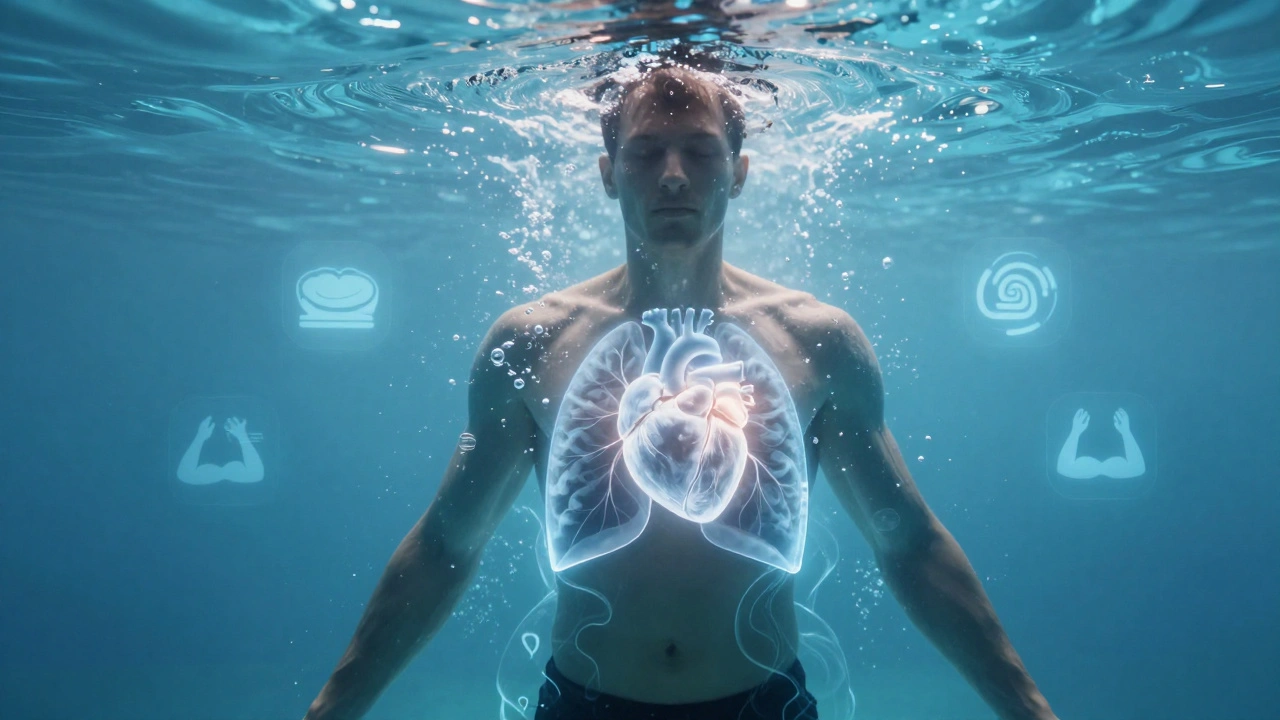
Your lungs don’t get much attention in fitness, but they’re just as important as your heart. Swimming forces you to control your breathing. You can’t gasp for air mid-stroke-you have to plan it. This trains your diaphragm, increases lung capacity, and improves oxygen efficiency.
People with asthma often find swimming easier than running or cycling because the humid air around pools reduces airway irritation. A 2023 review in the European Respiratory Journal found that children and adults with asthma who swam regularly needed 40% fewer inhalers and had fewer asthma attacks.
Even if you don’t have asthma, swimming improves your breathing control. That helps during everyday activities-climbing stairs, carrying groceries, walking uphill. Your lungs become more efficient. You feel less winded. And that’s a quiet, powerful advantage as you age.
Swimming Is for Everyone-No Matter Your Age or Fitness Level
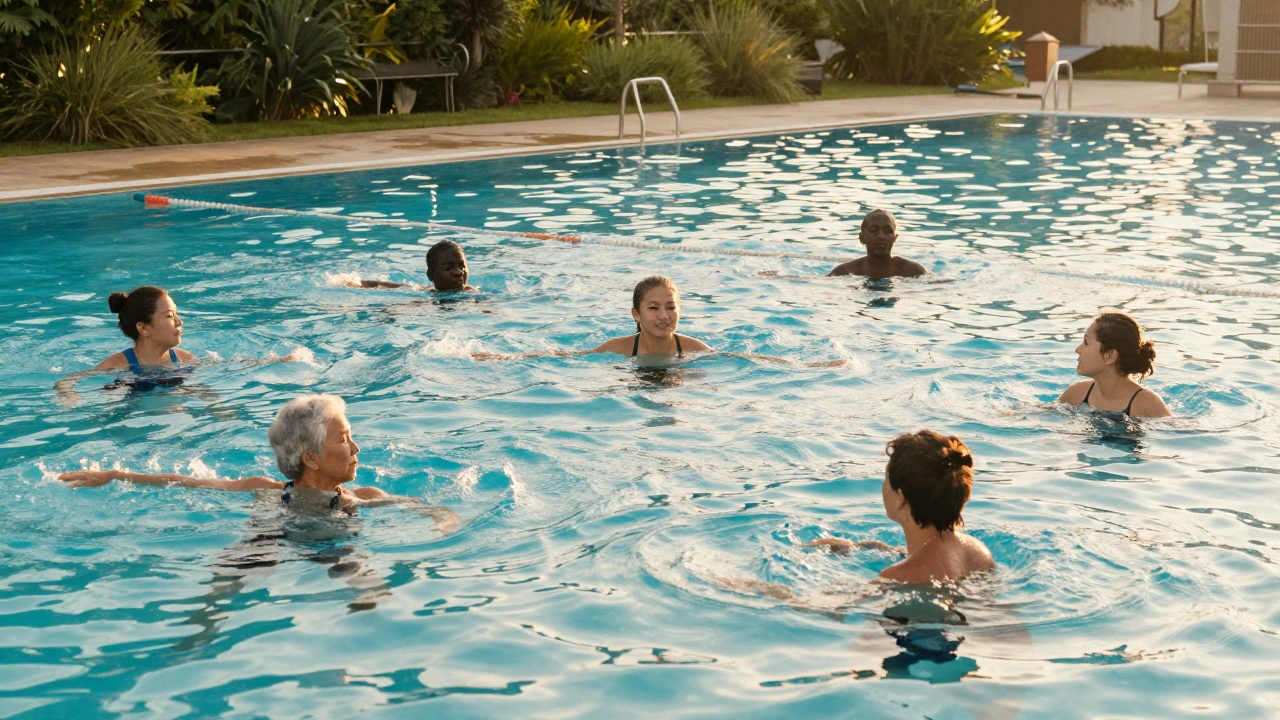
You don’t need to be a pro. You don’t need to swim laps for an hour. You don’t even need to know how to do the butterfly. If you can move in water, you can benefit. Kids as young as six learn to swim for safety. Seniors over 80 swim for mobility. Pregnant women use it to ease back pain. People recovering from surgery use it to rebuild strength.
Public pools in New Zealand offer beginner classes, water aerobics, and even silent swim sessions for those who want quiet time. Many pools have heated water year-round. You can swim in the morning, during lunch, or after work. It fits into life, not the other way around.
One man in his 70s started swimming after his wife passed away. He didn’t want to be alone. He joined a weekly group of retirees. Now, he swims three times a week. "I didn’t come for the exercise," he said. "I came because I needed to feel alive again. I stayed because I felt better than I had in years."
How to Start Swimming for Health (Even If You’re a Beginner)
- Start with 10-15 minutes, 2-3 times a week. Walk in the water first if you’re nervous.
- Focus on breathing, not speed. Inhale through your mouth, exhale slowly through your nose.
- Try freestyle or backstroke-they’re the easiest to learn. Use a kickboard if you need help with leg strength.
- Don’t compare yourself to others. Progress is measured in comfort, not laps.
- Use goggles. They make everything easier. If your eyes burn, the water’s too chlorinated-try a different pool.
- Warm up and cool down. Stretch your shoulders, neck, and hamstrings after swimming.
Most pools offer free trial sessions. Ask for a beginner’s lane. Most swimmers are happy to help. You don’t need to be fast. You just need to show up.
What to Avoid When Swimming for Health
- Don’t hold your breath underwater. It raises blood pressure and can cause dizziness.
- Avoid swimming right after eating. Wait at least an hour.
- If you feel chest pain, extreme shortness of breath, or dizziness, get out. Talk to your doctor.
- Don’t swim in cold, unheated water if you have heart conditions. Stick to pools with regulated temperatures.
- Don’t skip hydration. You sweat in water, too.
Swimming is safe for almost everyone-but like any activity, it’s about listening to your body. If something feels off, pause. Adjust. Try again tomorrow.
Can swimming help me lose weight?
Yes. A 160-pound person burns about 420 calories per hour swimming at a moderate pace. At a vigorous pace, that jumps to over 700 calories. Swimming builds lean muscle, which helps your body burn more calories even at rest. It’s not the fastest way to lose weight, but it’s one of the most sustainable. People who swim regularly are more likely to keep the weight off long-term because they enjoy it.
Is swimming better than running for overall health?
It depends on your goals. Running is great for bone density and speed. Swimming is better for joint health, lung capacity, and full-body muscle balance. If you have joint pain, arthritis, or past injuries, swimming wins. If you’re training for a marathon, running is necessary. For most people aiming for long-term health, swimming is the safer, more sustainable choice.
How often should I swim to see health benefits?
Three times a week for 30 minutes is the sweet spot. You’ll start noticing improvements in energy, sleep, and joint comfort within 4-6 weeks. Even once a week helps, but consistency matters more than intensity. Swimming every day isn’t necessary-and might lead to overuse if you don’t rest.
Do I need to know all the swimming strokes?
No. Freestyle and backstroke are enough to get all the health benefits. Breaststroke is great for beginners too. You don’t need to master butterfly or sidestroke. The goal isn’t to swim like a pro-it’s to move your body in water regularly. One stroke done consistently is better than four done sporadically.
Can swimming help with back pain?
Yes. Swimming strengthens the muscles that support your spine without putting pressure on it. Backstroke, in particular, helps open up the chest and stretch the lower back. Many physical therapists prescribe swimming for chronic back pain because it’s gentle, effective, and reduces inflammation. One study showed a 50% reduction in back pain after 12 weeks of swimming.
Swimming doesn’t promise quick fixes. It doesn’t sell supplements or require expensive gear. It just asks you to show up, move, and breathe. And over time, that’s enough to change your health in ways you didn’t expect.