Think sports massage is just a luxury for pro athletes? Think again. Whether you’re a weekend warrior, a high school runner, or someone who hits the gym five days a week, sports massage isn’t about pampering-it’s about performance. It’s the difference between sore muscles that drag you down and ones that bounce back fast. And it’s not magic. It’s science.
What Exactly Is Sports Massage?
Sports massage isn’t one type of massage. It’s a mix of techniques-deep tissue, trigger point therapy, myofascial release, and stretching-all tuned to the needs of active bodies. Unlike a Swedish massage meant to relax, sports massage targets specific muscles used in your sport. A cyclist gets focused work on quads and hamstrings. A tennis player gets attention on shoulders, forearms, and wrists. It’s tailored, not generic.
It’s used in three phases: pre-event, post-event, and maintenance. Pre-event massage warms up muscles, increases blood flow, and loosens tight spots so you move better from the start. Post-event helps flush out lactic acid and reduce swelling. Maintenance? That’s where most people miss out. Regular sessions keep chronic tension from turning into injuries.
How It Actually Helps Recovery
After a hard workout, your muscles are flooded with metabolic waste. Blood flow slows down. Inflammation spikes. That’s when soreness hits-and sometimes, it sticks around for days.
Sports massage doesn’t just feel good. It physically changes what’s happening inside your muscles. Studies show it increases circulation by up to 30% in treated areas. That means oxygen and nutrients get where they need to go faster. At the same time, it helps move out inflammation-causing chemicals like cytokines and histamines.
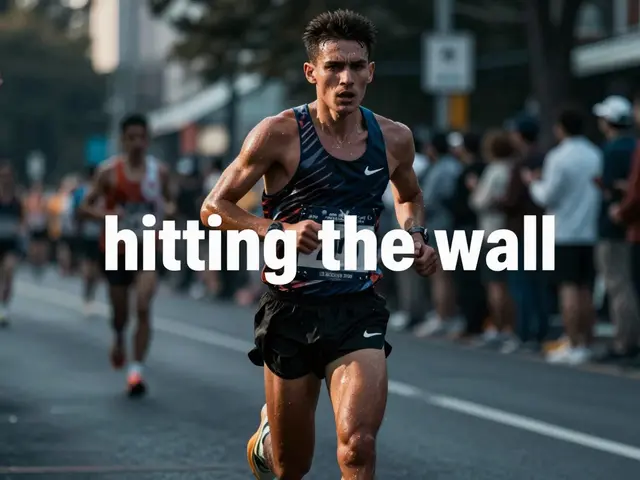
One 2023 study from the Journal of Athletic Training tracked 120 runners after a marathon. Half got a 30-minute sports massage within two hours of finishing. The other half didn’t. The massage group reported 40% less muscle soreness at 48 hours. Their range of motion returned to normal 2.5 days faster. And their next training session? They hit their target pace 92% of the time. The non-massage group? Only 61%.
It’s Not Just About Soreness
Most people think massage fixes pain. But the real value is in preventing it.
Think about your body like a car. If you keep driving with worn shocks, you’ll eventually damage the tires, the alignment, even the suspension. Your muscles and connective tissues work the same way. Tight hip flexors? That pulls on your lower back. Tight calves? That changes your stride and stresses your knees. Over time, these imbalances become injuries.
Sports massage finds those tight spots before they turn into problems. A therapist doesn’t just push hard-they look for asymmetries. One shoulder higher? One quad tighter? That’s not normal. That’s a warning sign. Regular sessions catch these imbalances early. That’s why elite teams have massage therapists on staff year-round. It’s not about treating injuries. It’s about avoiding them.
Real-World Results: Who’s Using It?
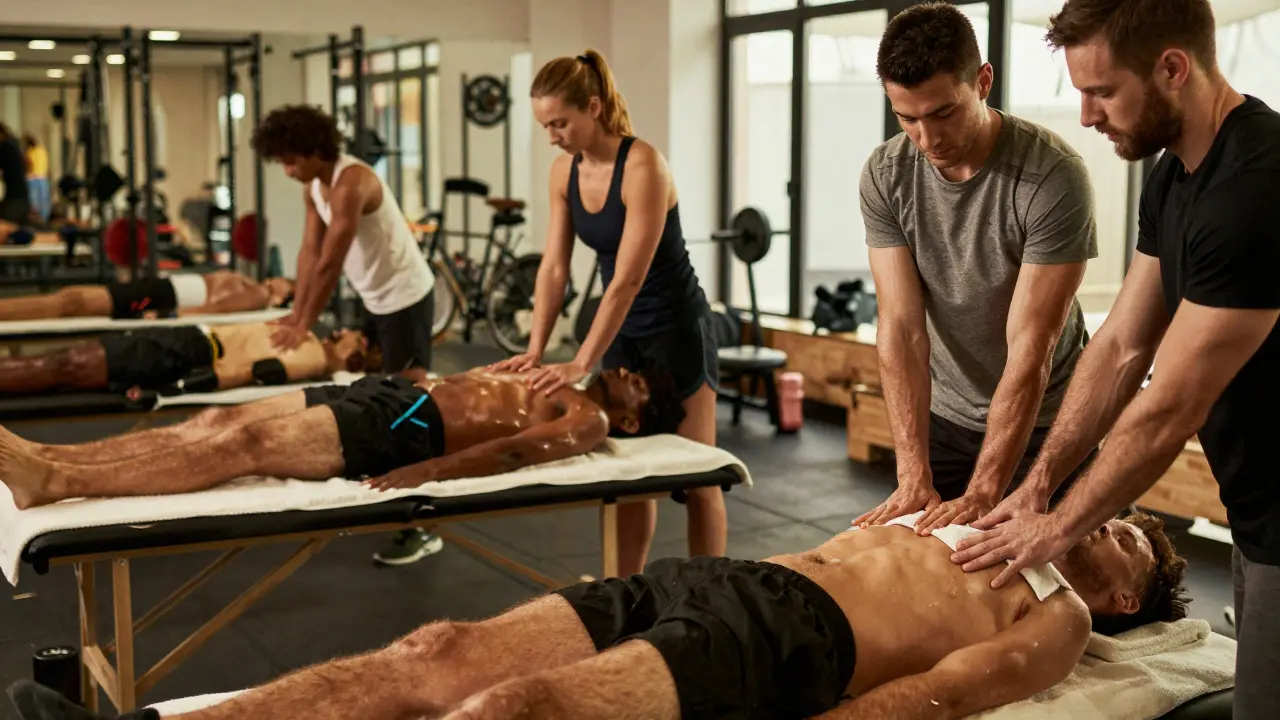
You don’t need to be a pro to benefit. Look at local athletes in Calgary. The city’s running clubs now offer monthly massage clinics. High school soccer teams have partnered with local therapists for pre-season prep. Even fitness coaches at community gyms are adding 15-minute post-workout massage sessions.
A 32-year-old triathlete from Calgary told me she cut her recovery time in half after starting monthly sessions. She used to take three days to feel normal after an Ironman. Now, she’s back to swimming by day two. She doesn’t wait until she’s in pain. She goes every four weeks-rain or shine. That’s the key: consistency.
Even recreational lifters are seeing changes. One guy from Inglewood started getting massages after his shoulder started aching from bench presses. Two months in, his pain vanished. His coach said his form improved. Why? Because tight lats were pulling his shoulders forward. The massage freed them up. Now he lifts heavier-and pain-free.
What to Expect in a Session
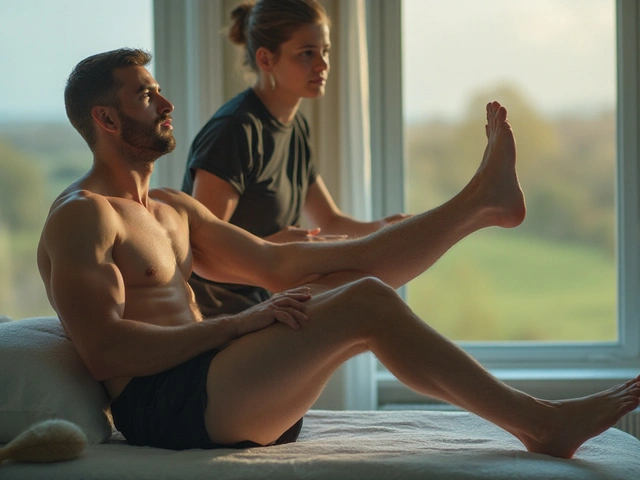
A typical sports massage lasts 45 to 75 minutes. You’ll usually wear shorts (or a sports bra for women). The therapist will ask about your sport, your training schedule, and any pain you’ve noticed.
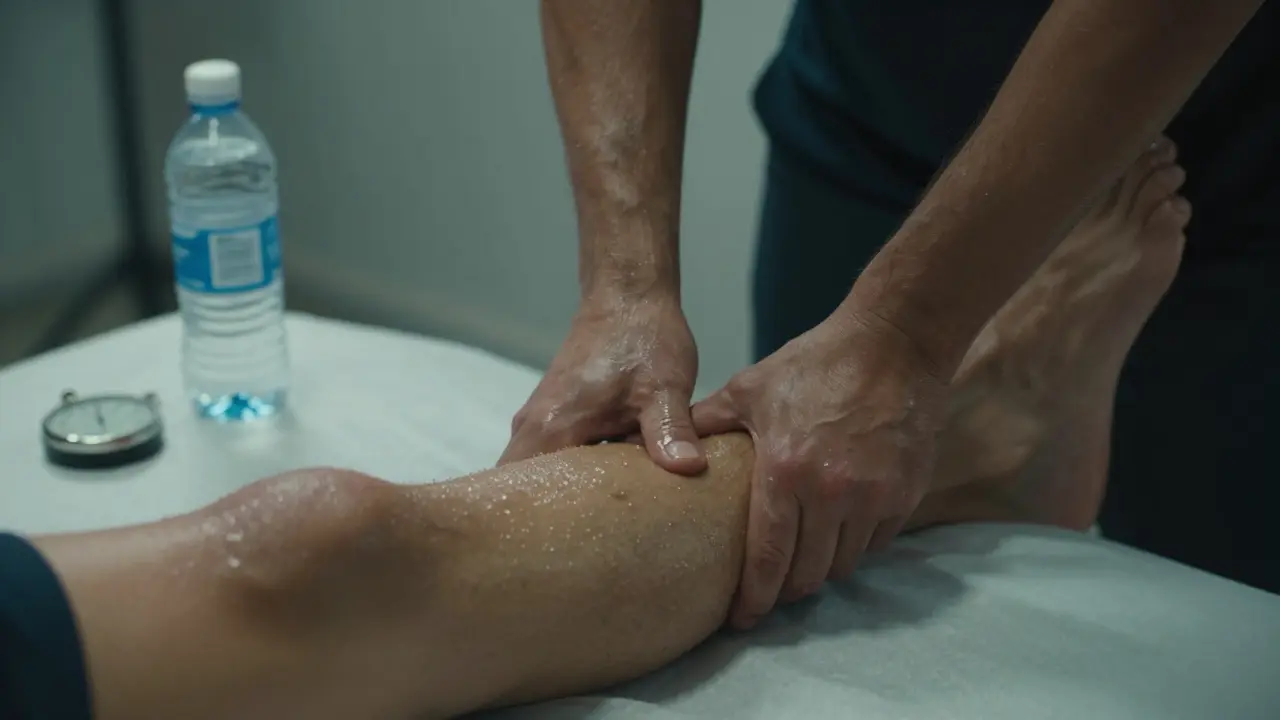
The massage itself isn’t always comfortable. It can be intense. But it shouldn’t hurt. If you’re flinching or gasping, speak up. Good therapists adjust pressure based on your feedback. They’ll use their hands, elbows, and sometimes forearms to dig into deep tissue. You might feel a burning sensation-that’s normal. Sharp pain? That’s not.
Afterward, you might feel a little tired. Drink water. Avoid heavy lifting or intense workouts for the next 12 hours. Your body’s healing. Don’t undo the work.
How Often Should You Get One?
It depends on your activity level.
- If you train 5+ days a week: every 2-3 weeks
- If you train 3-4 days a week: every 4-6 weeks
- If you’re recovering from an injury: weekly until symptoms improve
- If you’re preparing for a race: 2-3 days before, then again 24 hours after
Don’t wait for pain to strike. That’s like waiting for your car to break down before changing the oil. Proactive is better than reactive.
What Doesn’t Work
Sports massage isn’t a cure-all. It won’t fix a torn ligament. It won’t replace physical therapy for serious injuries. And it won’t magically give you more strength or speed.
It’s a tool. A powerful one-but only when used right. You still need sleep, nutrition, and proper training. Massage just makes those things more effective.
Also, not all massage therapists are created equal. Look for someone with certification in sports massage. Ask if they’ve worked with athletes in your sport. A general spa therapist might not know how to target a runner’s IT band or a swimmer’s rotator cuff.
DIY Tips Between Sessions
You don’t have to wait for your next appointment to care for your muscles.
- Use a foam roller on big muscle groups-quads, hamstrings, glutes-after workouts. Roll slowly. Pause on tight spots for 20-30 seconds.
- Stretch daily, especially after you sweat. Hold each stretch for 30-45 seconds. Don’t bounce.
- Stay hydrated. Dehydration makes muscles tighter and slower to recover.
- Get enough protein. Muscle repair needs amino acids. Aim for 1.6-2.2 grams per kilogram of body weight on training days.
These won’t replace massage. But they’ll make it more effective.
The Bottom Line
Sports massage isn’t a luxury. It’s a performance enhancer. It’s not about relaxation. It’s about resilience. It’s about being ready for your next workout, your next race, your next push.
Every athlete-no matter their level-deserves to recover faster, move better, and stay injury-free. You don’t need a pro contract to benefit. You just need to show up. Consistently. Regularly. And treat your body like the machine it is.
Can sports massage help with chronic pain?
Yes, but not alone. Sports massage can reduce tension, improve circulation, and break up scar tissue that contributes to chronic pain. But if the pain is due to structural damage-like a herniated disc or arthritis-it needs medical evaluation first. Massage works best as part of a broader plan that includes physical therapy, strength training, and proper rest.
Is sports massage painful?
It can be intense, but it shouldn’t be unbearable. Good therapists adjust pressure based on your feedback. You might feel a deep burn or pressure, especially in tight areas, but sharp or shooting pain means you need to speak up. Pain doesn’t equal effectiveness. Consistent, moderate pressure over time creates lasting change.
How long do the benefits last?
After one session, you’ll likely feel looser and less sore for 2-5 days. But the real gains come from regular sessions. Over time, your muscles adapt. Tightness becomes less frequent. Recovery speeds up. The benefits compound. Think of it like brushing your teeth-you don’t do it once and expect lifelong dental health.
Can I get a sports massage if I’m not an athlete?
Absolutely. You don’t need to compete to benefit. If you’re active-whether you hike, bike, garden, or lift weights-you put stress on your muscles. Sports massage helps anyone who moves regularly. It’s not about how fast you run. It’s about how well you recover.
Do I need to be naked during a sports massage?
No. Most people wear athletic shorts or underwear. The therapist will drape you with towels and only uncover the area they’re working on. You should feel comfortable and respected. If you’re unsure, ask what to wear ahead of time. A good therapist will guide you.