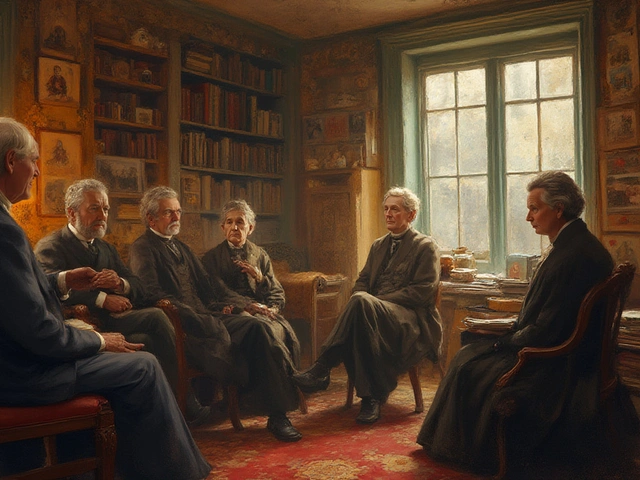
What if the path to healing didn’t start with words, but with a brushstroke, a drumbeat, or the movement of your own body? Creative arts therapies aren’t about becoming an artist-they’re about using creativity to unlock what words can’t say. For people struggling with anxiety, trauma, grief, or just the quiet weight of daily stress, these therapies offer a different kind of language-one that speaks through color, sound, motion, and texture.
What Exactly Are Creative Arts Therapies?
Creative arts therapies are structured, evidence-based practices that use artistic expression as a tool for emotional healing. They’re led by trained professionals-art therapists, music therapists, dance/movement therapists-who understand both psychology and the creative process. Unlike casual hobbies, these therapies are goal-oriented. You’re not there to make a masterpiece. You’re there to explore how your hands move when you’re sad, how a melody makes your chest feel tight, or why you keep choosing dark colors on the page.
The most common types include:
- Art therapy: Using drawing, painting, collage, or sculpture to express feelings you can’t name.
- Music therapy: Playing instruments, singing, or even just listening to music to regulate emotions and reduce stress.
- Dance/movement therapy: Using body movement to reconnect with yourself, release tension, or process trauma.
- Expressive arts therapy: Combining multiple art forms-like writing, painting, and sound-to deepen self-awareness.
These aren’t new ideas. Ancient cultures used drumming, storytelling, and ritual dance for healing long before modern psychology existed. Today, research backs it up. A 2023 meta-analysis of over 50 clinical studies found that participants in art therapy showed significant reductions in symptoms of depression and PTSD-comparable to traditional talk therapy, but with higher retention rates. People stick with it because it doesn’t feel like work.
How It Works: The Brain on Creativity
When you’re stuck in a loop of negative thoughts, your prefrontal cortex-the part of your brain that handles logic and control-gets overwhelmed. Talking about your feelings can feel impossible. That’s where creative arts therapies step in.
Creating art activates the brain’s reward system. Dopamine flows when you mix colors, tap a rhythm, or stretch your body in a new way. At the same time, the amygdala-the fear center-calms down. You’re not analyzing your pain. You’re embodying it. And that shift is powerful.
One woman in Melbourne, who survived a car accident and couldn’t speak about it for two years, started painting abstract shapes every week with an art therapist. She didn’t talk about the crash. But over time, her paintings shifted from jagged red lines to soft blues and curves. Her therapist noticed. So did her family. The change wasn’t in her words-it was in her hands.
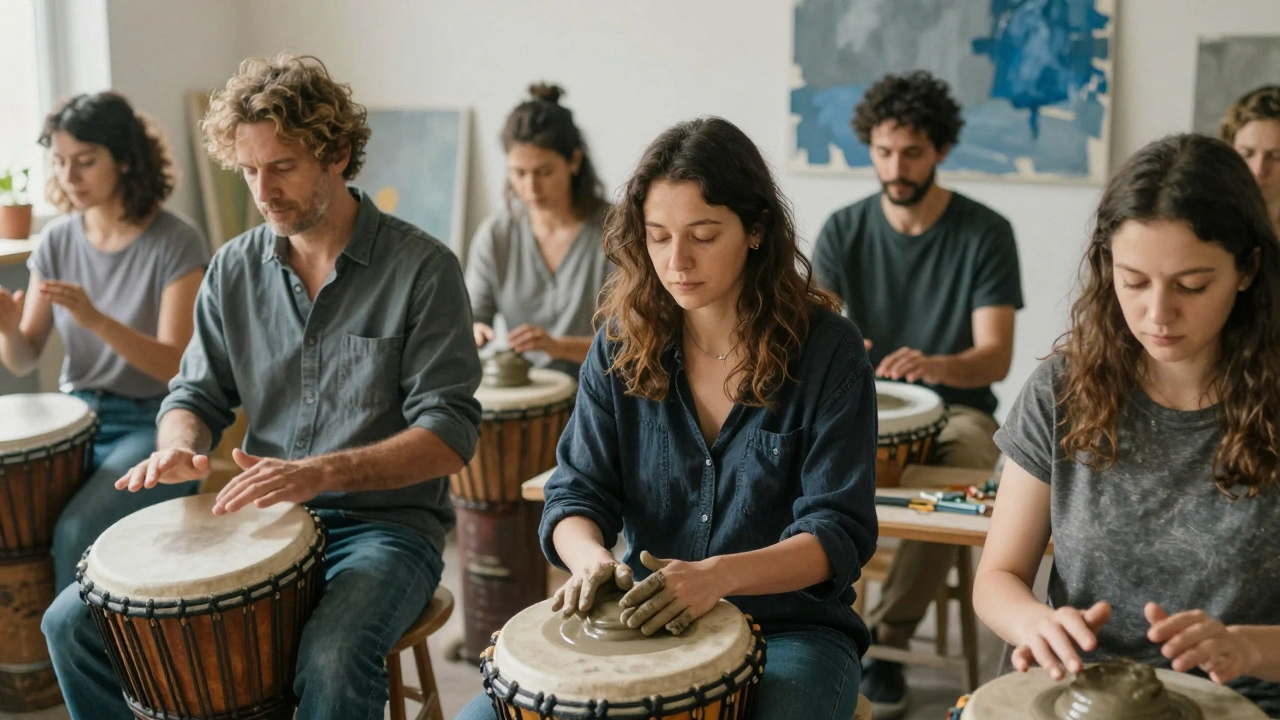
Music therapy works similarly. A 2024 study with veterans suffering from PTSD showed that drumming in a group setting lowered cortisol levels by 32% in just 45 minutes. The rhythm didn’t fix their trauma. But it gave their nervous systems a new pattern to follow-something steady, predictable, and alive.
You Don’t Need Talent. You Need Curiosity.
Most people think they can’t do art therapy because they’re "not artistic." That’s the biggest myth. You don’t need to know how to draw a face or play a song perfectly. You need to be willing to try something messy, awkward, or strange.
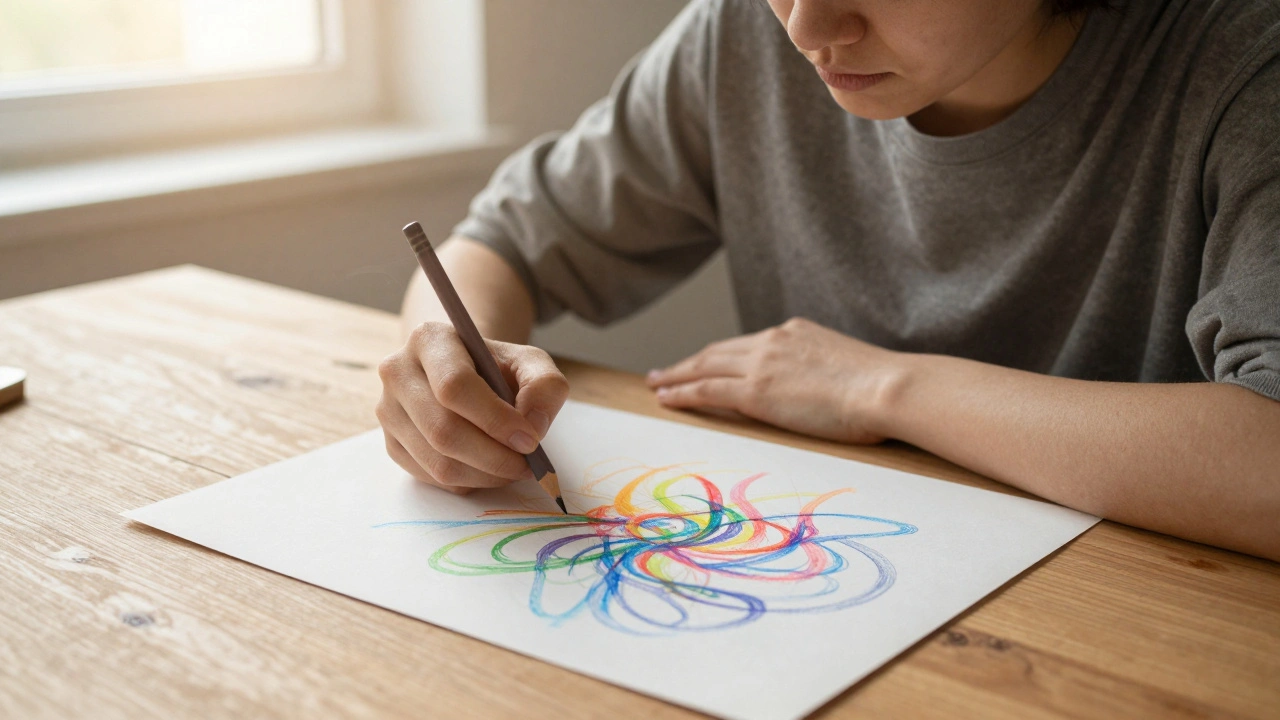
Try this: Grab a sheet of paper and a crayon. Close your eyes. Let your hand move however it wants for two minutes. Don’t think. Don’t judge. Just move. When you open your eyes, look at what’s there. Does it feel calm? Chaotic? Heavy? Light? That’s your emotion speaking-not your mind.
Another simple exercise: Play one song that matches how you feel right now. Then play one that you wish you felt. Notice the difference in your body. Do your shoulders drop? Does your breathing slow? That’s your nervous system responding to music-not your thoughts.
Even if you’ve never held a paintbrush, you’ve probably hummed a tune to calm yourself down. That’s music therapy. You’ve probably danced alone in your kitchen after a bad day. That’s movement therapy. Creative arts therapies just give you the space and support to do it intentionally.
Who Can Benefit?
These therapies aren’t just for people with diagnosed mental health conditions. They help anyone carrying unseen weight.
- Children with autism often communicate better through drawing or music than speech.
- People recovering from addiction use art to reconnect with parts of themselves they lost.
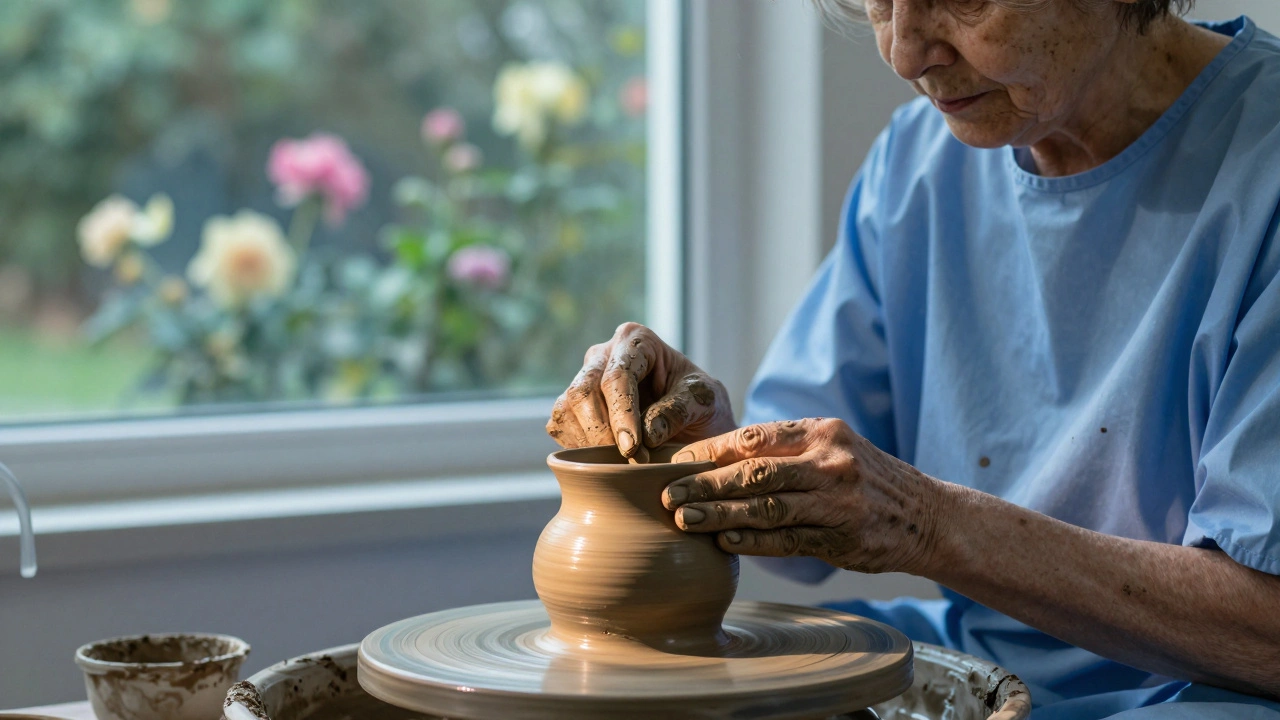
- Older adults with dementia recall memories through familiar songs or tactile materials like clay.
- Parents overwhelmed by caregiving find relief in scribbling on paper while their child sleeps.
- Professionals burning out use movement to release tension stored in their shoulders and jaw.
In Australia, public hospitals in Melbourne and Sydney now offer art therapy programs for cancer patients. One program gives patients clay to shape during chemotherapy. The act of molding something with their hands helps them feel in control when their body feels like it’s not.
Getting Started: Where to Begin
You don’t need to sign up for a six-week program to try this. Start small.
- Keep a daily art journal. Even five minutes a day. Scribble, paint, stick on magazine cutouts. No rules.
- Create a "mood playlist." Curate songs that match how you feel-and songs you want to feel. Listen without distractions.
- Move your body without music. Stand up. Stretch. Shake your arms. Walk slowly. Notice how your body wants to move.
- Try a free online session. Many community centers and nonprofits offer free introductory art or music therapy groups. Search "creative arts therapy Melbourne free"-you’ll find options.
- Find a registered therapist. Look for someone certified by the Australian Art Therapy Association or the Australian Music Therapy Association. They’ve completed at least two years of postgraduate training.
Some insurance plans in Australia now cover art therapy under mental health care plans. Ask your GP for a referral if you’re eligible.
What to Expect in a Session
The first session usually feels strange. You might feel silly holding a paintbrush. That’s normal. The therapist won’t ask you to explain your art. They’ll ask questions like:
- "What surprised you about what you made?"
- "Where did you feel that while you were doing it?"
- "If this color had a voice, what would it say?"
There’s no right or wrong answer. The goal isn’t to interpret your art-it’s to help you notice what it reveals about you.
Some people cry. Others laugh. Some sit in silence for the whole hour. All of it counts.
Common Misconceptions
Let’s clear up a few myths:
- Myth: "I’m not creative." Truth: Creativity isn’t about skill. It’s about curiosity and willingness to explore.
- Myth: "It’s just for kids." Truth: Adults benefit more-because they’ve had more to bury.
- Myth: "It’s not real therapy." Truth: It’s recognized by the World Health Organization and covered by Medicare in Australia under certain conditions.
- Myth: "I’ll be judged on my art." Truth: Therapists are trained to hold space, not critique. Your art is yours alone.
Why This Matters Now
In 2025, mental health services are stretched thin. Waitlists for psychologists are months long. Medication doesn’t work for everyone. Talk therapy can feel exhausting when you’re too numb to speak.
Creative arts therapies fill that gap. They’re low-cost, accessible, and deeply human. They don’t require you to be "fixed." They just ask you to be present-with your hands, your voice, your body.
One man in Geelong, who lost his wife to cancer, started playing the harmonica in his backyard every morning. He didn’t know how to play. He just blew into it until the sound matched how he felt. After six months, he joined a community music group. He still cries. But now, he says, he doesn’t feel alone.
You don’t have to be broken to try this. You just have to be tired of talking.
Do I need to be artistic to benefit from creative arts therapies?
No. Creative arts therapies aren’t about talent or skill. They’re about using creativity as a way to express emotions you can’t put into words. You don’t need to draw well, play music perfectly, or dance gracefully. The focus is on your experience, not the outcome.
Can creative arts therapies replace traditional therapy?
They can be used alone or alongside talk therapy, medication, or other treatments. For some people, they’re a powerful standalone tool-especially when words feel too hard. For others, they complement traditional therapy by helping access deeper emotions. A trained therapist will help you decide what works best for your needs.
Is creative arts therapy covered by Medicare in Australia?
Yes, under certain conditions. If you have a Mental Health Treatment Plan from your GP, you may be eligible for rebates for up to 10 sessions per year with a registered art, music, or dance therapist. Check with your therapist and Medicare to confirm eligibility.
How long does it take to see results?
Some people feel a shift after one session-like a weight has lifted or a knot has loosened. For lasting change, most people attend weekly sessions for 8 to 12 weeks. Progress isn’t always visible. Sometimes, the change is quiet: you sleep better, you breathe deeper, you stop snapping at loved ones.
What if I feel uncomfortable making art?
It’s normal. Many people feel awkward at first. A good therapist will never force you to create. You can sit, watch, or just hold a paintbrush without using it. The goal is safety, not performance. Over time, the discomfort often turns into curiosity-and then relief.
Next Steps
If you’re curious, start today. Grab a pencil. Play one song that feels true. Move your body for three minutes. Don’t wait for permission. You don’t need a therapist to begin-just a willingness to be human.
And if you’re ready to go deeper, search for a registered creative arts therapist near you. You might be surprised at what your hands already know how to say.


Apr 17 2025