
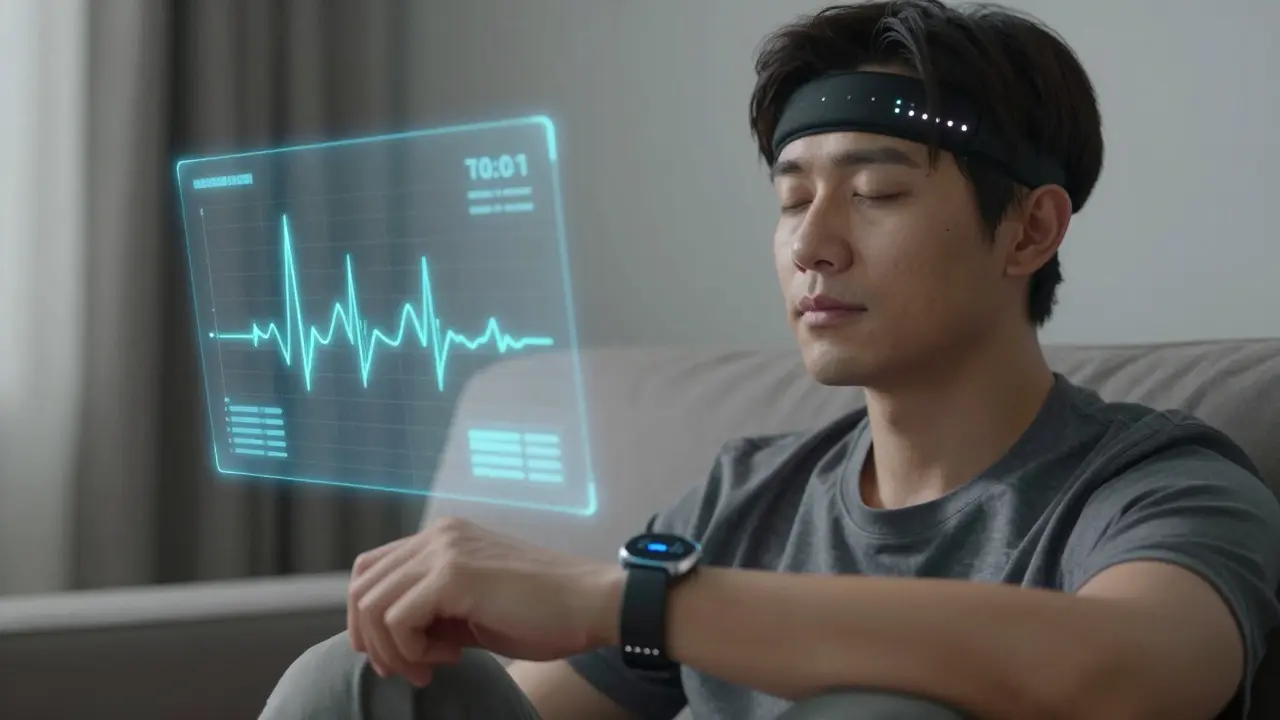
What if you could learn to calm your racing heart, quiet your tense muscles, or lower your blood pressure-just by paying attention to your own body? This isn’t magic. It’s biofeedback, and it’s been helping people take back control of their physical and mental health for over 50 years.
What Biofeedback Actually Is (And What It Isn’t)
Biofeedback is a technique that uses sensors to measure things your body does automatically-like heart rate, muscle tension, skin temperature, or brain waves-and turns those signals into real-time feedback you can see or hear. You’re not being controlled by a machine. You’re learning how to influence your own nervous system.
Think of it like a fitness tracker for your internal state. Instead of counting steps, it shows you how your stress is affecting your breathing. Or how your anger spikes your muscle tension. Once you see it, you can start changing it.
It’s not hypnosis. It’s not meditation alone. And it doesn’t require drugs. Biofeedback gives you data-and with data, you get power.
How Biofeedback Works: Your Body’s Hidden Dashboard
Your body is always sending signals. Your heart beats faster when you’re anxious. Your shoulders tighten when you’re overwhelmed. Your hands get cold when your fight-or-flight system kicks in. Most of the time, you don’t notice these changes until they’ve already caused a headache, insomnia, or a panic attack.
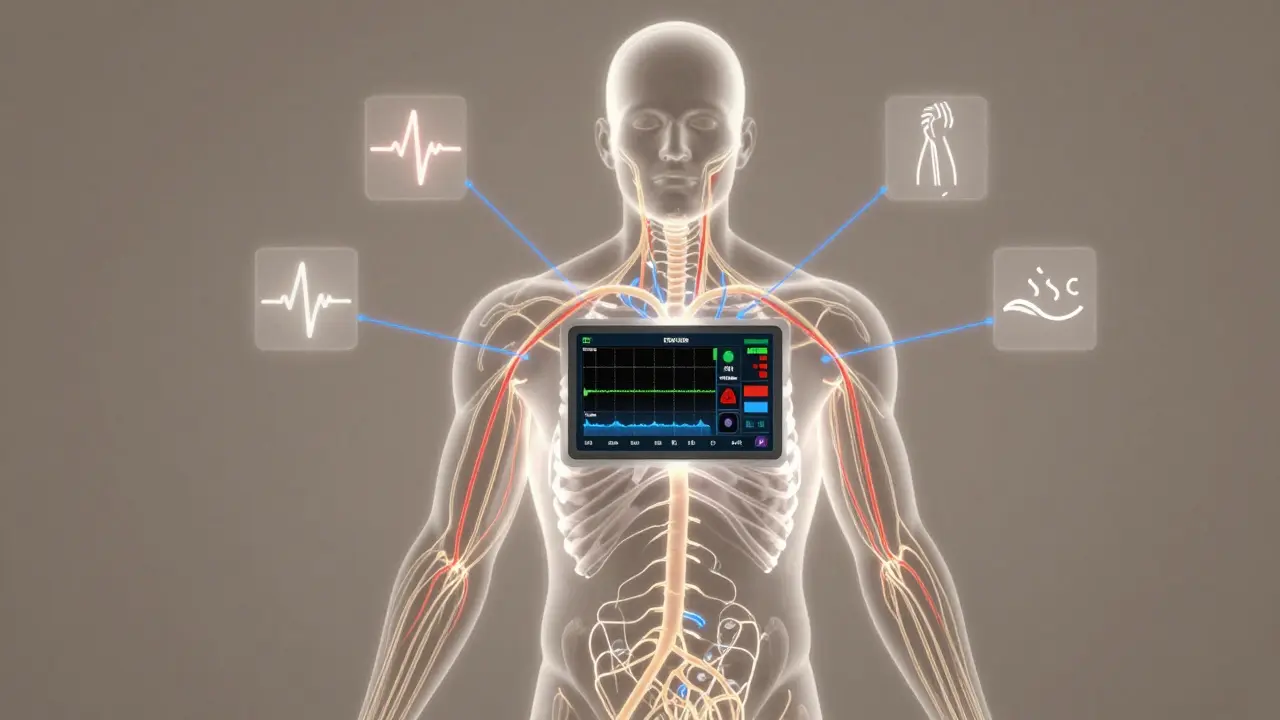
Biofeedback makes the invisible visible. Sensors attached to your skin pick up tiny changes:
- Electromyography (EMG) measures muscle activity-useful for tension headaches or chronic pain.
- Thermal biofeedback tracks skin temperature, which drops when you’re stressed due to reduced blood flow.
- Heart rate variability (HRV) shows how well your nervous system adapts to stress-low HRV links to anxiety and burnout.
- Electroencephalography (EEG) monitors brainwave patterns, helping with focus, sleep, and PTSD.
- Respiratory biofeedback tracks breathing rhythm, which is often shallow and rapid during anxiety.
These signals appear on a screen as graphs, tones, or even video games. If your muscles are too tight, the tone gets louder. If your breathing slows, the game progresses. Your brain learns: “When I relax, this changes. And when I relax, I feel better.”
What Biofeedback Can Help With (Evidence-Based Uses)
Biofeedback isn’t a cure-all. But for specific conditions, it’s backed by solid science.
- Chronic headaches and migraines: Studies show EMG biofeedback reduces migraine frequency by 45-60%-comparable to some medications, without side effects.
- High blood pressure: Thermal and HRV biofeedback can lower systolic pressure by 10-15 mmHg over 8-12 weeks, according to the American Heart Association.
- Anxiety and panic disorders: HRV training helps regulate the autonomic nervous system, reducing hyperventilation and racing thoughts.
- Chronic pain: People with fibromyalgia or lower back pain report less discomfort after learning to relax overactive muscles.
- ADHD: EEG biofeedback (neurofeedback) improves attention and impulse control in children and adults, with effects lasting months after training ends.
- Urinary incontinence: Pelvic floor EMG biofeedback is a first-line treatment for women after childbirth, with success rates over 75%.
These aren’t anecdotes. They’re results from clinical trials published in journals like The Lancet, JAMA Psychiatry, and the Journal of Behavioral Medicine.
What You’ll Need to Get Started
You don’t need a lab. But you do need the right tools and guidance.
Option 1: Professional sessions
Most people start with a licensed therapist-psychologist, physical therapist, or certified biofeedback practitioner. They’ll use medical-grade devices and tailor the training to your goals. Sessions usually last 30-60 minutes, and most people need 8-12 sessions over 2-3 months.
Option 2: Home devices
Consumer biofeedback tools have gotten smarter and cheaper:
- Heart rate variability monitors: Devices like the Muse headband or Biostrap wristband track HRV and guide breathing exercises.
- EMG muscle sensors: The Myo armband or BioExplorer can show you when your shoulders are tensing up during work.
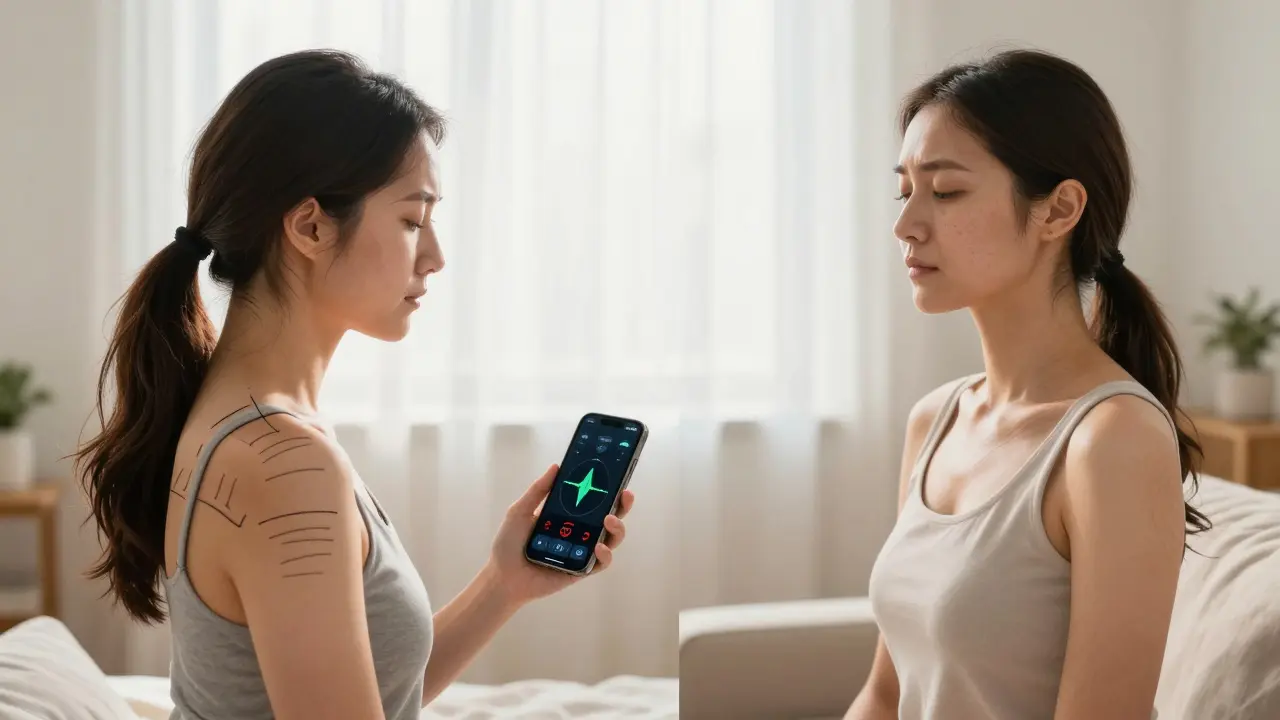
- Smart breathing apps: Apps like Breathwrk or Welltory use your phone’s camera to measure heart rate changes and coach you through paced breathing.
Home devices won’t replace professional help for serious conditions, but they’re excellent for daily stress management and building awareness.
A Real-Life Example: Sarah’s Story
Sarah, a 38-year-old teacher in Melbourne, started having daily tension headaches. She took painkillers, drank coffee, and pushed through. Nothing helped.
Her physiotherapist hooked her up to an EMG sensor on her forehead and neck. The screen showed her muscles firing at 80% of max capacity-even when she thought she was “relaxed.”
She learned to notice the tiny clench in her jaw before the pain hit. She practiced relaxing those muscles while watching the feedback drop on the screen. Within six weeks, her headaches dropped from daily to once a week. She still uses her phone’s breathing app every morning.
How Long Until You See Results?
Most people notice small changes after 2-3 sessions. But real, lasting change takes time. Your body doesn’t unlearn stress in a day.
Think of it like learning to play piano. One lesson won’t make you Mozart. But if you practice daily, your fingers start remembering the patterns on their own.
For chronic conditions like migraines or high blood pressure, most people see significant improvement after 8-10 sessions. For daily stress, even 10 minutes of daily biofeedback breathing can rewire your nervous system over 6-8 weeks.
Who Should Avoid Biofeedback?
Biofeedback is safe for almost everyone. But it’s not for everyone.
- Don’t use it if you have a pacemaker or implanted defibrillator. Some devices emit electrical signals that could interfere.
- Don’t rely on it alone for acute medical conditions. If you have chest pain, sudden dizziness, or severe anxiety attacks, see a doctor first.
- Don’t expect miracles. Biofeedback won’t fix a toxic job or an abusive relationship. It helps you manage your response-but you still need to address the root cause.
Pro Tips to Make Biofeedback Work for You
- Practice daily, even for 5 minutes. Consistency beats marathon sessions.
- Pair it with real-life triggers. Practice when you’re stuck in traffic, before a meeting, or right after your child screams.
- Track your progress. Keep a simple journal: “Today I noticed tension in my neck. I breathed for 3 minutes. My headache went from 7/10 to 3/10.”
- Don’t fight the feedback. If your heart rate spikes, don’t panic. Just observe. The goal isn’t to make the numbers perfect-it’s to learn how to shift them.
- Combine it with other tools. Biofeedback works better with mindfulness, yoga, or cognitive behavioral therapy.
Where to Find Help
In Australia, look for certified practitioners through the Applied Psychophysiology and Biofeedback Society or the Australian Biofeedback and Neurofeedback Society. Many physiotherapists, psychologists, and occupational therapists now offer biofeedback as part of their practice.
If you’re starting at home, try:
- Welltory (HRV tracking + coaching)
- Biostrap (wrist-based stress and recovery metrics)
- Breathwrk (free breathing exercises with real-time heart rate feedback)
Most apps offer free trials. Test one for two weeks. If you notice even a slight drop in your stress levels, you’re on the right path.
Why Biofeedback Is the Quiet Revolution in Mental Health
We’ve spent decades treating stress with pills, therapy, or telling people to “just relax.” Biofeedback flips the script. It doesn’t tell you what to feel. It shows you what’s happening-and gives you the tools to change it yourself.
It’s not about fixing brokenness. It’s about tuning your body’s natural intelligence.
For the first time in history, you can see your stress in real time. And once you see it, you’re never powerless again.
Is biofeedback scientifically proven?
Yes. Over 1,000 peer-reviewed studies support biofeedback for conditions like migraines, hypertension, anxiety, ADHD, and urinary incontinence. Major organizations like the American Heart Association and the American Psychological Association recognize it as an evidence-based treatment.
Can I do biofeedback at home without equipment?
You can’t get real-time physiological feedback without sensors, but you can practice the same skills. Focused breathing, progressive muscle relaxation, and mindfulness meditation teach your body to respond the same way biofeedback does-just slower. Many people use these methods as a foundation before adding devices.
How much does biofeedback cost?
Professional sessions in Australia typically cost $80-$150 per hour. Some are covered by private health insurance under “allied health” plans. Home devices range from $50 for basic apps to $300-$600 for medical-grade wearables. Many users start with free apps and upgrade only if they see results.
Is biofeedback the same as meditation?
No. Meditation is about quieting the mind. Biofeedback is about observing and changing physical signals. But they work well together. Many biofeedback users report that after a few sessions, they can achieve deep relaxation without the device-because their body remembers how.
How long do the effects last?
Studies show benefits last 6-12 months after training ends, and often longer. That’s because biofeedback teaches your brain new patterns-not just temporary tricks. Like learning to ride a bike, once your nervous system learns to relax, it tends to keep doing it.
Next Steps: Try This Today
Here’s your first biofeedback exercise-no device needed:
- Set a timer for 2 minutes.
- Place your fingertips on your wrist to feel your pulse.
- Breathe in slowly for 4 seconds. Hold for 2. Breathe out for 6.
- Notice how your pulse slows as you exhale longer.
- Repeat this daily for a week.
You just did biofeedback. You observed your body’s response-and changed it. That’s the power. Now, keep going.





Nov 16 2024