

When labor starts, the body goes into overdrive. Contractions tighten like a vice. Sweat beads on the forehead. Breathing becomes shallow. And in that moment, many people wonder: is there a way to soften the edges of this intense experience? Aromatherapy isn’t magic, but for many birthing people, it’s a quiet, powerful ally.
What Aromatherapy Actually Does During Labor
Aromatherapy uses concentrated plant oils-essential oils-to influence mood, reduce stress, and ease physical discomfort. During childbirth, it doesn’t stop contractions. It doesn’t replace medical care. But it can change how your brain processes pain. Studies from the Journal of Midwifery & Women’s Health found that women who used lavender oil during labor reported 30% lower pain scores compared to those who didn’t. Why? Because scent travels straight to the limbic system-the part of your brain that controls emotion and memory. A familiar, calming smell can trigger a sense of safety, even in the chaos of labor.
It’s not about replacing epidurals. It’s about giving your nervous system something to hold onto. Think of it like a lullaby for your body.
Which Oils Work Best for Labor
Not all essential oils are safe or effective during childbirth. Some are too strong. Others can trigger contractions too early. Here are the three oils most commonly used and backed by clinical experience:
- Lavender: Calms the nervous system, reduces anxiety, and helps with pain perception. Used in over 70% of midwife-supported births in Australia that include aromatherapy.
- Peppermint: Helps with nausea, headaches, and fatigue. A few drops on a cloth near the nose can clear mental fog during long labor.
- Frankincense: Grounding and centering. Often used when emotions run high or when someone feels overwhelmed. Its deep, woody scent helps anchor breathing.
Avoid citrus oils like lemon or orange during active labor-they can be too stimulating. Also skip rosemary and clary sage unless you’re under direct supervision. Clary sage, while great for easing tension, can intensify contractions and isn’t recommended before the active phase.
How to Use Them Safely
You don’t need a diffuser in the delivery room. In fact, most hospitals and birth centers prefer simple, non-invasive methods. Here’s how real people use aromatherapy during birth:
- Inhalation: Place 1-2 drops of oil on a cotton ball or cloth. Hold it near your nose during contractions. Breathe slowly. This is the safest and most common method.
- Massage: Mix 2-3 drops of oil with a tablespoon of carrier oil (like coconut or sweet almond). Gently rub onto lower back or shoulders. Always test a small patch of skin first-some people react to oils even if they’ve used them before.
- Steam Inhalation: Add 1 drop of oil to a bowl of warm water. Drape a towel over your head and breathe in slowly. Use only if you’re not dizzy or feeling faint.
Never apply oils directly to the skin without diluting them. Never ingest them. And never use them near the baby’s face after birth-babies’ lungs are still developing.
Real Stories From the Delivery Room
Maria, 34, gave birth in a Melbourne birthing center. She’d been scared of pain since her first pregnancy. Her doula brought a small vial of lavender oil. "I didn’t even know I was holding it until I felt a contraction coming," she said. "I just lifted it to my nose. The smell was like my grandma’s garden. I started breathing deeper. I didn’t cry out. I just… settled into it."
Then there’s James, who supported his partner through a 20-hour labor. "She was exhausted. We tried everything-warm baths, changing positions, music. Nothing helped her relax. Then I put a drop of peppermint on a tissue and held it near her nose. She took one breath, sighed, and said, ‘I can do this.’ That one breath changed everything."
These aren’t outliers. They’re common. In a 2024 survey of 500 birthing people in Australia, 68% said aromatherapy helped them feel more in control. 52% said they’d use it again.

What Hospitals and Midwives Think
Many hospitals in Australia, the UK, and Canada now allow aromatherapy-on a case-by-case basis. It’s not about replacing medicine. It’s about supporting the whole person. Midwives often keep small bottles of lavender and peppermint on hand. They don’t push it. They don’t sell it. They just offer it.
"We’re not trying to make birth ‘nice,’” says Sarah Lin, a certified midwife in Sydney. "We’re trying to make it bearable. If a scent helps someone find a rhythm, stay calm, or even just smile between contractions-that’s a win."
Some hospitals require written consent or a list of oils being used. Always check with your care provider ahead of time. And if you’re planning a home birth, talk to your midwife about safe combinations and dosages.
What Doesn’t Work
Aromatherapy isn’t a cure-all. And it’s not a substitute for medical care. If you’re experiencing high blood pressure, fetal distress, or prolonged labor, oils won’t fix it. They also don’t work the same for everyone.
Some people hate the smell of lavender. Others find peppermint too sharp. That’s okay. Your senses are personal. If a scent makes you tense, stop using it. Trust your body. The goal isn’t to force relaxation-it’s to give you tools that feel like yours.
Also, don’t believe the hype on social media. You don’t need a $150 aromatherapy birth kit with 12 oils and a fancy rollerball. One or two high-quality oils in a small glass bottle are enough.
How to Choose Quality Oils
Not all essential oils are created equal. Many are diluted, synthetic, or filled with fillers. Look for these signs:
- Botanical name on the label (e.g., Lavandula angustifolia)
- 100% pure, no "fragrance" or "parfum" listed
- Dark glass bottle (not plastic)
- Reputable brand with third-party testing
Brands like Plant Therapy, Aura Cacia, and Eden’s Garden are widely trusted in Australia. Avoid bargain brands sold at supermarkets or online marketplaces-they’re often not safe for pregnancy.
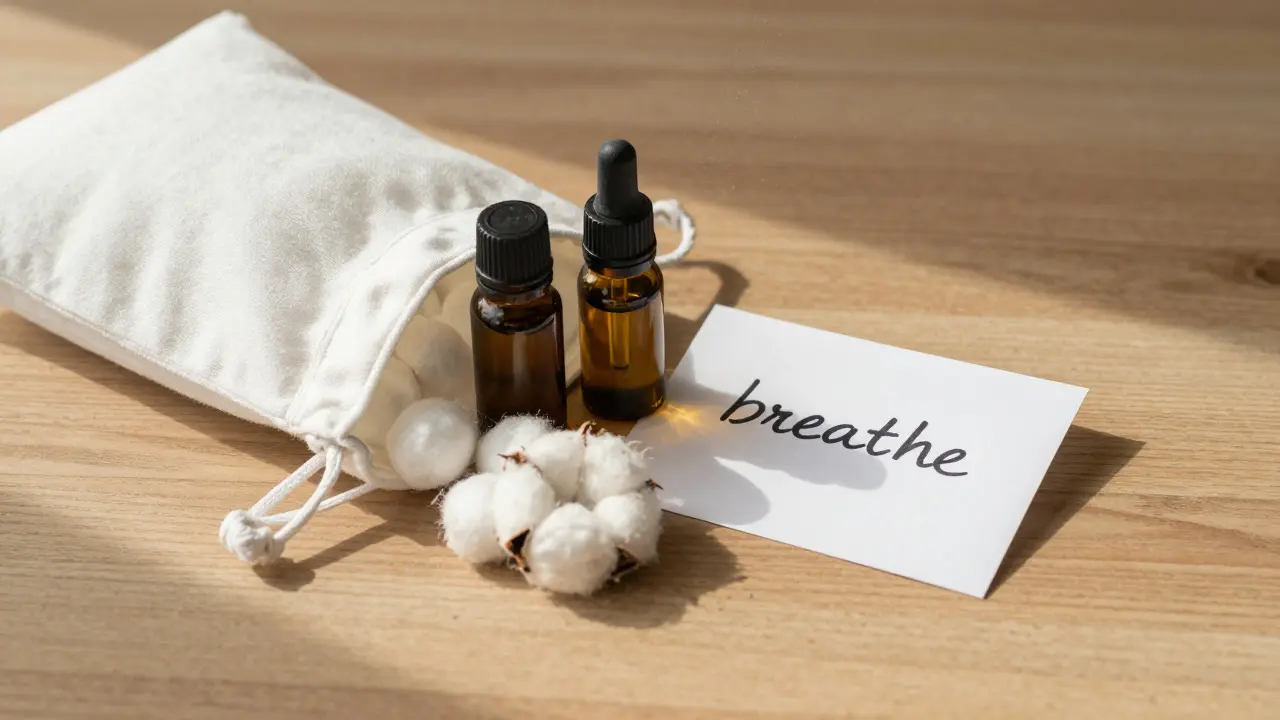
Preparing for Birth: What to Pack
If you want to include aromatherapy in your birth plan, here’s a simple checklist:
- 1 small glass bottle of lavender oil (5ml)
- 1 small glass bottle of peppermint oil (5ml)
- 1 small bottle of carrier oil (coconut or sweet almond)
- 5-10 clean cotton balls or small cloths
- A small notebook to note which scents help (and which don’t)
Keep it in your birth bag. Don’t overthink it. You don’t need to use them all. Just have them ready.
After Birth: Keeping Calm
Aromatherapy doesn’t stop when the baby is born. Postpartum fatigue, anxiety, and sleeplessness are real. Lavender oil on a pillow, a drop on your wrist before feeding, or a warm compress with a few drops of frankincense can help your body transition. It’s not just for labor-it’s for the days after, too.
Is aromatherapy safe during pregnancy?
Yes, but with caution. Lavender and peppermint are generally safe in the second and third trimesters when used topically or via inhalation. Avoid clary sage, rosemary, and jasmine before labor begins. Always consult your midwife or doctor before using any essential oils during pregnancy.
Can my partner use aromatherapy too?
Absolutely. Partners often feel helpless during labor. Holding a cotton ball with lavender oil can give them a way to be present without saying anything. A calm partner helps a birthing person feel safer. It’s a shared tool, not just a medical one.
Do hospitals allow essential oils?
Most do, as long as they’re used safely and don’t interfere with medical equipment. Hospitals often have policies requiring you to list the oils you plan to use. Always check ahead. Many birth centers encourage it.
Can I use aromatherapy if I’m having an epidural?
Yes. Even with an epidural, many people still feel pressure, anxiety, or emotional overwhelm. Aromatherapy doesn’t rely on pain sensation-it works on your nervous system. Lavender can still help you relax and feel more in control, even if you can’t feel the contractions.
How long do the effects last?
The calming effect usually lasts 10-20 minutes per inhalation. That’s why it’s best used in short bursts-during contractions, between pushes, or when you feel panic rising. It’s not a constant solution. It’s a reset button.
Final Thought: It’s About Control
Childbirth is unpredictable. You can’t control when labor starts, how long it lasts, or how strong the pain feels. But you can control what you bring into the room. A familiar scent. A quiet breath. A small bottle of lavender oil. These aren’t luxuries. They’re lifelines. For many, aromatherapy doesn’t take away the pain. It gives them back their calm-and sometimes, that’s enough.