
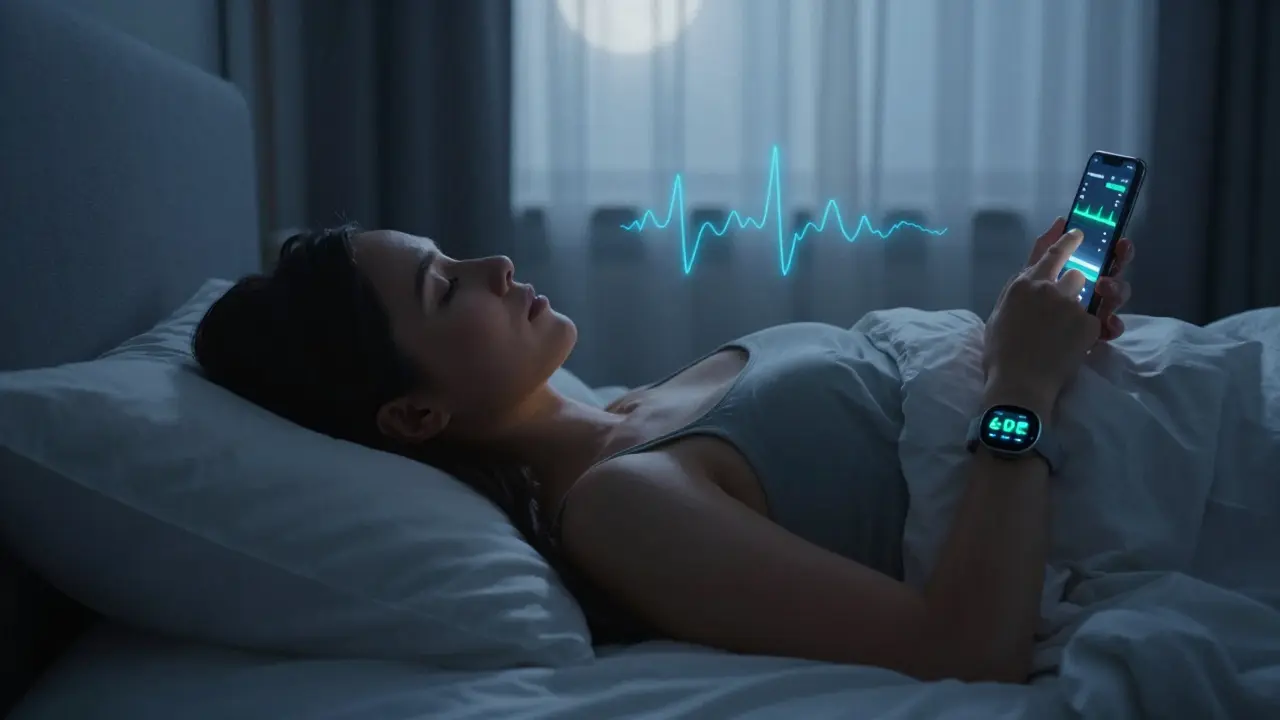
For years, people with insomnia have been told to take pills, cut out caffeine, or try meditation. But what if the real issue isn’t your mind racing at night-it’s your body stuck in overdrive? Biofeedback offers a quiet, science-backed way to reset your nervous system and finally sleep through the night-no drugs needed.
What Biofeedback Actually Does
Biofeedback isn’t magic. It’s not hypnosis or energy healing. It’s a simple tool that lets you see your body’s hidden signals in real time. Think of it like a mirror for your nervous system. You’re connected to sensors that measure things like heart rate, muscle tension, or skin temperature. A screen shows you how your body reacts to stress, relaxation, or even just breathing.
Most people with insomnia don’t realize their bodies are stuck in fight-or-flight mode. Even when they’re lying in bed, their muscles stay tight, their heart rate doesn’t drop, and their skin stays sweaty. Biofeedback makes these invisible patterns visible. Once you see them, you can learn to change them.
How It Works for Sleep
Insomnia isn’t just about thoughts. It’s a physical state. Your body stays alert because your autonomic nervous system won’t switch off. That’s where biofeedback steps in. There are three main types used for sleep:
- Heart rate variability (HRV) biofeedback - Teaches you to slow your breathing and calm your heart. Low HRV is linked to chronic stress and poor sleep.
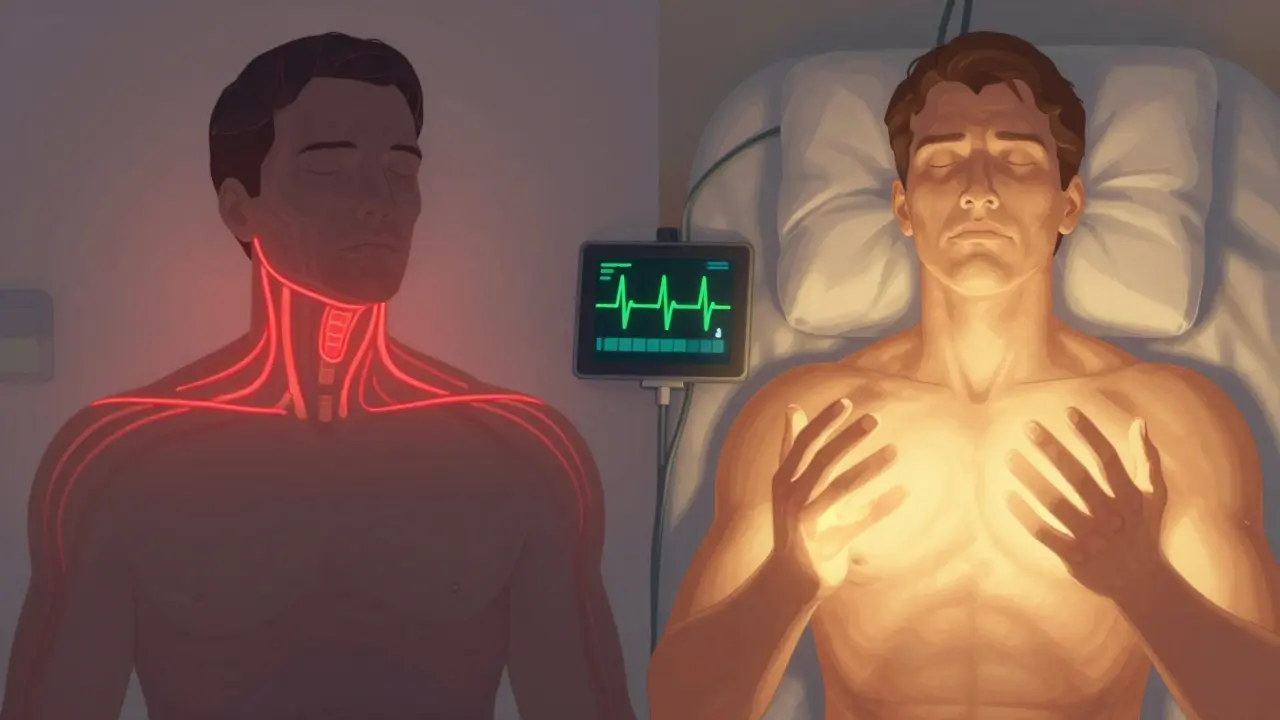
- Muscle tension biofeedback - Shows you how tightly your neck, jaw, or shoulders are clenched, even when you think you’re relaxed.
- Thermal biofeedback - Tracks hand temperature. Cold hands mean your body is in stress mode. Warming them signals relaxation.
A 2023 study published in the Journal of Clinical Sleep Medicine tracked 120 adults with chronic insomnia. Half used biofeedback for eight weeks. The other half took sleep medication. After six months, the biofeedback group had better sleep quality, fewer nighttime awakenings, and no side effects. The medication group reported dizziness, memory fog, and dependency.
Real-Life Example: Sarah’s Story
Sarah, 38, had been sleeping 4 hours a night for five years. She tried melatonin, weighted blankets, and sleep apps. Nothing worked. She started biofeedback after her therapist mentioned it. Her first session showed her heart rate stayed at 85 BPM even when she was "relaxed." Her hand temperature hovered around 78°F-signaling constant stress.
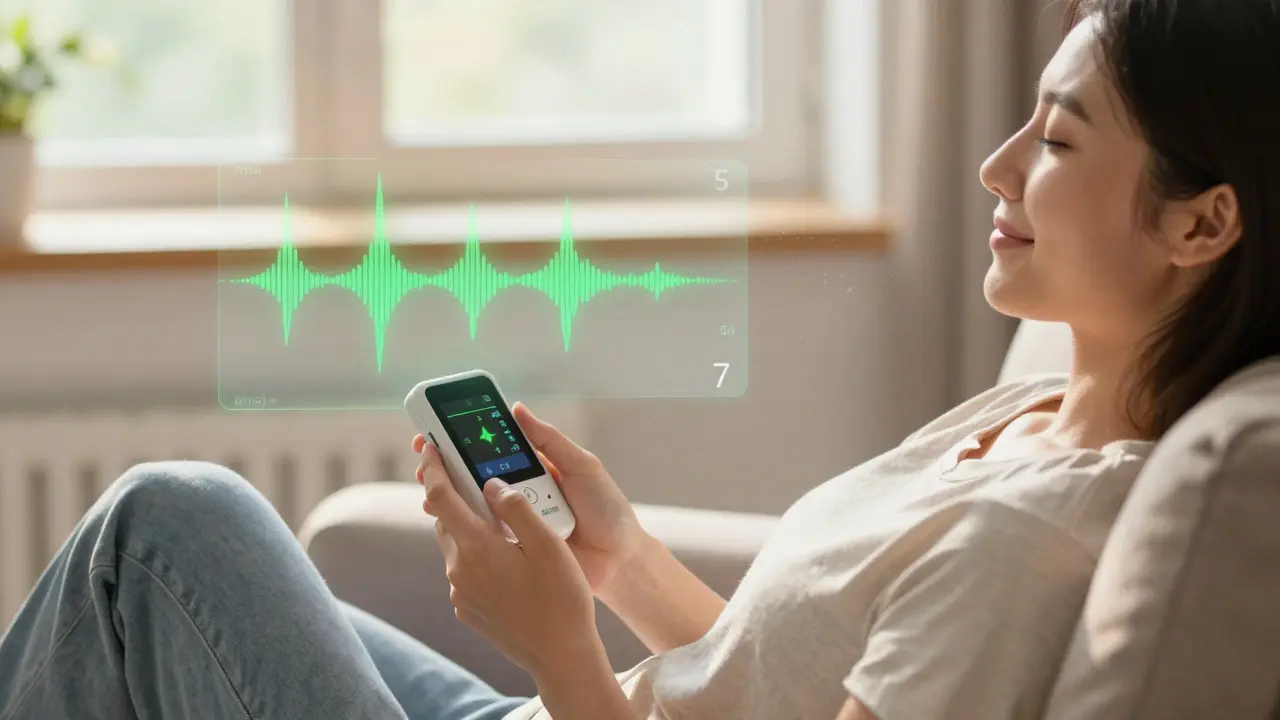
She practiced for 15 minutes a day, using a portable HRV device. She learned to breathe slowly-5 seconds in, 7 seconds out. Within two weeks, her heart rate dropped to 68 BPM at rest. By week four, she was falling asleep in under 20 minutes. After eight weeks, she stopped counting sheep. She started sleeping 7 hours.
Why It Works Better Than Pills
Medication masks symptoms. Biofeedback fixes the root. Sleep aids like Ambien or benzodiazepines suppress brain activity. They don’t teach your body how to relax naturally. Over time, your brain gets used to them. You need higher doses. You can’t sleep without them.
Biofeedback, on the other hand, retrains your nervous system. It’s like physical therapy for your body’s stress response. You learn to activate your parasympathetic nervous system-the one that says, "It’s safe to sleep now." That’s why the effects last. You don’t need a pill. You need the skill.
What You Need to Get Started
You don’t need a clinic. You don’t need expensive gear. Here’s what actually works:
- Start with a simple HRV monitor. Devices like the EliteHRV is a portable heart rate variability tracker designed for stress and sleep optimization. Also known as EliteHRV device, it connects to your smartphone and gives real-time feedback on your nervous system state.
- Practice daily for 10-15 minutes. Don’t wait until you’re exhausted. Do it in the afternoon, when you’re calm.
- Focus on breathing. Inhale slowly through your nose for 5 seconds. Exhale through your mouth for 7 seconds. Watch your HRV rise on the screen.
- Repeat. Consistency matters more than duration. Five days a week beats one long session.
Many people give up after a few tries because they don’t see instant results. But biofeedback is like learning to ride a bike. You don’t get it on day one. You get it after 10 tries. Then suddenly, it clicks.
Who It Works Best For
Biofeedback isn’t a cure-all. But it’s especially powerful for people who:
- Have trouble turning off their mind at night
- Feel physically tense even when resting
- Use caffeine or alcohol to manage stress
- Have tried meditation but still can’t sleep
- Are tired of relying on pills
If you’re someone who wakes up with a racing heart, clenched jaw, or stiff shoulders, biofeedback speaks directly to your body’s language. It doesn’t ask you to think differently. It asks you to feel differently.
Common Misconceptions
Some people think biofeedback is just for athletes or biohackers. It’s not. It’s for anyone who’s tired of lying awake.
Others think it’s expensive. A basic HRV monitor costs under $100. Many clinics offer group sessions for under $50 per month. Compared to years of sleep meds, it’s a bargain.
And no, you don’t need to be tech-savvy. The devices are designed like fitness trackers. You plug them in, open the app, and follow the breathing cues. It’s that simple.
What to Expect in the First Month
Week 1: You’ll notice your body is tenser than you thought. That’s normal. Awareness is step one.
Week 2: You’ll start to feel the difference after a session. Your shoulders might drop. Your breathing might slow. You’ll feel lighter.
Week 3: You’ll catch yourself breathing deeply without thinking. That’s your body learning.
Week 4: You might fall asleep faster. You might sleep longer. You might not even notice-you’re just sleeping.
The biggest change isn’t in your sleep. It’s in your daytime calm. You stop flinching at loud noises. You stop snapping at people. You stop feeling like you’re always one step away from burnout.
Where to Go Next
If you’re curious, start with a free app like BioGraph Infiniti is a clinical-grade biofeedback software used by therapists to train nervous system regulation. Also known as BioGraph software, it provides real-time feedback on physiological states and is often used in sleep therapy settings. or HeartMath is a system that uses HRV feedback to teach emotional self-regulation and reduce stress. Also known as HeartMath technique, it has been validated in over 200 peer-reviewed studies.. They offer guided breathing exercises and track your progress.
If you want deeper help, look for a therapist trained in biofeedback. They’ll use professional equipment and tailor sessions to your nervous system. Insurance sometimes covers it if you have a diagnosed sleep disorder.
And if you’ve tried everything else? Give biofeedback 30 days. No pills. No pressure. Just your breath, your body, and a little screen that shows you the truth: you’re already capable of sleeping. You just forgot how.
Can biofeedback cure insomnia permanently?
Biofeedback doesn’t "cure" insomnia like a pill. It retrains your nervous system to stop staying in high alert. Many people who stick with it for 6-8 weeks report long-term improvements. Some stop needing any sleep aids. But like exercise or meditation, it works best as a lifelong habit-not a one-time fix.
Is biofeedback better than CBT for insomnia?
CBT-I (Cognitive Behavioral Therapy for Insomnia) focuses on thoughts and habits. Biofeedback focuses on the body. They’re not rivals-they’re partners. Many therapists combine them. CBT-I helps you stop worrying about sleep. Biofeedback helps your body relax so sleep can happen. Together, they’re powerful.
Do I need a therapist to use biofeedback?
No. You can start with a simple HRV monitor and free apps. But if you’ve tried on your own and aren’t seeing progress, working with a trained therapist can make a big difference. They’ll help you interpret your data, adjust your breathing patterns, and troubleshoot what’s blocking your relaxation.
How long does each biofeedback session take?
You can see results with just 10-15 minutes a day. Most people do it in the morning or early afternoon-not right before bed. That’s because you’re training your nervous system, not forcing sleep. Over time, the effects carry over into nighttime.
Can biofeedback help with sleep apnea?
No. Sleep apnea is a physical blockage in your airway. It needs medical treatment like a CPAP machine. Biofeedback won’t fix that. But if you have insomnia on top of sleep apnea, biofeedback can help you relax and sleep more soundly between apnea events.
Insomnia isn’t about being weak. It’s about a body that’s forgotten how to rest. Biofeedback gives you the tools to remember.