
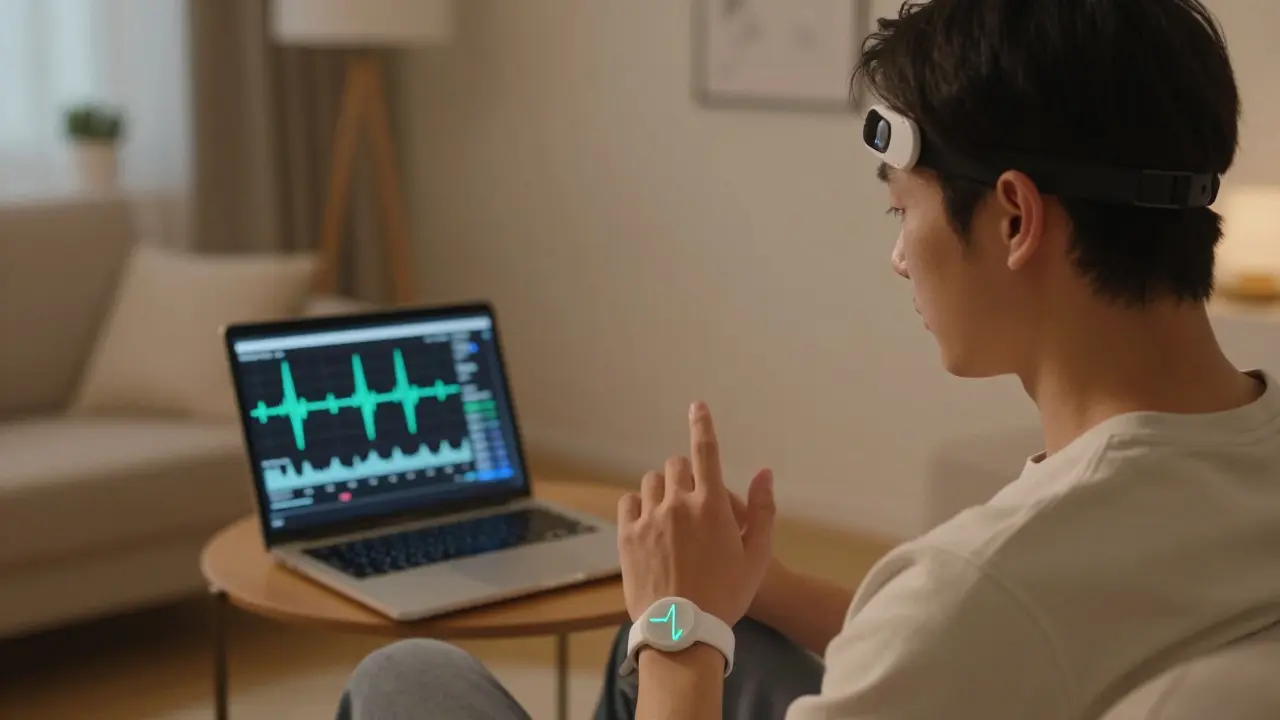
What if you could learn to calm your heart rate just by paying attention to it? Or lower your muscle tension without drugs, without meditation apps, just by seeing real-time data from your own body? That’s the power of biofeedback - a simple, science-backed tool that turns invisible internal signals into visible, manageable information.
What Biofeedback Actually Is (And What It’s Not)
Biofeedback isn’t magic. It’s not hypnosis. It’s not some high-tech gadget that forces your body to relax. It’s a training method. You attach sensors to your skin - on your forehead, chest, fingers, or back - and those sensors measure things your brain normally ignores: heart rate, skin temperature, muscle tension, sweat levels, even brainwave patterns. That data is displayed on a screen in real time. You watch it. You breathe. You shift your focus. And slowly, you learn how to change what you’re seeing.
Think of it like a fitness tracker for your nervous system. Instead of counting steps, you’re learning to control your stress response. A 2023 meta-analysis of over 80 clinical studies found that biofeedback significantly reduced symptoms in people with chronic stress, anxiety, and migraines - often as effectively as medication, but without side effects.
How Your Body Talks Back - The Key Signals
Your body is always sending signals. Most of the time, you don’t notice them. Biofeedback makes them impossible to ignore. Here are the five most common signals used in therapy:
- Heart rate variability (HRV): This measures how much your heart rate changes between beats. High HRV = calm, resilient nervous system. Low HRV = stuck in fight-or-flight mode. You can learn to raise it by slowing your breath.
- Electromyography (EMG): Measures muscle tension. If you’re clenching your jaw or hunching your shoulders all day, this tells you - and helps you unclench.
- Galvanic skin response (GSR): Tracks sweat on your skin. More sweat = more stress. Even if you feel fine, your palms might be sweating from hidden anxiety.
- Temperature feedback: Cold fingers often mean stress is constricting blood flow. Learning to warm them up teaches your body to relax its vascular response.
- Brainwave patterns (EEG): Used in neurofeedback, this shows if your brain is stuck in overdrive (beta waves) or needs more calm (alpha or theta waves).
These aren’t abstract concepts. People with chronic tension headaches report that seeing their EMG readings spike when they scroll through work emails is the first time they realized their stress wasn’t "just in their head." It was in their neck muscles - and they could change it.
Real-Life Use Cases: Who Benefits Most?
Biofeedback isn’t one-size-fits-all. But certain groups see dramatic results:
- People with chronic pain: A 2024 study at the University of Adelaide showed that 72% of participants with fibromyalgia reduced their pain scores by at least 30% after 8 weeks of EMG biofeedback training. They learned to release muscle tension before it turned into flare-ups.
- Those with anxiety or panic attacks: When your heart races during a panic attack, biofeedback gives you a visual anchor. Instead of fearing the spike, you see it - and then use slow breathing to bring it down. It breaks the fear-of-fear cycle.
- Students and professionals under constant pressure: A corporate wellness program in Melbourne tracked 150 employees using portable HRV biofeedback devices. After six weeks, 68% reported better focus, fewer headaches, and less emotional burnout.
- People with high blood pressure: Biofeedback helps train the autonomic nervous system to reduce resting heart rate and blood pressure. It’s not a replacement for medication, but many patients reduce their dosage under medical supervision.
- Athletes recovering from injury: Biofeedback helps retrain movement patterns. If you’re favoring one leg after a knee injury, EMG sensors show the imbalance - so you can correct it before it causes more damage.
How to Get Started - No Clinic Required
You don’t need to book a $200 session to try biofeedback. There are now affordable, FDA-cleared devices for home use.
Here’s how to begin:
- Choose your goal: Are you trying to reduce headaches? Lower anxiety? Sleep better? Pick one. Don’t try to fix everything at once.
- Select a device: For beginners, start with a simple HRV monitor like the HeartMath InnerBalance or the Polar H10 paired with a free app. For muscle tension, try a basic EMG sensor like the MyoTrac.
- Set up your space: Sit quietly. No phone. No distractions. Ten minutes a day is enough to start.
- Observe, don’t force: Watch your readings. Don’t try to make them change. Just notice what happens when you inhale for 4 seconds, hold for 4, exhale for 6. See how your HRV shifts.
- Track progress: After a week, look back at your data. Did your average stress levels drop? Did your muscle tension decrease after work calls? That’s your proof it’s working.
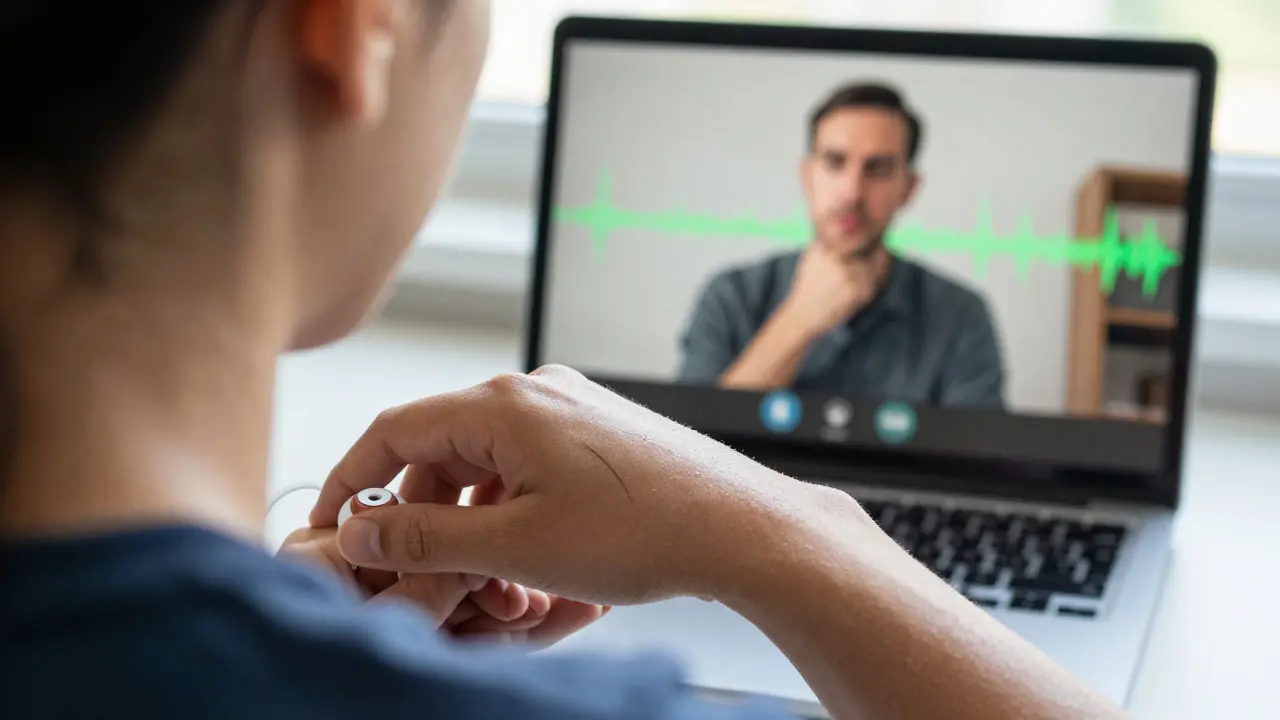
One user in Sydney told me she used her device during Zoom meetings. She noticed her GSR spiked every time her boss asked for updates. She started taking one slow breath before answering. Within two weeks, her anxiety dropped - and so did her boss’s tone. She wasn’t just managing her body. She was changing her interactions.
What Biofeedback Can’t Do
It’s important to be honest about limits. Biofeedback won’t:
- Replace therapy for trauma or clinical depression.
- Cure chronic illness like diabetes or autoimmune disorders.
- Work instantly. It takes consistent practice - like learning to play guitar.
- Be effective if you’re skeptical and don’t engage. You have to care about the numbers.
It’s a tool for self-awareness, not a quick fix. But that’s also why it lasts. Once you learn to read your body’s signals, you don’t need the device anymore. You carry the skill with you.
Why This Works: The Science Behind the Signal
The brain and body are always talking. Biofeedback just gives you a translator. When you see your heart rate climb, your brain doesn’t just register "I’m stressed." It starts asking: "How did that happen? What did I just do?" That self-observation triggers neuroplasticity - your brain rewires itself to respond differently.
Studies using fMRI scans show that after biofeedback training, the prefrontal cortex - the part responsible for decision-making and emotional control - becomes more active during stress. The amygdala - the fear center - quiets down. You’re not suppressing your emotions. You’re learning to regulate them.
This isn’t new science. NASA used biofeedback in the 1960s to train astronauts to handle extreme stress. Today, it’s in hospitals, schools, and living rooms - because it works when nothing else does.
What Comes Next?
Biofeedback is becoming more accessible. Wearables now combine HRV, GSR, and even EEG in one wristband. AI algorithms can predict your stress spikes before they happen. Some apps now give you voice cues: "Your heart rate is rising. Try exhaling longer."
But the core hasn’t changed. It’s still about paying attention. Not to your phone. Not to your to-do list. To your own body - and trusting what it’s telling you.
Is biofeedback safe?
Yes. Biofeedback is non-invasive and has no known side effects. The sensors only read your body’s signals - they don’t send any electricity or impulses into you. It’s like using a thermometer to check your temperature. You’re not being shocked or altered. You’re being informed.
How long until I see results?
Most people notice small changes within 3-5 sessions. Meaningful, lasting results usually take 6-12 weeks of consistent practice. Think of it like building muscle: one workout won’t transform you, but daily effort will.
Do I need a therapist to use biofeedback?
No, but it helps. Many people start on their own with affordable home devices. But if you have a serious condition like PTSD, chronic pain, or severe anxiety, working with a certified biofeedback therapist gives you personalized guidance and faster progress. Look for someone certified by the Biofeedback Certification International Alliance (BCIA).
Can kids use biofeedback?
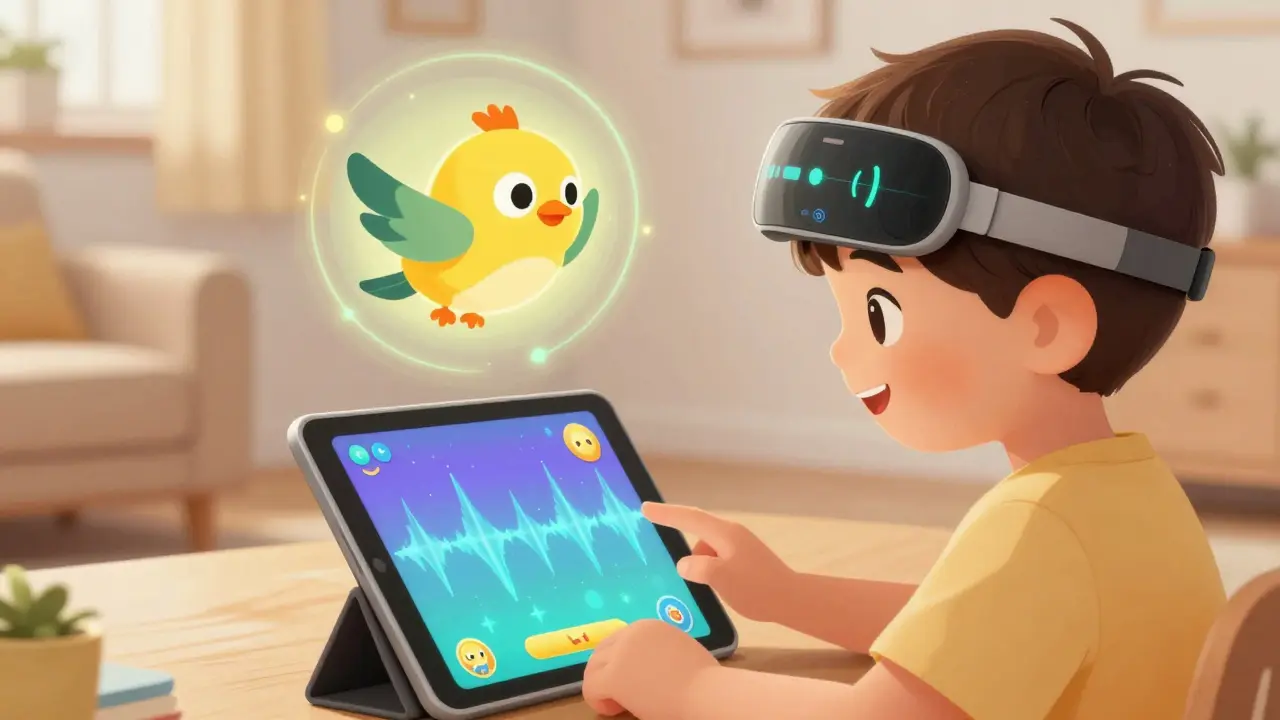
Absolutely. Children as young as 6 use biofeedback for ADHD, anxiety, and bedwetting. Games that turn heart rate or muscle tension into visual rewards (like making a character fly higher when calm) make it engaging. A 2025 study in the Journal of Pediatric Psychology showed that biofeedback improved attention span in kids with ADHD as effectively as stimulant medication - without the side effects.
Is biofeedback covered by insurance?
In Australia, some private health insurers cover biofeedback therapy under extras policies if provided by a registered practitioner. Medicare doesn’t cover it directly, but if you’re referred by a GP for chronic stress-related conditions, you might qualify for a Mental Health Treatment Plan that includes it. Always check with your provider.
Final Thought: Your Body Knows More Than You Think
You spend hours tracking your sleep, your steps, your calories. But how often do you check in with your breathing? Your jaw? Your shoulders? Biofeedback doesn’t ask you to change your life. It asks you to notice it. And once you start noticing, you realize you’ve had the power to change it all along.




Oct 20 2023