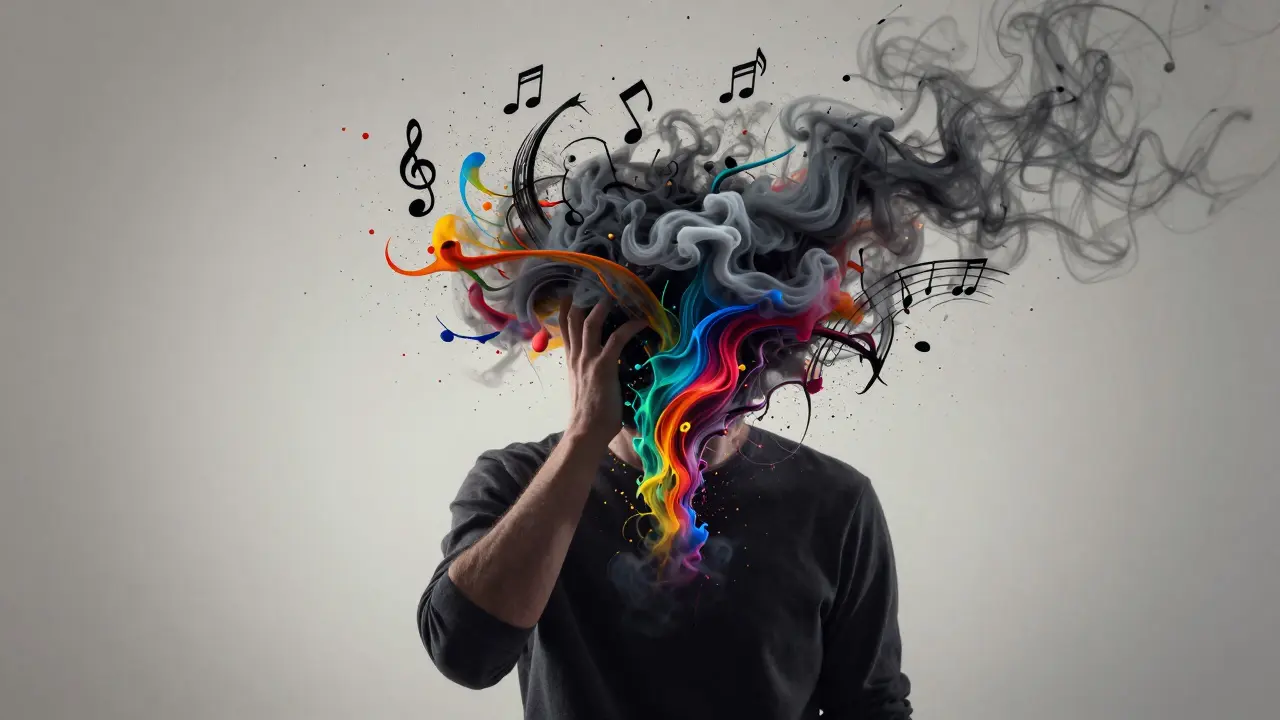
Ever feel like you have a knot in your chest or a cloud of anxiety that you just can't put into words? You're not alone. Most of us struggle to describe deep emotional pain, trauma, or even intense joy using only a vocabulary of spoken words. Sometimes, a conversation with a therapist feels too clinical or too direct, leaving us feeling exposed or stuck. This is where creative arts therapies is an umbrella term for therapeutic interventions that use the creative process-art, music, dance, and drama-to improve a person's physical, mental, and emotional well-being. Instead of asking "How do you feel?", these therapies ask "What does that feeling look like?" or "What does it sound like?"
Quick Highlights: How Creative Arts Help
- Bypasses the Logical Brain: Accesses emotions that are stored in the non-verbal parts of the brain.
- Provides a Safe Distance: Allows you to project feelings onto a canvas or a melody rather than facing them head-on.
- Builds Self-Awareness: Helps you spot patterns in your behavior and mood through visual or auditory cues.
- Empowers the Individual: Shifts the focus from being a "patient" to being a "creator."
Why Talking Isn't Always Enough
The human brain doesn't store trauma or deep emotion like a tidy filing cabinet of words. Instead, these experiences often live in the limbic system and the brainstem-areas responsible for survival and emotion, not language. When you're in a state of high stress, the prefrontal cortex (the part that handles logic and speech) can actually shut down. This is why people often "freeze" or find themselves unable to explain why they are crying or angry.
By using Art Therapy, which is a mental health profession that uses the process of making art to improve the psychological and emotional well-being of the person, you create a bridge. You aren't just talking about a memory; you're painting it, sculpting it, or drawing it. This shifts the experience from a terrifying internal memory to an external object that you can observe, analyze, and eventually change.
The Different Paths of Creative Expression
Depending on how you interact with the world, different mediums work better. Some people find the silence of a paintbrush soothing, while others need the rhythmic movement of dance to release tension. Here are the primary modalities used in clinical settings today.
Music Therapy is an evidence-based clinical practice that uses music interventions to accomplish individualized goals. It's not about being a virtuoso; it's about the vibration, the rhythm, and the lyric. For someone with severe depression, simply drumming a beat can stimulate the motor cortex and provide a sense of agency and power. For those with PTSD, songwriting can help reorganize a chaotic narrative into a structured story.
Then there is Dance/Movement Therapy, which is the psychotherapeutic use of movement to promote the emotional, social, cognitive, and physical integration of the person. Our bodies keep score of our stress. You might notice your shoulders are permanently hunched or your jaw is clenched. Through guided movement, you can "shake off" the physical remnants of a panic attack or use dance to reclaim a sense of bodily autonomy after trauma.
Finally, Drama Therapy uses role-play and theatrical improvisation to help patients explore different facets of their identity and practice new ways of interacting with others. It allows you to "try on" a different version of yourself in a safe environment, acting out a difficult conversation with a parent or boss before doing it in real life.
| Therapy Type | Primary Tool | Best For... | Emotional Impact |
|---|---|---|---|
| Art Therapy | Visual Media | Trauma, Anxiety, Grief | Externalizing inner chaos |
| Music Therapy | Sound/Rhythm | Depression, Autism, Dementia | Mood regulation & connection |
| Dance Therapy | Body Movement | Eating Disorders, PTSD | Somatic release & grounding |
| Drama Therapy | Role-play/Story | Social Anxiety, Personality Disorders | Identity exploration & empathy |
How it Actually Works in a Session
If you walk into a creative arts therapy session, don't expect a formal art class. There are no grades and no "wrong" ways to draw. The focus is on the process, not the product. A therapist isn't looking for a masterpiece; they are looking for a clue. If you paint a small, isolated figure in the corner of a massive black canvas, the therapist won't tell you the proportions are wrong. Instead, they might ask, "What does it feel like to be that small figure?"
This is called "triangulation." In traditional therapy, it's just you and the therapist. In arts therapy, there is a third element: the artwork. This creates a healthy distance. It's much easier to say, "The colors in this painting look angry," than to say, "I am feeling an overwhelming rage that I can't control." By talking about the art, you're actually talking about yourself, but with a protective layer that makes the process less threatening.
The Science of the "Creative Flow"
When we engage in creative acts, we often enter a state called Flow, which is an optimal state of consciousness where we feel and perform our best, characterized by total absorption in an activity. During flow, the brain reduces activity in the default mode network-the part of the brain associated with rumination and self-criticism.
Essentially, the "inner critic" goes quiet. For someone struggling with chronic anxiety, this is a profound relief. The rhythmic act of knitting, the repetitive stroke of a paintbrush, or the steady beat of a drum lowers cortisol levels and increases the production of dopamine. This doesn't "cure" the underlying trauma, but it regulates the nervous system, making the person more resilient and open to the cognitive work of therapy.
Practical Ways to Integrate Creativity at Home
You don't always need a licensed clinician to benefit from the power of expression. While self-help isn't a replacement for professional therapy-especially for deep trauma-you can use "creative toolkits" to manage daily stress. Try these simple shifts in your routine:
- Emotion Mapping: Instead of writing a journal entry, assign colors to your feelings. If your day felt "heavy blue" or "jagged red," scribble those colors across a page. Don't draw a picture; just let the color move.
- The Playlist Bridge: Create a playlist for the emotion you have and another for the emotion you want. Use the first to acknowledge your pain and the second to gently pull yourself toward a calmer state.
- Somatic Shaking: If you feel an energy surge of anger or anxiety, spend two minutes shaking your limbs vigorously. This mimics the "shaking off" behavior seen in animals after a stressful event and helps reset your nervous system.
- Guided Imagery Sculpting: Use a piece of aluminum foil or clay to create a shape that represents your current stress. Once it's finished, decide what to do with it: flatten it, rip it, or reshape it into something supportive.
Common Pitfalls and Misconceptions
One of the biggest hurdles people face is the "I'm not an artist" block. They believe that if they can't draw a straight line, art therapy won't work. This is a fundamental misunderstanding. In a clinical setting, a scribble is just as valuable as a portrait. In fact, sometimes the lack of skill is where the most honest expression happens, because the person isn't trying to perform or impress.
Another misconception is that these therapies are just "distractions" from the real work. On the contrary, they are often the entry point to the real work. Many patients who spent years in traditional talk therapy without progress find that a single session of music or art therapy unlocks a memory or a feeling that had been repressed for decades. The art doesn't distract from the problem; it reveals the problem.
Do I need to be talented to try creative arts therapies?
Absolutely not. These therapies are not about artistic skill or aesthetic beauty. They are about using creative materials as a tool for communication. The focus is on the process of creating and the emotions it evokes, not the final look of the piece. A simple smudge of charcoal can be more therapeutically significant than a perfect painting.
How is this different from just painting or listening to music for fun?
While doing art for fun is relaxing, creative arts therapy is a structured process led by a trained professional. A therapist helps you interpret the symbols you create, challenges the patterns that emerge in your art, and uses the creative process to reach specific clinical goals, such as processing grief or managing a disorder.
Can these therapies replace traditional talk therapy?
For some, they can be the primary modality, but they are most often used as a complementary approach. Many people find a "hybrid" approach works best-using art or music to unlock an emotion and then using talk therapy to analyze and integrate that feeling into their life story.
Which therapy is best for anxiety vs. depression?
While all can help, those with high anxiety often benefit from the grounding and sensory focus of Art Therapy or Dance Therapy. Those struggling with the lethargy and numbness of depression often find Music Therapy helpful because the external rhythm and sound can "jumpstart" emotional responses and provide a sense of energy.
Is it safe for people with severe trauma or PTSD?
Yes, and in many cases, it is safer than talk therapy. Because it doesn't require a direct verbal recount of the trauma, it reduces the risk of re-traumatization. However, it must be done with a certified therapist who knows how to handle the intense emotions that might surface during the creative process.
Next Steps for Your Emotional Journey
If you're curious about trying this, start by identifying where you feel your emotions in your body. Do you feel a tightness in your throat? A heaviness in your chest? This is your starting point. If you're looking for professional help, search for credentials like ATR (Art Therapist Registered) or MT-BC (Music Therapist Board Certified) to ensure you're working with a licensed clinician.
For those who prefer a gentler start, try a "low-stakes" creative habit. Spend ten minutes a day sketching without looking at the paper, or create a mood-based playlist. The goal isn't to make something a gallery would want; the goal is to make something that feels like you. Once you realize that the act of creating is a form of talking, the world becomes a lot louder and more colorful.