
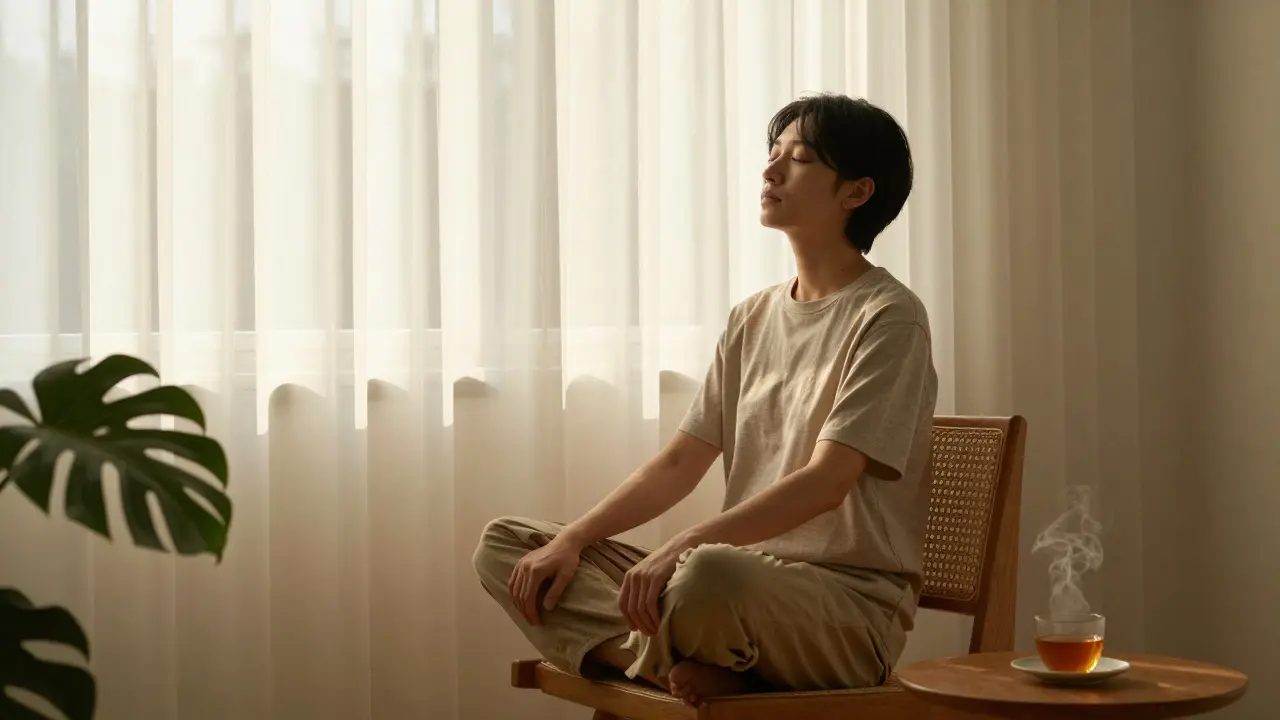
Stress doesn’t wait for a good time. It shows up when you’re stuck in traffic, when your inbox hits 200 unread emails, or when you’re lying awake at 3 a.m. wondering if you’re doing everything right. The truth? Stress isn’t the enemy. It’s your body’s alarm system. But when that alarm never turns off, it starts wearing you down-sleepless nights, constant tension, irritability, even headaches that won’t quit. The good news? You don’t need a month-long retreat or a fancy app to turn it off. Real stress reduction happens in small, repeatable moments.
What Actually Reduces Stress? (It’s Not What You Think)
Most people think stress reduction means meditation apps, spa days, or buying expensive candles. Those can help, sure. But they’re not the core. The real magic happens when you change how your nervous system reacts-not just how you feel in the moment.
Here’s what science says works: deep breathing, movement, and sensory grounding. Not because they’re trendy, but because they directly signal your brain: you’re safe now. When you’re stressed, your sympathetic nervous system (the ‘fight or flight’ part) is running full throttle. To calm it, you need to activate the parasympathetic system-the ‘rest and digest’ switch. And you can do that with your breath.
Try this right now: inhale for 4 seconds, hold for 2, exhale for 6. Do that five times. Notice how your shoulders drop, your jaw loosens. That’s your body switching gears. No app needed. No subscription. Just your lungs.
The 2-Minute Reset That Changes Everything
One of the most underrated tools? The 2-minute sensory reset. It’s simple. When you feel overwhelmed, stop. Look around. Name:
- Five things you can see
- Four things you can touch
- Three things you can hear
- Two things you can smell
- One thing you can taste
This isn’t a mindfulness gimmick. It’s neuroscience. When your brain is stuck in panic mode, it’s focused on threats. This exercise forces it to engage with the present environment-real, tangible, safe things. It breaks the loop. I’ve seen people use this in hospital waiting rooms, before job interviews, even in the middle of a heated argument. It doesn’t fix the problem. But it gives you back your calm.
Move Your Body, Quiet Your Mind
You don’t need to run a marathon or do yoga poses in a studio. Just move. Walk. Stretch. Dance in your kitchen. The key is rhythm. Repetitive motion-like walking, swimming, or even knitting-triggers a calming effect. Studies from the University of California found that 20 minutes of brisk walking lowered cortisol levels more than sitting quietly for the same time.
Why? Movement releases endorphins, yes. But more importantly, it resets your body’s tension patterns. When you’re stressed, your muscles tighten-neck, shoulders, jaw. Movement tells those muscles: it’s okay to relax. I’ve had clients who started taking 10-minute walks after lunch. Within two weeks, their afternoon headaches disappeared. Not because they changed their workload. Because they changed their body’s stress response.
Stop Trying to ‘Clear Your Mind’
Everyone says: ‘Just meditate and clear your mind.’ But if you’ve ever tried that, you know-it’s impossible. Your brain isn’t designed to go blank. It’s designed to scan for danger. Trying to force silence only makes you frustrated.
Instead, try focused attention. Pick one thing: your breath, the sound of rain, the feeling of your feet on the floor. When your mind wanders (and it will), gently bring it back. No judgment. No ‘I’m bad at this.’ Just return. That’s the practice. Not emptying your mind. Training your focus.
Apps like Insight Timer or Calm can guide you, but you don’t need them. Set a timer for 5 minutes. Sit. Breathe. Notice. That’s it.
The Hidden Stress Triggers You’re Ignoring
Stress doesn’t just come from big events. It piles up from tiny things you don’t even notice:
- Checking your phone within 5 minutes of waking up
- Drinking coffee on an empty stomach
- Scrolling before bed instead of winding down
- Skipping meals because you’re ‘too busy’
- Never saying no
These aren’t ‘bad habits.’ They’re nervous system irritants. Each one keeps your body in a low-grade alert state. Fixing them doesn’t require a complete life overhaul. Start with one. Pick the one that feels most obvious. Maybe it’s putting your phone in another room for the first 30 minutes of your day. Or drinking a glass of water before your coffee. Small shifts create big changes over time.

Why You Need a Personal Stress Toolkit
There’s no one-size-fits-all fix. What calms one person might irritate another. The goal isn’t to find the ‘best’ technique. It’s to build your own toolkit.
Try this: List five things that make you feel grounded. Maybe it’s listening to vinyl records, watering plants, pacing your backyard, or writing in a notebook. Now, pick one to use daily for two weeks. Don’t overthink it. Just do it. At the end of two weeks, ask yourself: Did I feel calmer? More in control? If yes, keep it. If not, swap it for something else.
Your toolkit should include:
- One breathing technique
- One movement habit
- One sensory reset
- One daily ritual that feels like a pause
Keep it simple. Too many options mean you’ll never use any of them.
Stress Isn’t Going Away. But You Can Change How It Affects You
Life won’t get less busy. Work won’t get easier. People will still be demanding. But you don’t have to carry the weight like it’s yours to hold. Stress reduction isn’t about escaping pressure. It’s about building resilience-so pressure doesn’t break you.
Start small. Pick one technique from above. Try it for seven days. Notice how your body responds. Don’t wait for perfection. Don’t wait for ‘the right time.’ Do it when you’re tired. Do it when you’re annoyed. Do it when you think it won’t work.
That’s when it matters most.
How long does it take for stress reduction techniques to work?
Some techniques, like deep breathing or the 5-4-3-2-1 sensory reset, work in under a minute. Others, like building a daily movement habit or changing your morning routine, take weeks to show lasting change. The key is consistency, not intensity. Doing a 2-minute reset three times a day is more effective than one 30-minute session once a week.
Can stress reduction techniques replace therapy or medication?
No. If you’re dealing with chronic anxiety, depression, or trauma, techniques like breathing and grounding are helpful tools-but not replacements for professional care. Therapy and medication address root causes. Stress reduction helps manage symptoms. Think of them as complementary. Many therapists now incorporate breathing and mindfulness into treatment plans because they work well together.
What’s the best time of day to practice stress reduction?
There’s no single ‘best’ time. But the most effective time is when you’re most likely to stick with it. For most people, that’s first thing in the morning (before the day gets chaotic) or right before bed (to unwind). If you’re dealing with acute stress during the day, use a quick reset right when you feel it rising. The goal is to make it a habit, not to wait for the perfect moment.
Do I need special equipment or apps for stress reduction?
No. While apps and props like weighted blankets or essential oils can help, they’re not necessary. The most powerful tools are your breath, your body, and your senses. You already have everything you need. A quiet corner, five minutes, and the willingness to pause-that’s all it takes.
Why do some stress techniques work for others but not for me?
Because everyone’s nervous system responds differently. Someone who finds peace in silence might feel more anxious in it. Someone else might need movement to release tension. It’s not about what’s ‘right’-it’s about what works for your body. Experiment. Try different methods. Pay attention to how you feel afterward. Your body will tell you what fits.

Mar 7 2026



Nov 26 2023