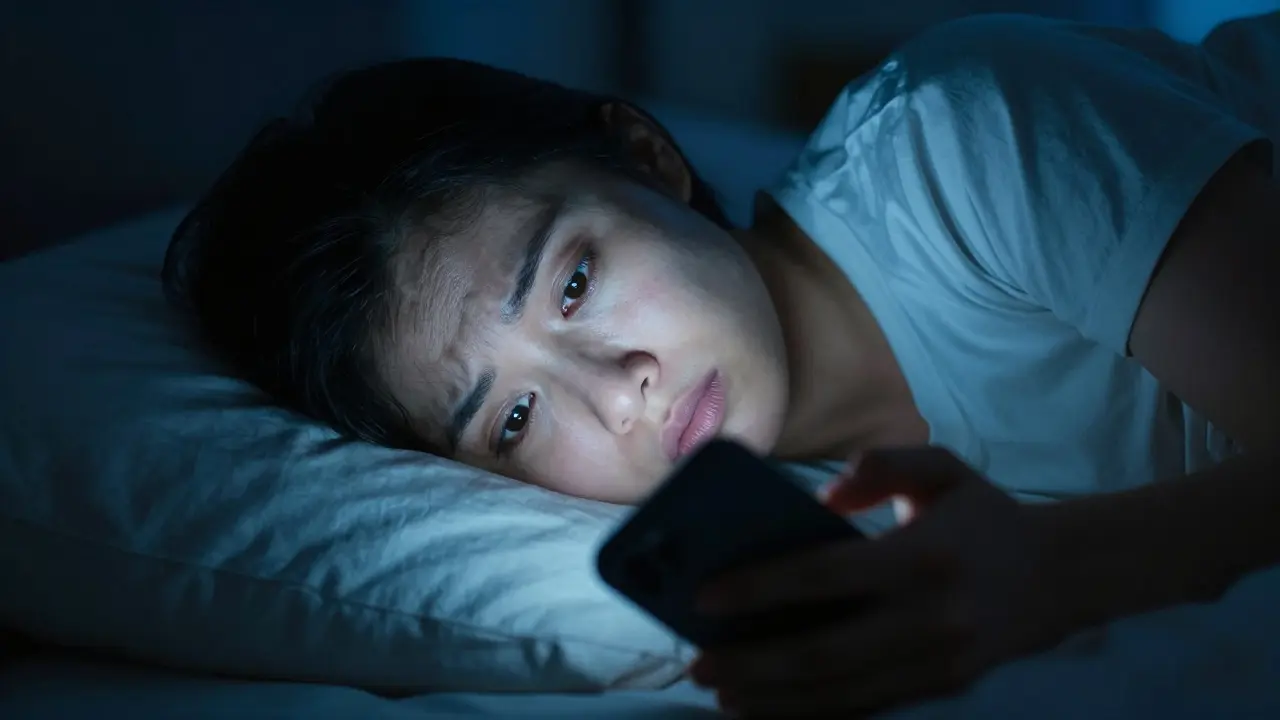
You check your pulse while lying in bed. You search a mild headache on Google until you find something terrifying. You feel a twinge in your shoulder and immediately think it’s a sign of heart trouble. If this sounds familiar, you are not alone, and more importantly, you are not broken. You are dealing with health anxiety, which is a condition characterized by excessive fear and worry about having or acquiring a serious illness despite medical reassurance. It used to be called hypochondria, but that term carries a stigma that doesn’t help anyone. Today, we understand it as a real, treatable mental health challenge that affects how you perceive your body.
The good news? You can learn to manage it. This isn’t about ignoring your body or pretending everything is fine. It’s about changing the relationship between your thoughts, your physical sensations, and your emotional responses. Let’s look at practical ways to take back control.
Understanding the Loop of Health Worry
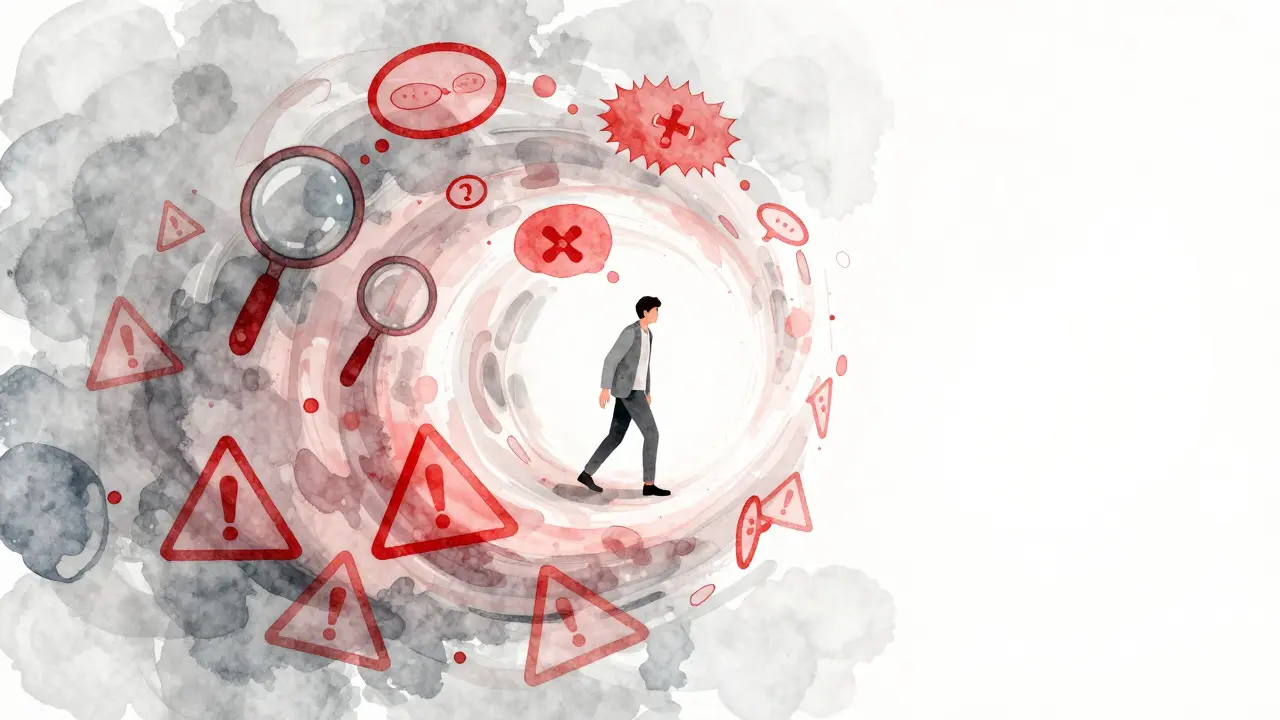
To fix health anxiety, you first need to see how it works. It operates like a vicious cycle. It starts with a normal bodily sensation-maybe your stomach gurgles, your vision blurs for a second, or you feel tired. For most people, these sensations fade into the background. For someone with health anxiety, they become red flags.
Your brain jumps to a worst-case scenario. "That’s cancer." "That’s a stroke." Then comes the urge to seek certainty. You might check your symptoms online, ask friends for their opinion, or rush to the doctor. When you get reassurance, you feel relieved-for a short time. But that relief fades quickly, and the next time you feel a strange sensation, the cycle starts all over again. The problem isn’t the sensation; it’s the meaning you attach to it.
Stop the Search Engine Spiral
One of the biggest triggers for health anxiety is the internet. Medical information online is designed to list every possible cause for a symptom, including the rarest and most severe ones. When you search "dizziness and nausea," the top results often mention serious conditions before common ones like dehydration or stress. This creates a confirmation bias where your anxious brain latches onto the scary possibilities.
- Set strict boundaries: Decide in advance that you will not search for symptoms after a certain hour or when you feel stressed.
- Use trusted sources only: If you must look something up, stick to reputable sites like the Mayo Clinic or government health departments, and read the whole article, not just the headlines.
- Delay the urge: When you feel the impulse to search, wait ten minutes. Often, the urgency passes.
Think of Google as a library with no librarian. It gives you all the books, including the ones written by conspiracy theorists. You need to be the librarian for yourself.
Redefine Your Relationship with Body Sensations
People with health anxiety often live in a state of hyper-vigilance. You are constantly scanning your body for signs of trouble. This constant monitoring actually makes you more sensitive to sensations. It’s like putting a microphone on a quiet room-you start hearing every creak and hum. Over time, you interpret normal noise as danger.
The goal isn’t to stop feeling sensations. It’s to change how you label them. Instead of thinking, "This pain means I’m sick," try thinking, "This is just a sensation. It might be uncomfortable, but it’s not dangerous." This shift requires practice. Start small. Notice a sensation without judging it. Just observe it. Is it sharp? Dull? Does it move? By treating sensations as data rather than threats, you reduce the emotional charge they carry.
Practice Mindfulness Without Judgment
Mindfulness is often misunderstood as trying to empty your mind. That’s impossible and frustrating. Real mindfulness is about paying attention to the present moment without judgment. For health anxiety, this means acknowledging your worries without fighting them or feeding them.
- Find a quiet space: Sit comfortably and close your eyes if you feel safe doing so.
- Focus on your breath: Notice the air entering and leaving your nose. Don’t try to control it; just watch it.
- Notice distractions: When a thought about your health pops up, acknowledge it. Say to yourself, "I’m having a thought that I might be sick." Then gently return your focus to your breath.
- Be kind to yourself: If your mind wanders, don’t criticize yourself. Wandering is part of the process. Just bring it back.
This practice helps you realize that thoughts are just thoughts. They aren’t facts. A thought saying "You have a heart condition" is not the same as an ECG showing irregular rhythms. Mindfulness builds the muscle of detachment, allowing you to let worries pass without engaging with them.
Cognitive Behavioral Therapy (CBT) Strategies
Cognitive Behavioral Therapy is a structured psychological treatment that helps individuals identify and change negative thought patterns and behaviors. It is considered the gold standard for treating health anxiety. While working with a therapist is ideal, you can apply some core CBT principles on your own.
The key is identifying cognitive distortions. These are logical errors your brain makes under stress. Common distortions in health anxiety include:
- Catastrophizing: Assuming the worst possible outcome is inevitable.
- Overgeneralization: Taking one minor symptom and applying it to your entire health status.
- Emotional reasoning: Believing that because you feel scared, there must be a real threat.
To challenge these thoughts, ask yourself: What is the evidence for this thought? What is the evidence against it? What would I tell a friend who had this same worry? Often, you’ll find that the evidence for the catastrophic thought is weak, while the evidence for a benign explanation is strong.

Limit Reassurance Seeking
Reassurance seeking feels helpful in the moment. You ask your partner, "Do I look pale?" or you visit the doctor for another test. When they say you’re fine, you relax. But this relaxation is temporary. In fact, each time you seek reassurance, you teach your brain that uncertainty is intolerable and that you can’t trust your own judgment. You become dependent on external validation to feel safe.
Gradually reducing reassurance seeking is hard but necessary. Start by setting limits. Tell your family and friends that you are working on managing your health anxiety and that you won’t be asking for symptom checks. If you feel the urge to call your doctor, write down why you want to do it. Read it later. Often, you’ll see that the urge was driven by anxiety, not a genuine medical concern.
| Situation | Anxious Response | Healthy Response |
|---|---|---|
| Feeling dizzy | Searches for brain tumor symptoms; lies down immediately | Sits down, drinks water, waits to see if it passes |
| Stomach ache | Worries about ulcers; avoids eating out of fear | Eats bland food; monitors for other signs like fever |
| Doctor visit | Asks multiple questions seeking absolute guarantees | Asks specific questions about diagnosis and treatment plan |
Build a Life Beyond Health
When health anxiety takes over, your world shrinks. Your conversations revolve around symptoms. Your hobbies are put on hold. Your social life suffers because you’re too worried to go out. This narrowing of focus reinforces the anxiety. The more you focus on health, the bigger it becomes in your mind.
To counter this, you need to rebuild your life. Engage in activities that distract you and give you a sense of accomplishment. Exercise is particularly powerful. It not only improves physical health but also reduces anxiety by releasing endorphins. Join a club, volunteer, or pick up a new skill. The goal is to create moments where you forget to check your body. When you’re deeply engaged in painting, coding, or hiking, your brain stops scanning for threats. These experiences remind you that life is more than just staying alive.
When to Seek Professional Help
Self-help strategies work well for mild to moderate health anxiety. However, if your anxiety is severely impacting your daily life, causing panic attacks, or leading to depression, you should seek professional help. A therapist specializing in anxiety disorders can provide personalized guidance. Cognitive Behavioral Therapy is highly effective, and in some cases, medication like SSRIs may be recommended to help balance brain chemistry.
Don’t wait until you hit rock bottom. Early intervention leads to better outcomes. Talk to your primary care physician about your concerns. Be honest about how much time you spend worrying about your health. They can refer you to a mental health specialist who understands health anxiety specifically.
Is health anxiety the same as being cautious about my health?
No. Being cautious involves taking reasonable steps to protect your health, like exercising and eating well. Health anxiety involves excessive, persistent worry that interferes with daily life, despite medical reassurance. Caution is proactive; health anxiety is reactive and driven by fear.
Can health anxiety cause physical symptoms?
Yes. Anxiety triggers the body's fight-or-flight response, which can cause real physical symptoms like rapid heartbeat, sweating, dizziness, and stomach issues. These symptoms are harmless but can fuel further anxiety, creating a feedback loop.
How long does it take to overcome health anxiety?
There is no fixed timeline. Some people see improvement in a few weeks with therapy, while others take months or years. Consistency in practicing coping skills is key. Progress is often non-linear, with good days and bad days, but overall trends toward reduced anxiety.
Should I avoid going to the doctor entirely?
No. Regular check-ups are important for preventive care. The goal is to stop unnecessary visits driven by anxiety. Work with your doctor to establish a routine schedule for exams and tests, so you know when to expect them and don't feel the need to seek extra reassurance.
What role does genetics play in health anxiety?
Research suggests that anxiety disorders, including health anxiety, can run in families. Genetics may predispose you to heightened sensitivity to stress and bodily sensations. However, environment and learned behaviors also play significant roles, meaning you can change your response patterns regardless of genetic risk.