

Have you ever felt a strange twinge in your chest and immediately convinced yourself it was heart failure? Or noticed a small bump on your neck and spent three sleepless nights researching rare cancers online? If this sounds familiar, you are not just being cautious; you might be trapped in the cycle of health anxiety, also known as illness anxiety disorder or historically referred to as hypochondria. It is a condition where the fear of having a serious disease becomes more debilitating than any actual physical ailment. You check your pulse obsessively, scan your body for changes, and seek reassurance from doctors only to feel anxious again within hours. This article breaks down exactly why this happens and gives you concrete steps to stop the spiral.
Understanding the Mechanism of Health Anxiety
To break the chains, you first need to understand what forged them. Health anxiety is not a character flaw or a sign of weakness. It is a malfunction in how your brain processes threat signals. Normally, when you feel pain or discomfort, your brain assesses the risk and moves on. For someone with health anxiety, the alarm system is stuck in the 'on' position. Every minor bodily sensation-a headache, a twitch, a change in bowel habits-is interpreted as catastrophic evidence of impending doom.
This process involves a feedback loop involving several key psychological concepts. First, there is cognitive distortion, specifically catastrophizing, which is the habit of assuming the worst possible outcome without evidence. Second, there is somatic hyperawareness, or heightened sensitivity to internal bodily sensations. When you focus intensely on a part of your body, you start noticing things that everyone else ignores. This increased awareness confirms your fear, leading to more checking, which leads to more anxiety. It is a self-perpetuating cycle that feels impossible to escape until you identify the specific behaviors fueling it.
The Role of Cyberchondria and Information Overload
In the digital age, health anxiety has found a new amplifier: the internet. The phenomenon of cyberchondria, or compulsive online health searching, has become a primary driver of modern health anxiety. Search engines are designed to show you popular results, and unfortunately, dramatic and severe conditions often rank higher because they generate more clicks. You type in "mild dizziness," and the top results discuss strokes, tumors, and neurological disorders. Rare diseases are highlighted because they are unique, not because they are likely.
This creates a distorted view of probability. You begin to believe that because a symptom *can* be associated with a rare cancer, it *is* likely to be one. This is known as the availability heuristic. The more you search, the more your brain encodes these scary possibilities as real threats. Breaking this chain requires a strict digital boundary. It means recognizing that general web searches are terrible tools for personal medical diagnosis. They provide information, but they lack context, nuance, and clinical judgment.
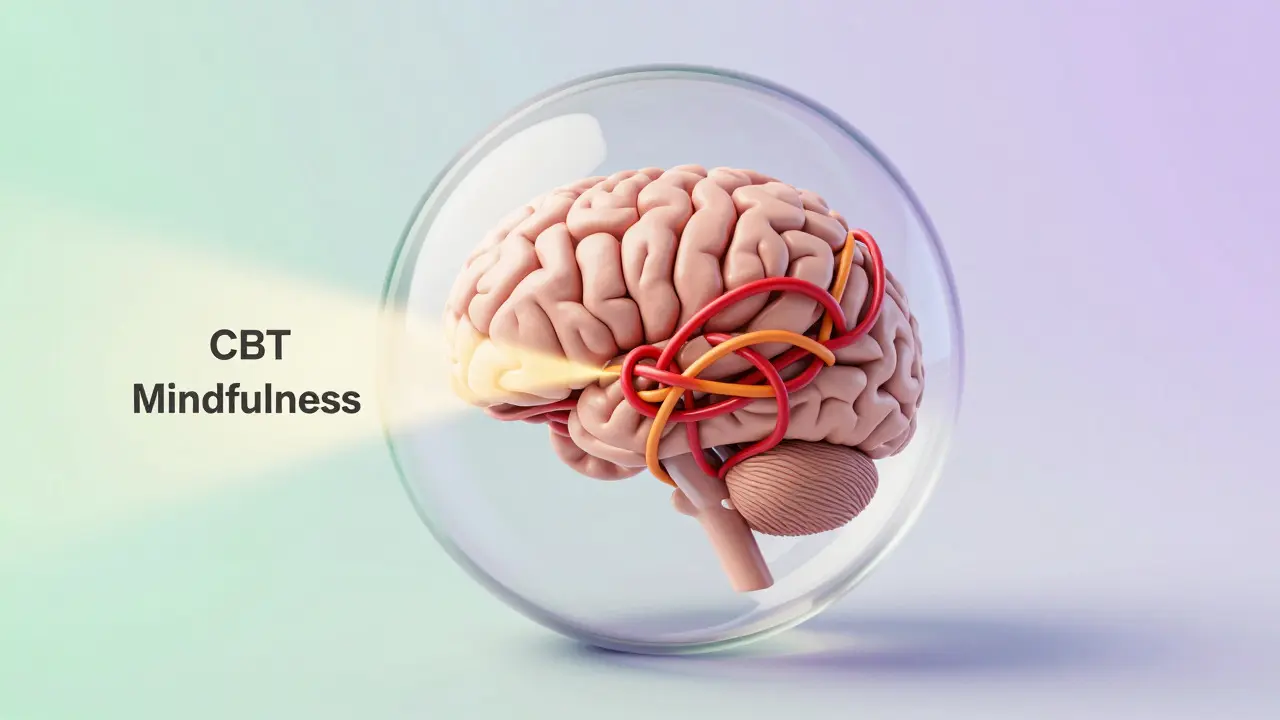
Identifying Safety Behaviors That Keep You Stuck
One of the most counterintuitive aspects of health anxiety is that the actions you take to feel safe actually make you more anxious in the long run. These are called safety behaviors. Common examples include:
- Body Checking: Frequently examining moles, feeling for lumps, or checking your pulse and blood pressure multiple times a day.
- Reassurance Seeking: Asking friends, family, or doctors repeatedly if you look sick or if a symptom is normal.
- Avoidance: Avoiding hospitals, medical news, or even places where people are sick to prevent triggering anxiety.
- Medical Testing: Demanding unnecessary scans or tests despite previous clean bill of health.
Why do these backfire? Because they prevent your brain from learning that the sensation is harmless. When you check your pulse and see it is normal, you feel relief for about ten minutes. Then the doubt creeps back in. By avoiding the uncertainty, you reinforce the belief that the sensation was dangerous all along. To recover, you must gradually reduce these behaviors, a process central to Cognitive Behavioral Therapy (CBT).
Practical Strategies to Regain Control
Breaking the chains of health anxiety is a gradual process that requires patience and consistent practice. Here are actionable strategies based on clinical best practices.
1. Schedule Worry Time
Instead of letting health worries interrupt your entire day, contain them. Set aside 15 minutes each day as your designated "worry time." If a health fear pops up at 10 AM, write it down and tell yourself, "I will think about this at 5 PM." Often, by the time 5 PM arrives, the urgency has faded. This technique helps you regain agency over your thoughts rather than being hijacked by them.
2. Practice Interoceptive Exposure
Many people with health anxiety fear their own bodily sensations. Interoceptive exposure involves safely inducing mild physical sensations to desensitize your fear response. For example, if you fear rapid heartbeat, spin around in a chair for 30 seconds to make your heart race slightly. Sit still and observe the sensation without panicking. Notice that the racing heart does not lead to a heart attack. Over time, your brain learns that these sensations are uncomfortable but not dangerous.
3. Limit Medical Information Consumption
Create a strict rule for yourself: no Googling symptoms. If you have a genuine concern that persists for more than two weeks, make an appointment with your doctor. Trust the professional evaluation. Until then, assume the symptom is benign stress or a minor issue. Unplugging from medical websites is one of the fastest ways to lower baseline anxiety levels.
4. Mindfulness and Grounding
When anxiety spikes, your mind races into the future imagining worst-case scenarios. Mindfulness meditation brings your attention back to the present moment. Use the 5-4-3-2-1 grounding technique: identify five things you can see, four you can touch, three you can hear, two you can smell, and one you can taste. This shifts your focus from internal bodily scans to external reality, breaking the cycle of rumination.

Comparison: Healthy Vigilance vs. Health Anxiety
| Behavior | Healthy Vigilance | Health Anxiety |
|---|---|---|
| Response to Symptoms | Monitors for changes; seeks care if persistent or severe. | Immediate panic; assumes worst-case scenario instantly. |
| Doctor Visits | Regular check-ups; trusts medical advice after evaluation. | Frequent visits; doubts diagnoses; seeks second/third opinions constantly. |
| Online Research | Occasional look-up for understanding; stops after getting clear info. | Compulsive searching; spirals into rare disease forums; increases anxiety. |
| Impact on Life | Minimal disruption; promotes longevity and well-being. | Significant distress; interferes with work, relationships, and sleep. |
When to Seek Professional Help
While self-help strategies are powerful, health anxiety can be deeply entrenched. If your anxiety is causing significant impairment in your daily life-missing work, straining relationships, or constant insomnia-it is time to seek professional support. Cognitive Behavioral Therapy (CBT) is considered the gold standard treatment for health anxiety. Therapists specializing in CBT will help you identify distorted thoughts, challenge catastrophic predictions, and systematically reduce safety behaviors. In some cases, medication such as SSRIs may be prescribed to manage the underlying anxiety levels, making therapy more effective.
Remember, recovering from health anxiety is not about ignoring your health. It is about trusting your body’s resilience and your ability to handle uncertainty. The goal is not zero anxiety, but functional peace. You can live a full, vibrant life without being held hostage by the fear of illness. Start small, be kind to yourself, and take the first step toward breaking the chains today.
What is the difference between health anxiety and hypochondria?
The terms are often used interchangeably, but "hypochondria" is an older term that has been replaced in clinical diagnostics by "Illness Anxiety Disorder" or "Somatic Symptom Disorder" in the DSM-5. Illness Anxiety Disorder refers to people who worry about having a disease despite having few or no physical symptoms. Somatic Symptom Disorder applies to those who have significant physical symptoms that cause major distress, even if the medical explanation for the symptoms is minor. Both fall under the umbrella of health anxiety.
Can health anxiety be cured completely?
Health anxiety is highly treatable, though "cure" implies it never returns. With proper therapy, particularly CBT, most people achieve significant remission. They learn to manage triggers and respond to bodily sensations with curiosity rather than fear. Relapses can happen during times of high stress, but individuals with treatment experience know how to use their coping skills to get back on track quickly.
How do I stop checking my body for symptoms?
Start by setting limits. If you check your pulse once a day, try reducing it to once every other day. Use a timer to delay the urge to check. When you do check, keep it brief and factual, without emotional engagement. Gradually increase the time between checks. The goal is to tolerate the uncertainty of not knowing the exact status of your body at every moment, which reduces the anxiety over time.
Is cyberchondria a recognized psychological condition?
Cyberchondria is not a standalone diagnosis in the DSM-5, but it is widely recognized by mental health professionals as a behavioral pattern that exacerbates health anxiety. It refers to the escalation of health-related anxiety through excessive internet research. It is treated as a maintaining factor in Illness Anxiety Disorder, and limiting online research is a core component of therapeutic intervention.
What role does genetics play in health anxiety?
Research suggests a genetic component to anxiety disorders, including health anxiety. If you have close relatives with anxiety disorders, you may be predisposed to heightened threat sensitivity. However, genetics is not destiny. Environmental factors, such as childhood illness experiences, parental modeling of health behaviors, and traumatic medical events, play a significant role in triggering and shaping health anxiety. Therapy addresses these learned patterns regardless of genetic predisposition.


Aug 15 2024