

Ever notice how the happiest people aren’t always the ones with the most money, the fanciest house, or the biggest social media following? They’re often the ones who seem untouched by chaos-calm in the middle of a storm. That’s not luck. It’s a direct link between calmness and happiness that science and lived experience both confirm. You don’t need to meditate for hours or quit your job to find it. You just need to understand how stillness becomes strength, and how quiet moments build a life that feels truly good.
What calmness really is (and what it isn’t)
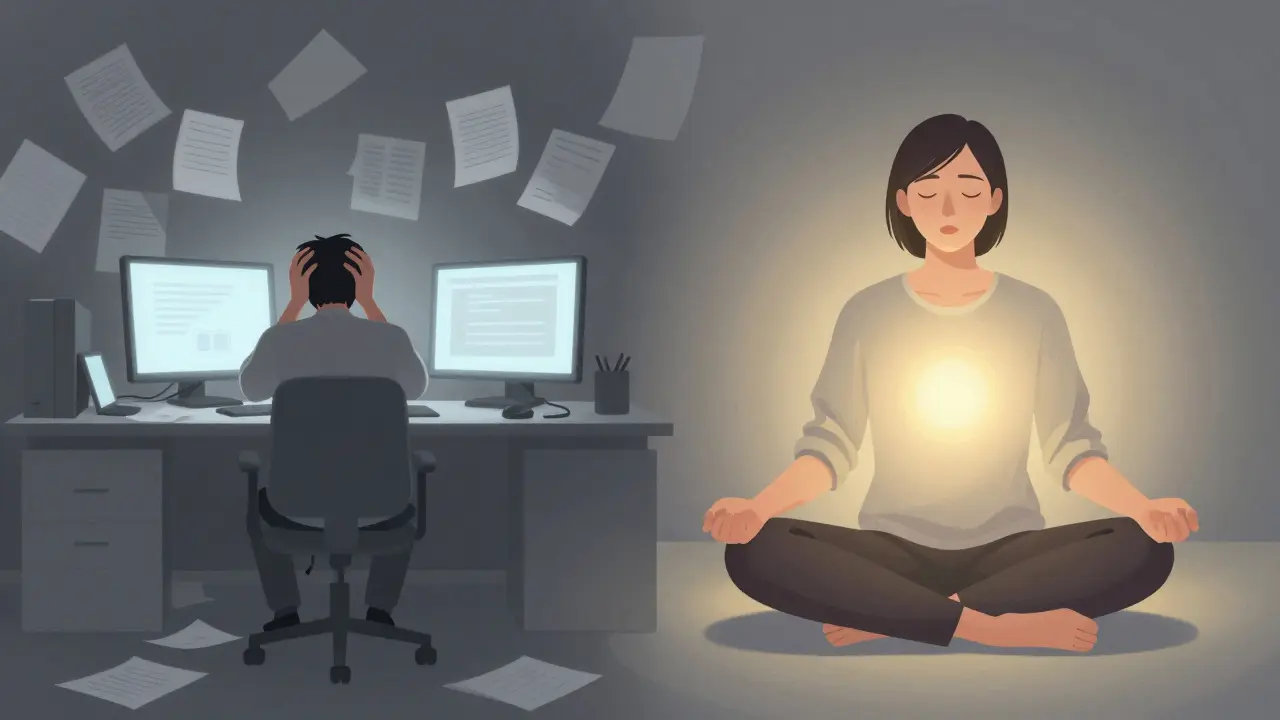
Calmness isn’t the absence of problems. It’s not about pretending everything’s fine when it’s not. You can be calm while feeling angry, sad, or overwhelmed. Calmness is the space between your thoughts and your reactions. It’s the pause you take before snapping at your partner, the breath you draw before replying to a stressful email, the moment you notice your heart racing and choose not to panic.
Think of it like a lake. When the wind blows, the surface ripples. But the depth? Still. Calmness is that deep stillness. It’s not denying the wind-it’s knowing you’re not the waves. People who are consistently happy aren’t immune to life’s turbulence. They’ve just learned to stay rooted in their own depth.
The science behind calm and happiness
Neuroscientists at the University of Wisconsin studied long-term meditators and found their brains produced significantly more gamma waves during states of calm. These are the same brain patterns linked to heightened awareness, joy, and compassion. In another study from Harvard Medical School, people who practiced daily mindfulness for eight weeks showed a 30% drop in cortisol-the primary stress hormone-while reporting higher levels of life satisfaction.
Here’s the key insight: happiness isn’t something you chase. It’s something you cultivate by reducing the noise that blocks it. Every time you react impulsively to stress, your brain rewires itself to expect chaos. Every time you pause, breathe, and choose calm, you train your brain to default to peace. That’s not philosophy. That’s biology.
How calmness changes your daily experience
When you’re calm, small things stop feeling like emergencies. The coffee spills? You wipe it up. The meeting runs late? You check your phone. The kids are screaming? You take a step back. These aren’t acts of detachment-they’re acts of control. And control, in this context, means choosing how you respond instead of letting your emotions hijack you.
People who live calmly report fewer physical symptoms of stress: less tension headaches, better sleep, lower blood pressure. But the bigger shift is emotional. They feel less resentment, less anxiety about the future, less guilt about the past. Why? Because calmness breaks the cycle of reactive thinking. You stop seeing every problem as a threat. You start seeing it as something you can handle.
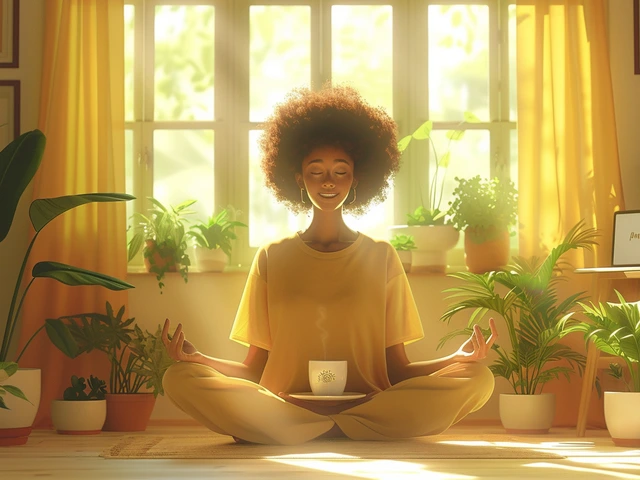
One woman I spoke with, a single mom working two jobs, told me: "I used to cry every night after putting my kids to bed. Now I sit for five minutes with a cup of tea and just breathe. It doesn’t fix anything. But it lets me remember I’m still me-no matter how hard the day was. That’s when I feel happy again. Not because things got better, but because I did."
The habits that build calm (and therefore happiness)
- Start with one breath. Before you check your phone in the morning, take three slow breaths. In for four counts, hold for two, out for six. Do this for seven days. You’ll notice a shift in how you start the day.
- Pause before you reply. Whether it’s a text, an email, or a conversation, wait five seconds before responding. That tiny gap gives your prefrontal cortex time to kick in instead of your amygdala.
- Walk without a goal. Spend 10 minutes walking outside-no music, no podcast, no destination. Just notice the air, the sounds, the way your feet hit the ground. This isn’t exercise. It’s recalibration.
- Turn off the noise. Not just social media. Turn off the news, the background TV, the constant chatter. Your brain needs silence to reset. Try one hour a day with zero digital input.
- Write down what you’re grateful for. Not a list of big things. One small thing: the smell of rain, a stranger’s smile, the way your cat stretched when you walked in. Gratitude anchors you in the present-and presence is the foundation of calm.
What blocks calmness (and steals happiness)
There are three big thieves of calm: comparison, control, and clutter.
Comparison tells you your life should look like someone else’s. You scroll through perfect vacations, perfect families, perfect careers-and feel like you’re falling behind. But you’re not comparing your life to theirs. You’re comparing your behind-the-scenes to their highlight reel.
Control is the illusion that you can manage everything. You plan every minute, micromanage your kids’ schedules, obsess over work emails at midnight. But control isn’t power-it’s fear in disguise. The more you try to control, the more anxious you become.
Clutter isn’t just physical. It’s mental. Too many apps, too many commitments, too many "shoulds." Your brain can’t focus when it’s overloaded. Calmness needs space. Start by deleting one app you don’t need. Cancel one obligation that drains you. Say no to one thing that doesn’t serve you.
Calmness isn’t a luxury-it’s the foundation
Most people think happiness comes first: "I’ll be happy when I get that promotion," or "I’ll be happy when I lose 20 pounds." But real happiness doesn’t work that way. It’s the other way around. When you’re calm, you see opportunities instead of obstacles. You connect more deeply with people. You enjoy small joys because you’re not too distracted to notice them.
Think of calmness as the soil. Happiness is the plant. You can’t grow a strong plant in rocky, dry dirt. You need to prepare the ground first. That’s what calmness does. It prepares your inner ground so happiness can take root and grow-even when the weather outside is rough.

What happens when you stop chasing happiness
Here’s the paradox: the more you chase happiness, the more it slips away. Why? Because chasing implies you’re missing something. It creates a sense of lack. Calmness, on the other hand, says: "I am enough right now." That’s not resignation. That’s liberation.
When you stop trying to force happiness, you stop fighting yourself. You stop resisting your emotions. You stop judging your mood. And in that acceptance, something surprising happens-you start feeling joy. Not because everything changed, but because you did.
One man I knew, a former firefighter, told me: "I used to think I needed to feel good to be happy. Now I know I need to be calm to feel good. And when I’m calm, happiness shows up on its own-quiet, steady, and real."
Start where you are
You don’t need a retreat, a guru, or a month off to begin. You just need one moment. Right now. Breathe. Feel your feet on the floor. Notice the air in your lungs. That’s calmness. That’s where happiness lives-not in some future version of you, but in the quiet space between your thoughts.
Try this today: When you feel stress rising, don’t reach for your phone. Don’t scroll. Don’t vent. Just pause. Count to five. Then ask yourself: "What’s one small thing I can do right now to feel more grounded?" Then do it. That’s how calmness becomes your default. And that’s how happiness stops being a goal-and starts being your home.
Can calmness make me happier even if my life is still hard?
Yes. Calmness doesn’t change your circumstances-it changes how you experience them. You can still face loss, financial stress, or illness and still feel inner peace. Calmness gives you emotional space to hold hardship without being crushed by it. People who practice calmness report higher life satisfaction even during tough times because they’re not fighting their emotions-they’re learning to move through them.
Is calmness the same as being passive?
No. Calmness is not passivity. It’s intentional presence. A calm person can speak up, set boundaries, and take action-but they do it without anger, panic, or desperation. Passivity means avoiding. Calmness means choosing. You can be calm and firm, calm and decisive, calm and bold. Calmness gives you clarity, not silence.
How long does it take to become a calmer person?
It doesn’t take years. It takes moments. Most people notice a shift in how they respond to stress after just 7-10 days of consistent, small practices-like breathing before reacting or taking a 5-minute walk without distractions. Calmness grows like a muscle. You don’t need to train for an hour a day. Just 60 seconds of intentional stillness, repeated daily, rewires your nervous system over time.
Can I be too calm? Does it make me emotionally numb?
No. True calmness doesn’t suppress emotion-it allows you to feel it without being controlled by it. Emotionally numb people avoid feeling. Calm people feel deeply but choose how to respond. You can be calm and cry. Calm and angry. Calm and grieving. The difference is you’re not drowning in the feeling-you’re holding it with awareness. That’s emotional intelligence, not numbness.
What’s the fastest way to feel calm right now?
Try the 4-7-8 breath: Inhale slowly through your nose for 4 counts, hold your breath for 7 counts, then exhale through your mouth for 8 counts. Repeat three times. This activates your parasympathetic nervous system-the part that tells your body it’s safe. Within 60 seconds, your heart rate slows, your shoulders drop, and your mind clears. It’s science-backed, instant, and free.
What to do next
If you want to make calmness a daily habit, pick one of the five habits listed above and try it for seven days. Don’t aim for perfection. Aim for consistency. Even one moment of calm each day builds a new neural pathway in your brain. Over time, those moments become your new normal.
And when you feel overwhelmed again-remember this: happiness isn’t something you find. It’s something you return to. And calmness is the path back home.

Oct 31 2024