
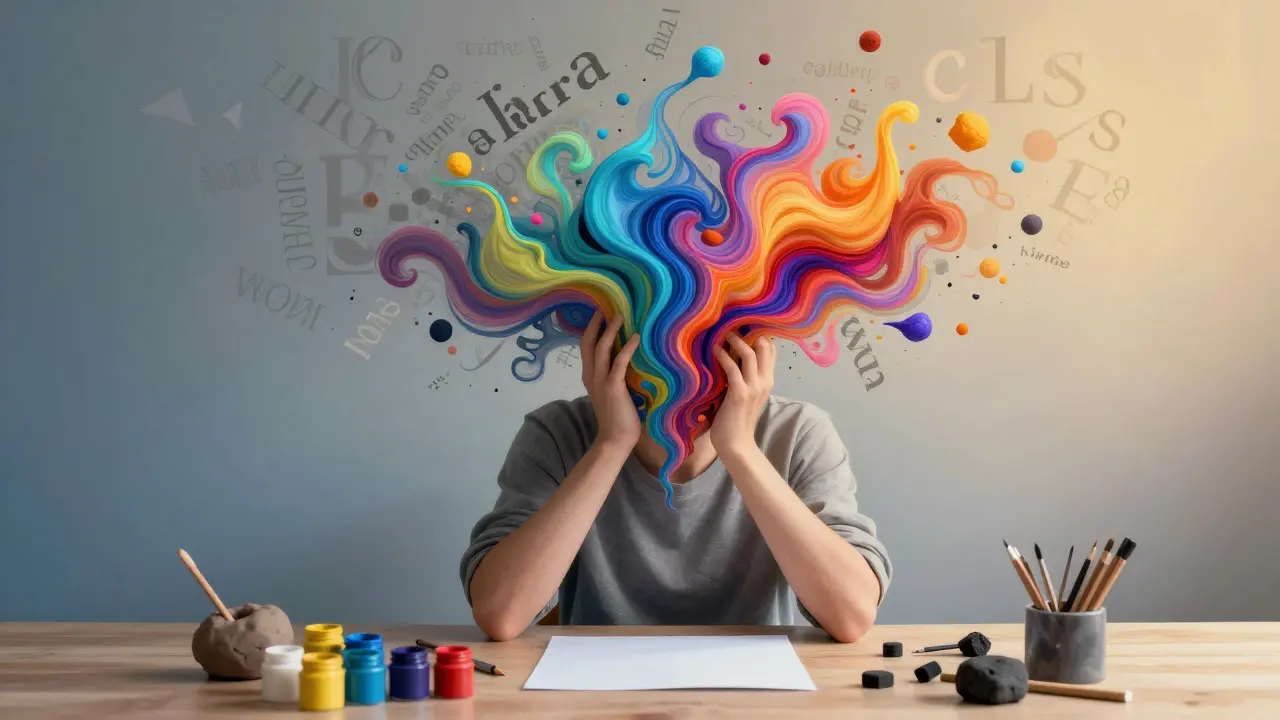
Imagine trying to explain the heavy weight of grief or the sharp edge of anxiety using only words. For many people, language hits a wall. The feelings are too big, too chaotic, or simply too deep for sentences to capture. This is where Creative Arts Therapies step in. Unlike traditional talk therapy, which relies heavily on verbal communication, these approaches use painting, music, dance, drama, and writing as primary tools for healing. They bypass the logical brain’s defenses and speak directly to the emotional core.
You might think of these methods as just "hobbies" or "relaxing activities." While they are enjoyable, clinical creative arts therapy is a structured, evidence-based practice guided by licensed professionals. It is not about making a masterpiece; it is about the process of creation itself. Whether you are dealing with trauma, chronic stress, or simply seeking deeper self-understanding, these modalities offer a unique pathway to wellness that words alone cannot provide.
The Core Modalities: More Than Just Hobbies
Creative arts therapy is an umbrella term covering several distinct disciplines. Each modality targets different aspects of human experience, from physical sensation to cognitive processing. Understanding the differences helps you choose the right approach for your specific needs.
| Modality | Primary Medium | Key Benefits | Best For |
|---|---|---|---|
| Art Therapy | Painting, drawing, sculpture | Visualizing internal states, reducing anxiety | Trauma survivors, those with communication difficulties |
| Music Therapy | Singing, playing instruments, listening | Mood regulation, memory recall, social connection | Dementia patients, depression, autism spectrum |
| Dance/Movement Therapy | Body movement, rhythm | Reconnecting body and mind, releasing stored tension | Eating disorders, PTSD, somatic issues |
| Drama Therapy | Role-playing, improvisation, storytelling | Exploring new perspectives, building confidence | Social anxiety, identity issues, skill-building |
| Bibliotherapy/Poetry Therapy | Reading, writing, journaling | Cognitive reframing, emotional expression | Grief, personal growth, reflective individuals |
Notice how each method engages a different part of you. Art therapy allows you to externalize what is inside, making abstract fears concrete and manageable. Music therapy taps into the primal rhythms of the heart and breath, often calming the nervous system faster than conversation can. Dance/movement therapy addresses the fact that emotions live in the body; if you have been holding your shoulders tight for years, talking about stress won’t drop them, but moving through the tension will.
Why Words Sometimes Fail: The Science Behind Expression
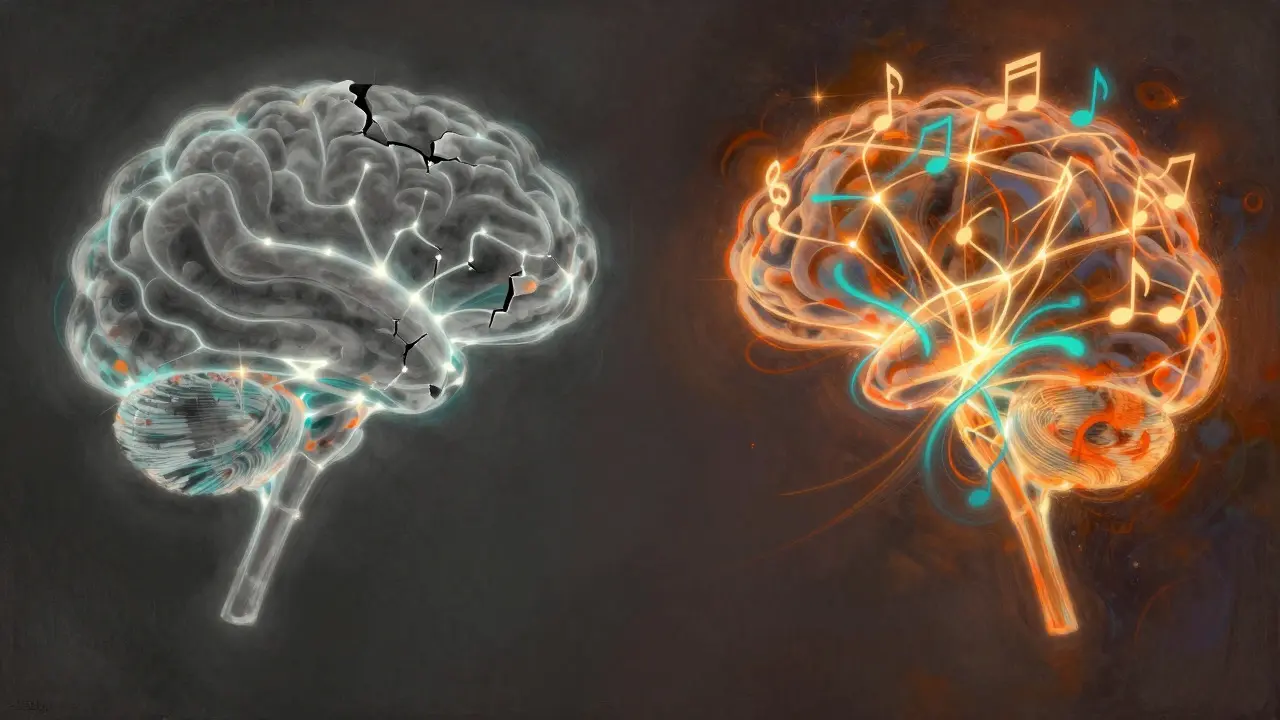
To understand why creative arts therapies work, we need to look at how the brain processes trauma and emotion. When you experience high stress or trauma, the amygdala-the brain’s alarm bell-lights up. In severe cases, the prefrontal cortex, responsible for logic and language, goes offline. This is why victims of trauma often struggle to tell their stories coherently. They aren’t being evasive; their brain literally cannot access the linguistic centers efficiently.
Creative arts therapies engage the non-verbal parts of the brain, such as the limbic system and sensory networks. By creating art or moving to music, you are communicating with the parts of the brain that store the raw emotional data. This process, known as neuroplasticity, helps rewire neural pathways. It integrates the fragmented memories or feelings into a coherent narrative without forcing them through the bottleneck of speech first.
Research published in journals like the Journal of the American Art Therapy Association consistently shows reductions in cortisol levels (the stress hormone) after sessions. Patients often report a sense of relief not because they solved a problem intellectually, but because they felt heard by their own creations. The artwork becomes a safe container for emotions that were previously too dangerous to feel.
Who Can Benefit? Real-World Applications
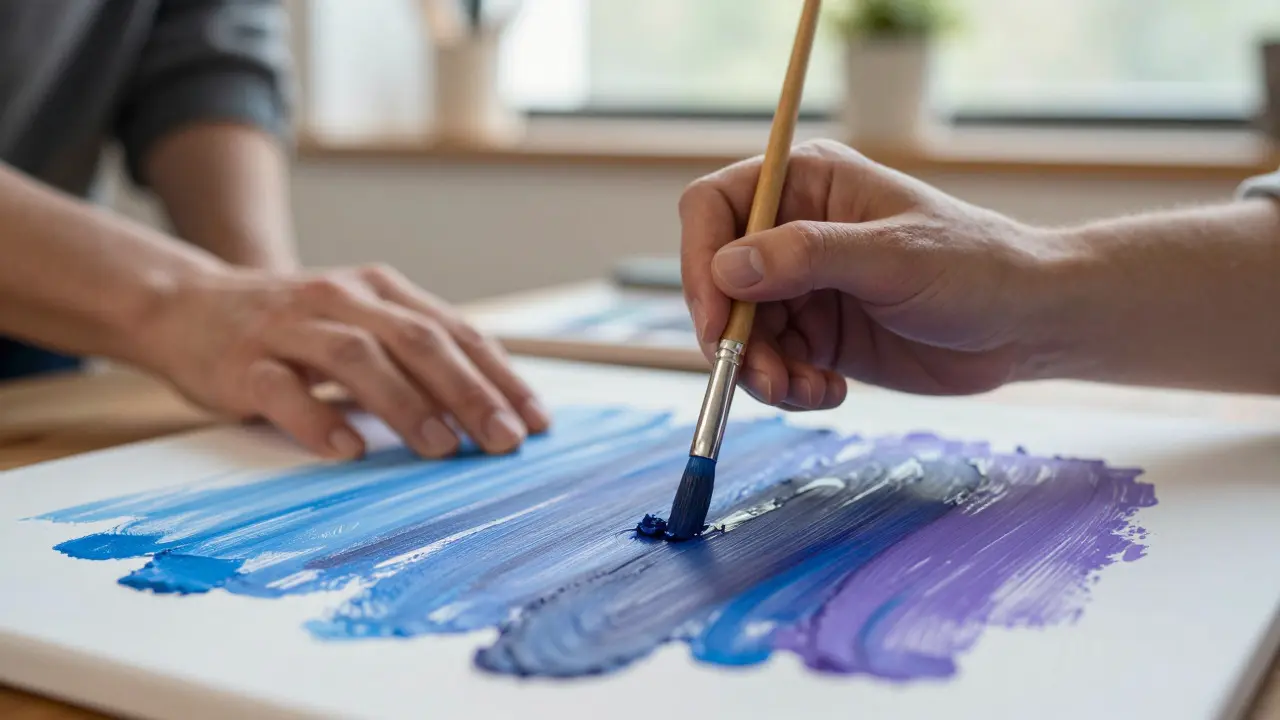
You do not need to be an artist to benefit from art therapy. In fact, most clients come in with zero artistic experience. The goal is not aesthetic beauty; it is psychological insight. Here is who typically sees the most significant results:
- Trauma Survivors: Individuals recovering from abuse, accidents, or combat often use sandplay or drawing to reconstruct their narratives safely. The distance provided by the medium makes the trauma less overwhelming.
- Children and Adolescents: Kids naturally play and create. For them, therapy often looks like playing with clay or acting out scenarios. It meets them at their developmental level, bypassing the resistance many teens feel toward "sitting and talking."">
- People with Neurodevelopmental Disorders: Those on the autism spectrum may find eye contact and direct questioning stressful. Music and structured movement provide alternative channels for social interaction and emotional regulation.
- Elderly with Dementia: As verbal memory fades, musical memory often remains intact. Singing familiar songs can trigger lucid moments and reduce agitation in care facilities.
- Corporate Professionals: Burnout is a growing crisis. Expressive writing and mindfulness-based art practices help executives disconnect from constant productivity demands and reconnect with their intrinsic values.
The common thread among these groups is a blockage in standard communication or coping mechanisms. Creative arts therapies remove that blockage by offering a new language.
What to Expect in Your First Session
If you decide to try this approach, knowing what happens can lower the barrier to entry. A typical session lasts 45 to 60 minutes and follows a loose structure designed to ensure safety and focus.
- Check-In: You start with a brief conversation about how you are feeling. There is no pressure to share deeply yet. The therapist sets the intention for the session.
- The Invitation: The therapist presents a prompt or choice of materials. It might be as simple as "Draw your current mood" or "Choose a color that represents your energy today." There are no wrong answers.
- Creation Phase: You spend time engaging with the medium. The therapist observes silently, noting your choices, movements, and reactions. This is not a judgment zone; it is a laboratory for your psyche.
- Reflection: Once you finish, the therapist asks open-ended questions. "Tell me about this shape," or "How did it feel to mix these colors?" You interpret your own work. The therapist does not analyze it for you; they guide you to uncover your own meanings.
- Integration: The session ends with grounding exercises to bring you back to the present moment. You might take photos of your work or keep it in a private portfolio to track progress over time.
Many people worry about looking foolish. Remember, the therapist has seen thousands of messy, abstract, and chaotic pieces. Their job is not to critique your technique but to witness your experience. The vulnerability of creating something visible is where the healing begins.
Finding the Right Practitioner
Not everyone who teaches art classes is a therapist. To ensure you receive clinical-level care, look for specific credentials. In the United States, for example, look for board certification through the American Art Therapy Association (ATR-BC) or equivalent bodies in your country for music, dance, or drama therapy.
Ask potential therapists about their training in trauma-informed care. Since creative processes can unlock suppressed memories, a skilled practitioner knows how to hold space for intense emotions without letting you become overwhelmed. They should also clarify their insurance acceptance and sliding scale options, as costs can vary widely depending on location and specialization.
Consider whether you prefer individual or group settings. Group art therapy can be incredibly powerful for breaking isolation, especially for those dealing with grief or addiction. Seeing others create and share reminds you that your struggles are part of the shared human experience. However, if privacy is a concern, one-on-one sessions allow for deeper, more personalized exploration.
Integrating Creative Practices into Daily Life
You don’t need a weekly appointment to harness the power of creative expression. Small, daily practices can maintain the mental clarity gained in therapy. Try keeping a "mood journal" where you sketch or write freely for five minutes every morning. Use music intentionally: create playlists for specific emotional states, such as "calm focus" or "release anger."">
Engage in "mindful making." Whether it is knitting, gardening, or cooking, focus entirely on the sensory details-the texture of the yarn, the smell of the soil, the sound of chopping vegetables. This anchors you in the present moment, disrupting the cycle of rumination that fuels anxiety and depression.
The key is consistency, not complexity. A ten-minute daily practice is more effective than a two-hour monthly binge. Over time, these small acts of creation build resilience. They remind you that you are not just a passive recipient of life’s events but an active creator of your inner world.
Do I need to be talented at art to benefit from art therapy?
No, artistic talent is irrelevant in clinical art therapy. The focus is on the process of creation and the emotions it evokes, not the aesthetic quality of the final product. Most clients have little to no prior artistic experience, and therapists are trained to facilitate insight regardless of technical skill.
Is creative arts therapy covered by insurance?
Coverage varies significantly by provider and region. Many major insurance plans now cover licensed creative arts therapists if they diagnose a mental health condition. Always check with your insurer and ask the therapist if they bill directly or provide superbills for reimbursement. Some practitioners offer sliding scale fees based on income.
How long does it take to see results?
Results depend on the individual and the issue being addressed. Some people feel immediate relief after a single session due to the cathartic nature of expression. For deeper issues like complex trauma, a course of 12 to 20 sessions is typical to establish trust and process underlying patterns. Consistency is key to lasting change.
Can creative arts therapy replace medication?
It is generally used as a complementary treatment rather than a replacement for medication, especially for severe conditions like bipolar disorder or schizophrenia. However, for mild to moderate anxiety and depression, some patients may reduce medication under a doctor's supervision as their coping skills improve. Always consult your psychiatrist before changing any medical regimen.
What is the difference between a hobby and therapy?
The main difference is the presence of a trained clinician and a therapeutic framework. A hobby is for leisure and skill-building. Therapy uses the creative act as a tool to explore unconscious material, process trauma, and achieve specific psychological goals. The therapist guides the reflection and ensures emotional safety during the process.

Aug 15 2024