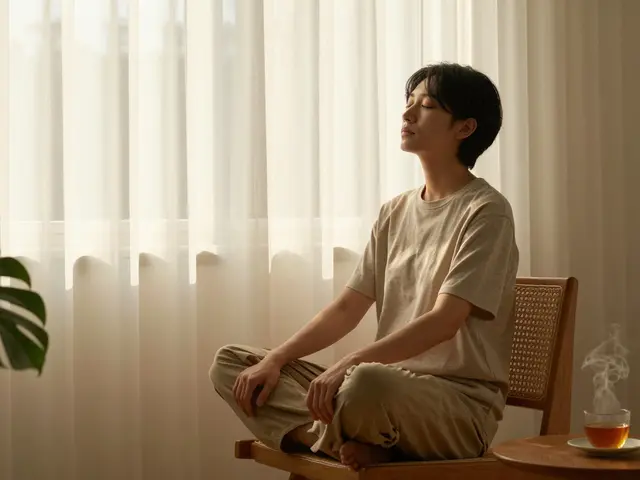

The Hidden Potential of Your Brain
Most of us spend our days reacting to things. A loud noise, a stressful email, or a sudden memory of an argument from three years ago triggers a wave of emotion, and we just ride it. But what if you could step back? Imagine your mind as a stormy ocean; most people are drowning in the waves, but Meditation is a systematic practice of training the mind to focus and redirect thoughts, leading to a state of mental clarity and emotional stability. It isn't about clearing your head of all thoughts-that's practically impossible-but about changing your relationship with those thoughts.
Think about the last time you felt completely overwhelmed. Your heart raced, and your focus vanished. That's the "fight or flight" response in action. By practicing meditation for beginners, you can actually rewire how your brain handles these moments. It's not magic; it's biology. You're teaching your prefrontal cortex to take the wheel when the amygdala tries to panic.
| Style | Focus Point | Best For | Typical Duration |
|---|---|---|---|
| Mindfulness | Present moment/Breath | General anxiety, daily stress | 5-20 minutes |
| Transcendental | Specific Mantra | Deep relaxation, spiritual growth | 20 minutes (twice daily) |
| Loving-Kindness | Compassion/Empathy | Anger, social conflict | 10-15 minutes |
| Zazen | Posture and Breath | Disciplined mental stillness | 30+ minutes |
Getting Started Without the Frustration
One of the biggest myths is that you need a silent mountain top or a special cushion to start. In reality, you can do this while sitting in a noisy office or waiting for the bus. The goal is simply to notice when your mind has wandered and gently bring it back. If you do this ten times in one minute, you haven't failed; you've actually had ten successful moments of mindfulness.
To start, find a spot where you won't be interrupted for five minutes. Sit with your back straight-not stiff like a board, but not slumped like a sack of potatoes. Close your eyes or soften your gaze. Focus on the sensation of air entering and leaving your nostrils. When a thought pops up-like "Did I lock the front door?"-just label it as "thinking" and go back to your breath. This simple act of labeling is a powerful tool in Mindfulness, as it detaches you from the emotion of the thought.
If you find sitting still too difficult, try a walking meditation. Instead of thinking about where you're going, focus on the feeling of your feet hitting the pavement. Notice the shift in weight from heel to toe. This grounds you in the physical world and stops the mental loop of worrying about the future.
The Science of the Quiet Mind
It's easy to dismiss meditation as "woo-woo," but the data says otherwise. Research using fMRI scans shows that consistent practice can actually shrink the Amygdala, which is the brain's alarm system. When this area is less reactive, you don't feel a surge of panic over small mistakes. At the same time, the gray matter in the Prefrontal Cortex-the area responsible for decision-making and complex cognitive behavior-becomes denser.
This change explains why people who meditate often report better Mental Clarity. You aren't just "feeling" calmer; your brain is physically better at filtering out distractions. It's like upgrading your internal processor from an old laptop to a modern workstation. You can handle more data (stressors) without the system crashing.
Furthermore, meditation impacts the Autonomic Nervous System. By consciously slowing your breath, you trigger the parasympathetic nervous system, which tells your body it is safe to relax. This lowers your heart rate and reduces the production of Cortisol, the primary stress hormone that, in high doses, can mess with your sleep and immune system.

Integrating Practice Into a Busy Life
Most people quit meditating because they try to do too much too fast. Trying to meditate for an hour on day one is like trying to bench press 300 pounds without ever going to the gym. You'll just hurt yourself or get discouraged. The secret is "habit stacking." Attach your practice to something you already do.
- The Morning Coffee Ritual: Instead of scrolling through news apps while your coffee brews, spend those three minutes focusing on the smell and warmth of the cup.
- The Red Light Reset: Every time you hit a red light, take three deep, conscious breaths. Use the stop as a signal to check in with your body.
- The Bedtime Scan: As you lie down, mentally scan your body from your toes to the top of your head, consciously releasing tension in each muscle group.
By breaking the practice into these smaller chunks, you remove the friction. You stop viewing meditation as a "task" on your to-do list and start seeing it as a way of experiencing the day. This shift is what leads to long-term Stress Reduction.
Common Pitfalls and How to Bypass Them
You'll likely encounter a few mental hurdles. The most common is the "I can't stop my thoughts" trap. You have to realize that the point isn't to stop the thoughts; it's to stop *chasing* them. Your mind is a thought-generating machine. Expecting it to be silent is like expecting a heart to stop beating. Just observe the thoughts as if they were clouds passing by in the sky. You don't need to climb every cloud to see what's inside; you just need to watch them float away.
Another issue is physical restlessness. You might feel an itch on your nose or a cramp in your leg. The instinct is to scratch or shift immediately. Try this: notice the itch. Observe how it feels. Wait five seconds. Then, if it's still unbearable, move. This trains your mind to handle discomfort without reacting impulsively, which is a skill that transfers directly to how you handle an annoying coworker or a traffic jam.
Lastly, avoid the "spiritual ego." Some people start meditating and then feel superior to others because they are "zen." This is actually a form of attachment that defeats the purpose of the practice. True progress in meditation is marked by a decrease in judgment-both toward others and yourself.

Advanced Techniques for Mental Power
Once you've mastered the basics of breath work, you can experiment with Vipassana, which is a form of insight meditation. Instead of focusing on one point, you expand your awareness to everything-the sound of a distant car, the feeling of your clothes on your skin, the subtle movement of your chest. This builds an incredible level of sensory awareness and emotional resilience.
You might also explore Visualization. This involves creating a detailed mental image to evoke a specific emotional state. For example, if you're facing a high-pressure presentation, spend five minutes visualizing a warm, golden light filling your chest, representing confidence and calm. Because the brain often struggles to distinguish between a vivid imagination and a real event, this can "prime" your nervous system for success.
For those who struggle with insomnia, Yoga Nidra-often called psychic sleep-is a game-changer. It's a guided practice that leads you into a state of conscious deep sleep. It's designed to systematically relax the body and mind, making it much easier to drift off without the usual midnight spiral of anxiety.
Do I have to believe in something spiritual to meditate?
Not at all. While meditation has roots in spiritual traditions, many modern practices are purely secular. You can treat it as a form of mental exercise or "brain gym" focused on biology and psychology rather than spirituality.
How long does it take to see results?
Some people feel a sense of calm immediately after their first session. However, structural brain changes, like the shrinking of the amygdala, usually require consistent practice over 8 weeks. Consistency matters more than duration; five minutes every day is better than one hour once a week.
What if I fall asleep during meditation?
This is very common, especially if you're sleep-deprived. If it happens, try meditating with your eyes slightly open, sitting upright in a chair rather than lying down, or practicing at a different time of day when you're more alert.
Can meditation make my anxiety worse?
In rare cases, people with severe trauma or PTSD may find that sitting in silence brings up overwhelming memories. If this happens, it's best to practice "grounding" techniques or work with a therapist who specializes in mindfulness-based stress reduction (MBSR).
Which is better: guided or silent meditation?
Guided meditations are great for beginners because they provide a roadmap and prevent you from getting lost in your thoughts. Silent meditation is more challenging but helps develop a deeper level of independent focus and self-reliance.
Next Steps for Your Practice
If you're feeling stuck, try a "meditation detox" for a week. Stop trying to force the practice and instead just notice three things you are grateful for every morning. Once you've rebuilt that positive connection, return to the breath with a sense of curiosity rather than a sense of duty.
For those who have already started, try increasing your sessions by just one minute every week. This gradual progression prevents burnout and keeps the habit sustainable. If you find yourself drifting, don't judge it-just smile at the fact that you noticed, and come back to the present. That moment of noticing is where the real growth happens.


Aug 4 2023