

Ever sat down to work and felt like your brain was stuck in molasses? You’re not lazy. You’re overwhelmed. Stress doesn’t just make you feel tense-it quietly steals your ability to concentrate. The science is clear: high cortisol levels mess with your prefrontal cortex, the part of your brain responsible for focus, decision-making, and planning. If you’re struggling to get things done, it’s not a willpower issue. It’s a stress issue.
Why Stress Kills Focus
Your brain isn’t designed to handle constant pressure. When you’re stressed, your body pumps out cortisol and adrenaline. These aren’t bad chemicals-they’re survival tools. But when they’re always on, they drown out the signals your brain needs to stay on task. A 2023 study from the University of Queensland found that people with chronic low-grade stress took 40% longer to complete simple cognitive tasks than those with lower stress levels. They weren’t slower because they were tired. They were slower because their attention was scattered.
Think about it: when you’re worried about a looming deadline, a messy inbox, or an argument from this morning, your brain doesn’t shut off those thoughts. It keeps looping them in the background. That’s why you read the same sentence five times and still don’t remember it. Your mental bandwidth is tied up.
Technique #1: Box Breathing for Instant Calm
You don’t need a meditation app or 30 minutes of silence. Sometimes, all you need is 60 seconds. Box breathing is simple, effective, and works even in a noisy office or a crowded train.
Here’s how:
- Inhale through your nose for 4 seconds
- Hold your breath for 4 seconds
- Exhale slowly through your mouth for 4 seconds
- Hold again for 4 seconds
Repeat that cycle three to five times. That’s it. This technique directly signals your nervous system to switch from fight-or-flight mode to rest-and-digest. It’s used by Navy SEALs, pilots, and elite athletes because it works fast. Try it before your next meeting or when you feel your focus slipping. You’ll notice a difference in how clear your thoughts feel.
Technique #2: The 5-Minute Walk (No Phone, No Music)
Walking is one of the most underrated stress reducers. But not just any walk. A 2022 study from Stanford showed that walking in nature-yes, even a small park-reduced activity in the part of the brain linked to rumination (that endless loop of negative thoughts). The key? No phone. No music. No podcasts.
Just walk. Notice the texture of the pavement. The way the wind moves the leaves. The sound of birds. Your brain needs sensory input that’s not digital. When you step away from screens and noise, your mind gets a chance to reset. You don’t need a forest. A tree-lined street, a backyard, or even a quiet courtyard will do. Five minutes is enough to break the stress cycle and bring your focus back.

Technique #3: The Two-Minute Rule for Mental Clutter
One of the biggest hidden sources of stress? Unfinished tasks. They hang around like mental ghosts. You don’t even realize how much energy you’re spending just avoiding them.
The two-minute rule is simple: if a task takes less than two minutes, do it now. Reply to that email. Put the dish in the sink. File that document. Make that quick call.
Why does this help focus? Because it stops the buildup of small stressors. Each unfinished task adds a tiny weight to your mental load. When those weights pile up, your brain starts to feel overloaded. Clearing the small stuff gives you breathing room. It’s not about productivity-it’s about peace. And peace means better focus.
Technique #4: Digital Sunset
Screen time isn’t just bad for your eyes. It’s bad for your nervous system. Blue light suppresses melatonin, but it also keeps your brain in a state of low-grade alertness. Even if you’re not working, scrolling through social media after dinner is like giving your brain a caffeine shot at midnight.
Try a digital sunset: one hour before bed, turn off all screens. No phone. No laptop. No TV. Use that time to read a physical book, journal, or just sit quietly. If you’re used to constant stimulation, this might feel weird at first. But within a week, you’ll notice your mind feels quieter. You’ll fall asleep faster. And the next day? You’ll think more clearly.
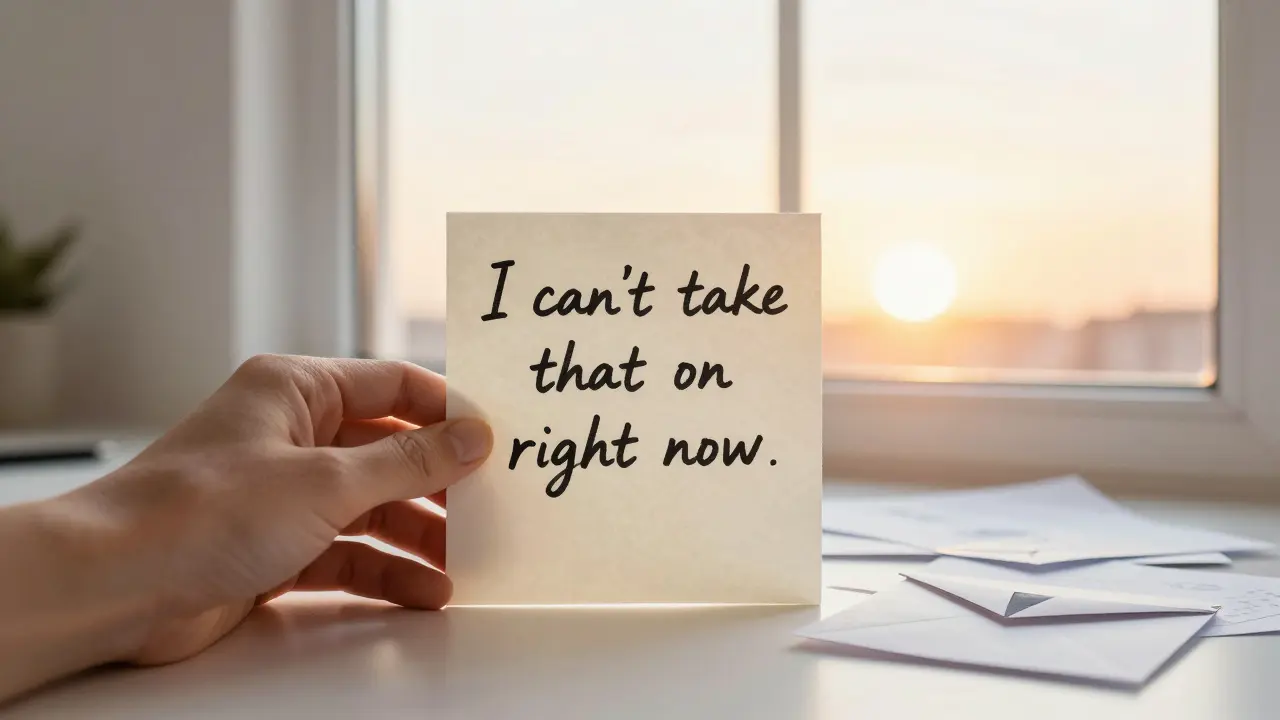
Technique #5: The Power of Saying No
Saying yes to everything is one of the fastest ways to burn out. You think you’re being helpful. But you’re actually training your brain to expect constant demand. And when demand outpaces your capacity, stress spikes-and focus evaporates.
Start small. Next time someone asks you to take on an extra task, pause. Ask yourself: Does this move me forward? If the answer is no, say no. Not with guilt. Not with an excuse. Just: “I can’t take that on right now.”
People respect boundaries more than you think. And when you protect your time, you protect your focus. You’re not being selfish. You’re being strategic.
Putting It All Together
You don’t need to do all five techniques every day. Pick one that feels doable. Maybe start with box breathing in the morning. Add the five-minute walk midday. Then try the two-minute rule for small tasks. Build slowly.
Focus isn’t something you force. It’s something you create by removing the noise. Stress is that noise. The techniques above aren’t magic. They’re tools. Tools that real people use every day to get back control of their attention.
Try this for one week. Track how many times you catch yourself distracted. Notice when your thoughts feel clearer. You might be surprised how much space opens up when you stop letting stress run the show.
What to Avoid
Not all stress relief methods help focus. Some even make it worse.
- Alcohol might calm you in the moment, but it disrupts sleep and increases anxiety the next day.
- Caffeine overload keeps your nervous system on edge. More coffee doesn’t mean more focus-it means more jitter.
- Trying to meditate for 20 minutes when you’ve never sat still before? You’ll just feel frustrated. Start with one minute.
- Waiting for “the right time” to reduce stress? There isn’t one. Start now, even if it’s small.
The goal isn’t to eliminate stress entirely. That’s impossible. The goal is to stop letting it hijack your attention.
Can stress reduction really improve focus in just a few days?
Yes. While long-term stress management takes consistency, many people notice improved focus within 3-5 days of using even one technique like box breathing or a digital sunset. The brain responds quickly to reduced cortisol. Small changes create noticeable shifts in mental clarity.
What if I don’t have time for these techniques?
You don’t need hours. Box breathing takes 60 seconds. The two-minute rule takes two minutes. A five-minute walk takes five minutes. These aren’t lifestyle overhauls-they’re micro-habits. You’re not adding more to your day. You’re replacing mental clutter with calm. Even one minute of intentional breathing can reset your focus for the next hour.
Is meditation necessary for better focus?
No. While meditation helps some people, it’s not the only path. Many find more success with movement (like walking), breathing, or task-clearing. If sitting still feels impossible, don’t force it. Focus on what feels natural-like stepping away from screens or saying no to extra tasks. Those actions reduce stress just as effectively.
Does diet affect focus when I’m stressed?
Absolutely. Sugar crashes and processed foods spike cortisol and make mental fog worse. Eating regular meals with protein, healthy fats, and fiber helps stabilize your energy and mood. You don’t need a perfect diet-just avoid skipping meals and cutting out junk sugar. Your brain works better when it’s fed steadily.
What’s the most important technique to start with?
Start with box breathing. It’s quick, requires no setup, and can be done anywhere. It gives your nervous system an immediate signal to calm down. Once you feel the difference, you’ll naturally want to add other techniques. The goal is momentum-not perfection.

Oct 19 2024




May 31 2024