
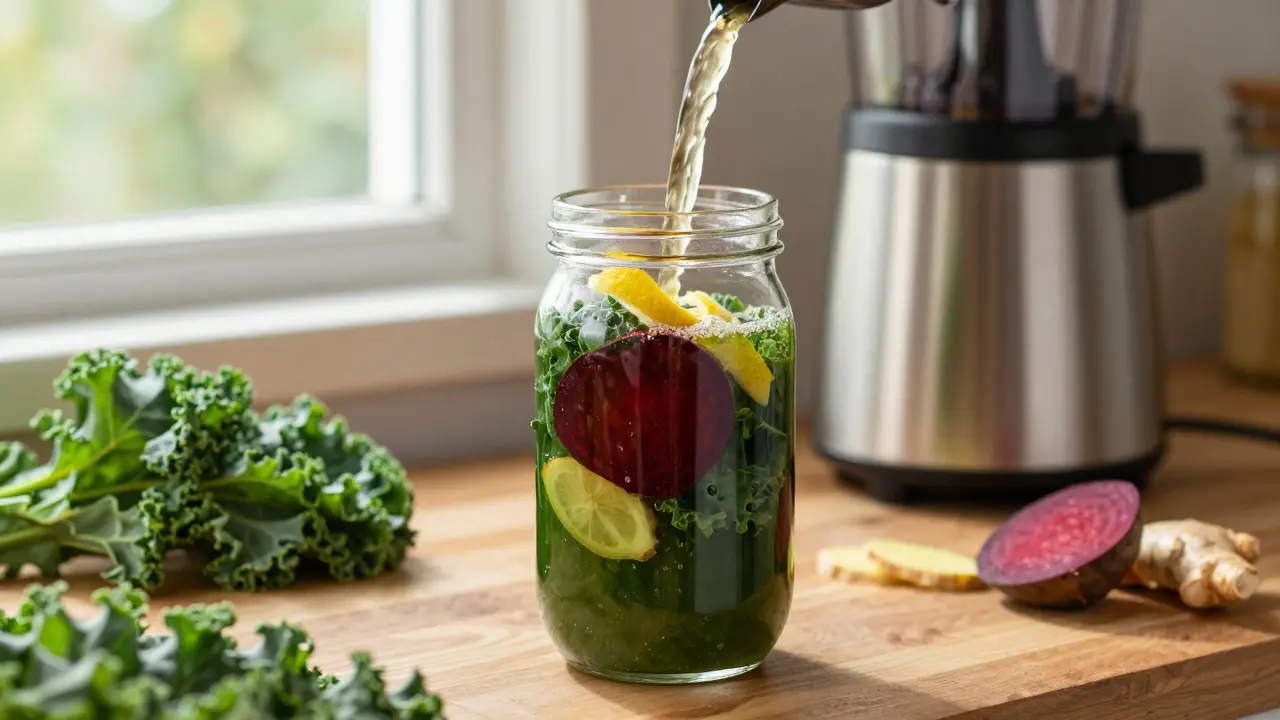
Drinking health juice isn’t just a trend-it’s a simple, everyday habit that can shift how your body fights off illness. If you’ve ever wondered why some people seem to stay healthy through cold season while others catch every bug going around, the answer might be in their glass. Not supplements. Not pills. Just fresh, blended, pressed juice made from real vegetables and fruits.
What Exactly Is Health Juice?
Health juice isn’t the sugary, store-bought stuff labeled "100% natural" that’s really just apple juice with a splash of carrot. Real health juice is made from mostly vegetables-think celery, kale, spinach, cucumber, beetroot, ginger, and lemon-with just a small amount of fruit for balance. The goal isn’t sweetness. It’s nutrient density. A typical homemade health juice might contain three cups of leafy greens, half a beet, a small piece of turmeric, and a quarter lemon. That’s not a snack. That’s a concentrated dose of vitamins, minerals, antioxidants, and phytonutrients your body can absorb fast-without the fiber slowing it down.
When you juice, you remove the insoluble fiber, which lets your digestive system focus on absorbing nutrients instead of breaking down bulk. That’s why a 16-ounce glass of green juice can deliver the equivalent of two pounds of vegetables in under five minutes. Your body doesn’t have to work as hard. And that matters when you’re tired, stressed, or recovering from something.
How Health Juice Helps Prevent Disease
Chronic inflammation is the hidden root of most diseases: heart disease, diabetes, arthritis, even some cancers. And the foods we eat every day often fuel that fire. Processed carbs, sugar, seed oils-they’re everywhere. Health juice works by turning that tide.
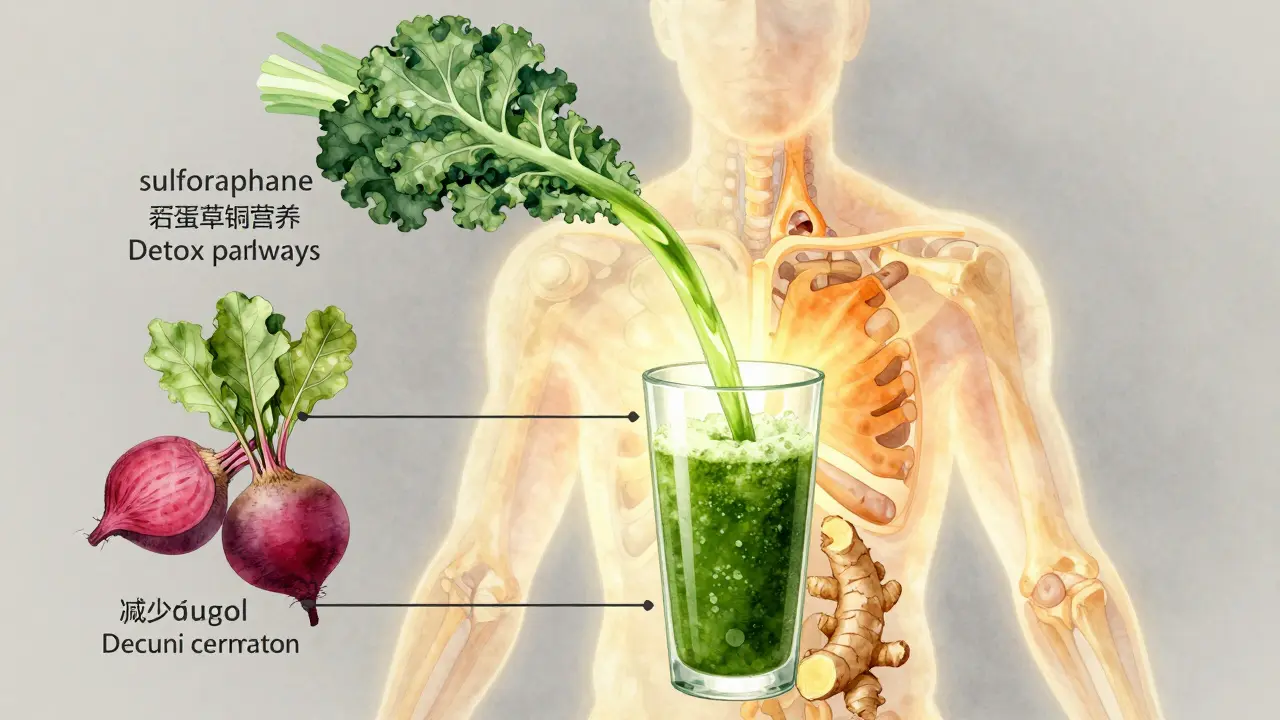
Take kale, for example. One cup of raw kale has more vitamin K than your body needs in a day. It also has lutein and zeaxanthin, which protect your eyes from blue light and oxidative stress. But more importantly, kale is packed with sulforaphane, a compound that activates your body’s natural detox pathways. Studies from Johns Hopkins show sulforaphane can reduce markers of inflammation by up to 40% in just four weeks with daily intake.
Beetroot juice? It’s not just for athletes. Nitrates in beets convert to nitric oxide in your body, which relaxes blood vessels and lowers blood pressure. A 2023 meta-analysis in the Journal of Hypertension found that drinking 250ml of beet juice daily reduced systolic blood pressure by an average of 8.1 mmHg-comparable to some medications, but without side effects.
And ginger? It’s not just for nausea. Gingerol, the active compound in ginger, has been shown in clinical trials to reduce joint pain and stiffness in osteoarthritis patients. A 2022 study in Arthritis Care & Research found participants who drank ginger juice daily for six weeks cut their pain levels by nearly half.
These aren’t lucky accidents. They’re repeatable biological responses. Health juice delivers these compounds in their most bioavailable form-liquid, unprocessed, and ready to act.
What You Should Be Juicing
Not all juices are created equal. If you’re using mostly fruit, you’re drinking sugar with a side of vitamins. That’s not health juice. That’s a smoothie with a straw.
Here’s what works:
- Leafy greens (kale, spinach, Swiss chard, romaine): High in chlorophyll, magnesium, and antioxidants. These are the base.
- Cucumbers: Hydrating, alkalizing, and full of silica for skin and joint health.
- Beetroot: Supports circulation, liver function, and endurance.
- Ginger: Anti-inflammatory, boosts digestion, and helps with nausea.
- Turmeric: Curcumin is a powerful anti-inflammatory. Always pair with black pepper for absorption.
- Lemon: Adds flavor, helps alkalize, and supports liver detox.
- Apple or pear (small amount): Only for taste. One-quarter of one fruit max per 16oz juice.
A good ratio? 80% vegetables, 20% fruit. That keeps sugar under 8 grams per serving-well below the WHO’s daily added sugar recommendation.
Real Results from Real People
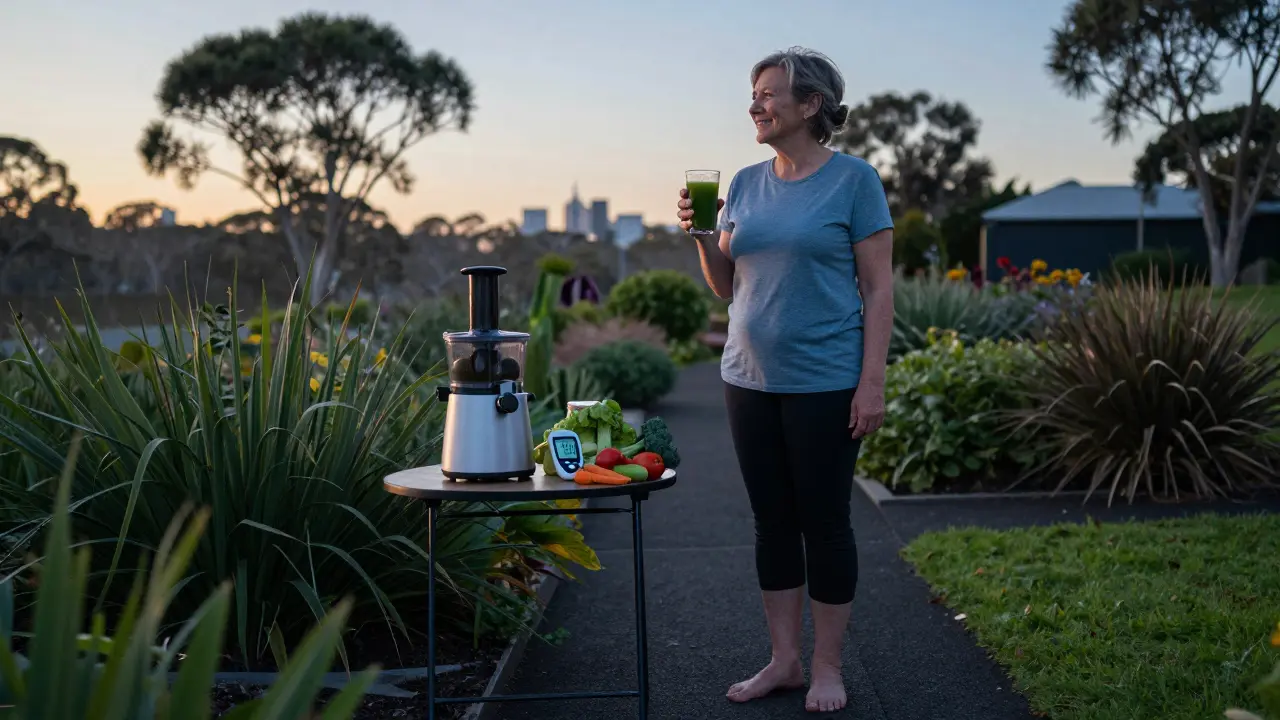
I’ve seen this work in my own community in Melbourne. A woman in her late 50s started drinking 16oz of green juice every morning after being diagnosed with prediabetes. Within six weeks, her fasting blood sugar dropped from 112 to 94. She stopped her metformin. Not because she changed her diet entirely-but because she replaced her morning coffee and pastry with a glass of celery, spinach, lemon, and ginger.
A 32-year-old man with chronic sinus infections started juicing three times a week. Within two months, his infections dropped from five a year to one. His doctor attributed it to reduced mucus production-something linked to cutting out dairy and increasing vegetable intake.
These aren’t outliers. They’re examples of what happens when you flood your body with nutrients it’s been starving for.
Myths About Health Juice
There’s a lot of misinformation. Let’s clear a few:
- "Juicing removes all fiber." True-but that’s the point. Fiber is essential, but you get plenty from whole foods. Juicing gives you a quick nutrient boost between meals, not a replacement for vegetables.
- "It’s too expensive." A bag of spinach costs $2. A beet is $1. A lemon is 50 cents. Make it at home. It’s cheaper than a latte.
- "You’ll lose muscle." No. Juicing doesn’t replace meals. It supplements them. If you’re juicing instead of eating, that’s a problem. But if you’re juicing before breakfast or as a midday reset? It’s a tool.
- "It’s just a detox fad." Your liver detoxes. Your kidneys detox. Your body doesn’t need a juice cleanse to do it. But giving it a break from processed foods and flooding it with antioxidants? That helps.
How to Start (Without Overwhelming Yourself)
You don’t need a $500 juicer. Start simple.
- Buy a small electric blender. Blend greens with water, then strain through a nut milk bag or cheesecloth. It’s messy, but it works.
- Start with one 16oz glass every other day. Don’t aim for daily right away.
- Use what’s local and in season. In Melbourne, spinach, cucumber, and lemon are cheap in winter.
- Drink it on an empty stomach. Wait 20 minutes before eating. That’s when absorption is highest.
- Keep it cold. Store in a sealed glass jar for up to 24 hours. Oxidation kills nutrients fast.
Don’t wait for perfection. Just start. One glass. One week. See how you feel.
Who Should Avoid It?
Most people benefit. But not everyone.
- If you have kidney disease, avoid high-potassium juices (beet, spinach, banana).
- If you’re on blood thinners like warfarin, be consistent with vitamin K intake. Sudden spikes from kale can interfere.
- If you have diabetes, monitor your blood sugar. Even low-sugar juices can affect insulin response.
- If you’re pregnant, avoid raw sprouts and unpasteurized juices.
When in doubt, talk to your doctor. But don’t assume it’s dangerous. For most people, health juice is one of the safest, most effective tools they’ve never tried.
The Bottom Line
Disease prevention doesn’t have to be complicated. It doesn’t require expensive supplements or radical diets. Sometimes, it’s just about replacing one habit-like sugary coffee-with another that works with your body, not against it.
Health juice isn’t magic. But it is science. And when you give your cells the raw materials they need to repair, regenerate, and defend themselves, your body responds. Fast. Consistently. And without side effects.
Try it for 14 days. No sugar. No excuses. Just vegetables. One glass a day. See what changes.