You check your phone one last time before bed. Your heart is racing, not because of the news you just read, but because your body has forgotten how to switch off. You are not alone. In 2026, chronic stress has become a baseline condition for millions of people, turning simple daily tasks into exhausting battles against our own nervous systems. But here is the good news: relaxation is not a luxury reserved for spa weekends or expensive retreats. It is a biological skill you can learn, practice, and master.
Think of your body like a car engine that has been revving in neutral all day. If you never let it idle, it overheats. Relaxation techniques are the mechanism that brings the RPMs down, allowing your system to cool, repair, and reset. This guide breaks down the most effective, science-backed methods to help you reclaim your calm, starting with the tools right at your fingertips.
The Science Behind Letting Go
To understand why relaxation works, you have to look at the Sympathetic Nervous System, which is the part of your autonomic nervous system responsible for the fight-or-flight response. When you feel threatened-whether by a tiger or a tight deadline-this system floods your body with cortisol and adrenaline. Your muscles tense, your breath shortens, and your focus narrows. This was designed for survival, not for staring at spreadsheets for eight hours.
The goal of any relaxation technique is to activate the opposing force: the Parasympathetic Nervous System, often called the rest-and-digest mode that promotes digestion, relaxation, and recovery. When this system takes over, your heart rate slows, blood pressure drops, and your mind clears. It is not about "thinking happy thoughts." It is about physically signaling safety to your brain so it stops screaming danger. Mastering this switch is the foundation of a stress-free life.
Breathing: The Remote Control for Your Brain
If you only learn one technique today, make it breathing. Why? Because unlike meditation, which requires mental discipline, or exercise, which requires equipment, breathing is always available. More importantly, it is the only part of your autonomic nervous system that you can control consciously. By changing how you breathe, you hack your biology.
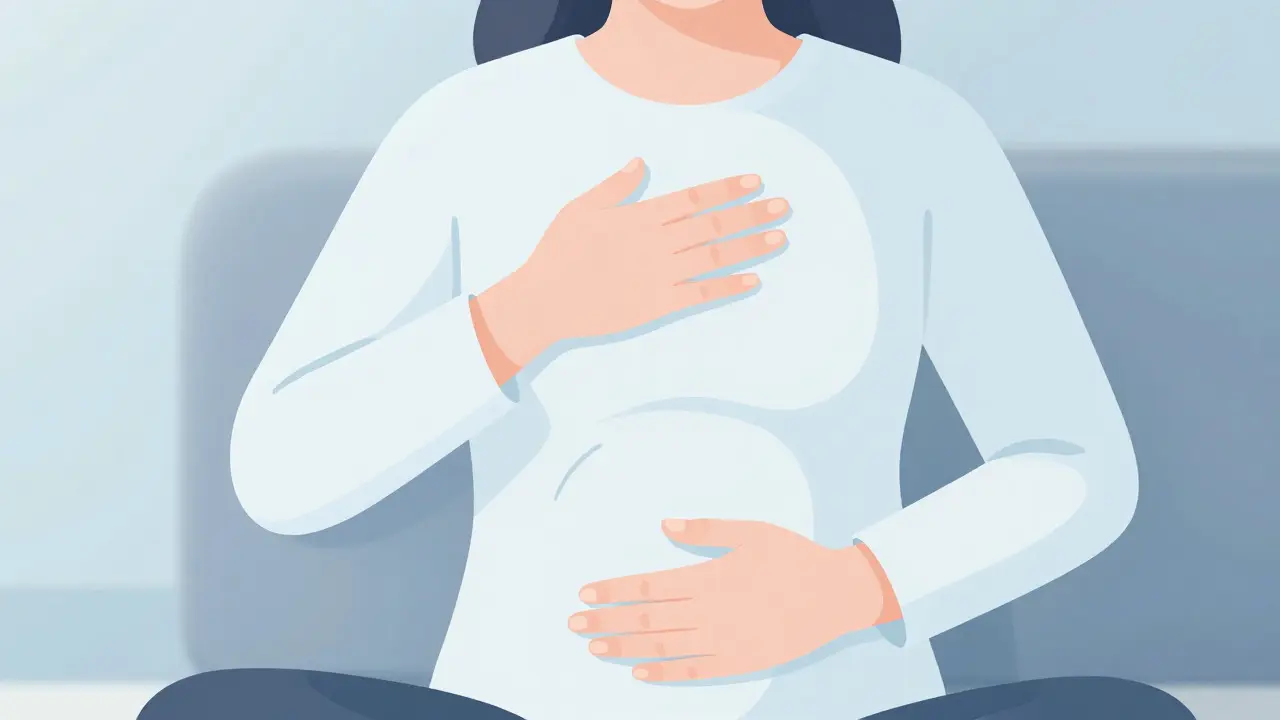
The most accessible method is Diaphragmatic Breathing, also known as belly breathing that engages the diaphragm to maximize oxygen exchange and stimulate the vagus nerve. Most of us breathe shallowly into our chests when we are stressed. This signals anxiety to the brain. To reverse this:
- Place one hand on your chest and the other on your belly.
- Inhale slowly through your nose for four seconds. Feel the hand on your belly rise while the hand on your chest stays still.
- Exhale slowly through your mouth for six seconds. Feel your belly fall.
- Repeat for five minutes.
Notice the longer exhale. That is the key. A longer exhale activates the vagus nerve, which acts as a brake pedal for your heart rate. Try this next time you are stuck in traffic or waiting for an email reply. It takes less than two minutes to drop your stress levels significantly.
Progressive Muscle Relaxation: Releasing Physical Tension
Sometimes your mind won't relax because your body is holding onto tension you didn't even know was there. You might carry stress in your jaw, your shoulders, or your lower back. Progressive Muscle Relaxation (PMR) is a technique developed in the 1920s that involves tensing and then relaxing specific muscle groups sequentially. It teaches you to recognize the difference between tension and relaxation.
Here is how to do it effectively:
- Find a quiet place where you won't be disturbed. Lie down or sit comfortably.
- Start with your feet. Curl your toes tightly for five seconds, feeling the strain.
- Suddenly release the tension. Notice the sensation of warmth and heaviness for ten seconds.
- Move up to your calves, thighs, buttocks, abdomen, hands, arms, shoulders, neck, and finally your face.
- For each group, tense hard, hold, and then let go completely.
This process usually takes about fifteen minutes. It sounds simple, but it is incredibly powerful for physical symptoms of stress like headaches, insomnia, and muscle pain. By systematically releasing physical knots, you send a clear message to your brain that the body is safe.
Mindfulness Meditation: Anchoring in the Present
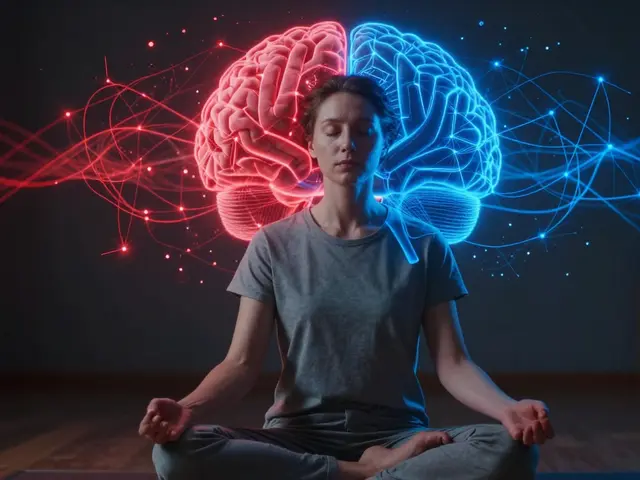
While breathing and PMR address the body, mindfulness addresses the mind. Mindfulness Meditation is the practice of paying attention to the present moment without judgment. It does not mean emptying your mind. It means noticing when your mind has wandered and gently bringing it back.
A common misconception is that you need to meditate for an hour to see benefits. Research from institutions like Harvard Medical School shows that even ten minutes a day can reduce activity in the amygdala, the brain's fear center. Start with a simple anchor:
- Sit quietly and close your eyes.
- Focus on the sensation of air entering your nostrils.
- When a thought arises-and it will-acknowledge it. Label it "thinking" or "worrying" and return to the breath.
- Do not criticize yourself for drifting. The act of returning is the rep that builds your mental muscle.
This practice rewires your brain over time, making you less reactive to stressors. Instead of spiraling into "what if" scenarios, you learn to stay grounded in what is happening right now.
Guided Imagery: Escaping Through Visualization
If meditation feels too abstract, try guided imagery. This technique uses your imagination to create a peaceful scene that engages all your senses. It works because the brain often struggles to distinguish between a vividly imagined experience and a real one. When you visualize a calm environment, your body responds as if you are actually there.
Create your own sanctuary. Maybe it is a cabin in the Canadian Rockies, listening to the wind in the pine trees. Or perhaps it is a quiet beach in Mexico, feeling the warm sand between your toes. Here is how to deepen the experience:
- Close your eyes and picture the location in detail. What colors do you see?
- Add sound. Do you hear waves crashing or birds singing?
- Incorporate smell. Is there salt in the air or the scent of rain?
- Feel the temperature on your skin.
Spend five to ten minutes immersed in this scene. This is particularly useful for anxiety related to upcoming events, like public speaking or medical procedures. It gives your mind a safe harbor to retreat to when things get chaotic.
Integrating Relaxation into Daily Life
The biggest mistake people make is treating relaxation as a separate activity, something to squeeze in after work. For it to be effective, it needs to be woven into your routine. Think of these techniques as micro-doses of calm throughout the day.
| Time of Day | Technique | Duration | Goal |
|---|---|---|---|
| Morning | Diaphragmatic Breathing | 3 minutes | Set a calm tone for the day |
| Midday Break | Body Scan / PMR | 5 minutes | Release accumulated physical tension |
| After Work | Mindfulness Meditation | 10 minutes | Transition from work mode to home mode |
| Before Bed | Guided Imagery | 10-15 minutes | Prepare the body for sleep |
Consistency matters more than duration. Five minutes every day is better than an hour once a week. Over time, these practices build resilience. You will find yourself reacting less intensely to stressors and recovering faster when they do hit.
Common Pitfalls to Avoid
Even with the best intentions, many people struggle to maintain a relaxation practice. Here are three common traps:
- Trying to force relaxation: Relaxation cannot be forced. If you tell yourself "I must relax now," you create performance anxiety. Instead, invite relaxation. Approach it with curiosity, not demand.
- Expecting immediate results: While breathing exercises can provide instant relief, deeper changes in stress reactivity take weeks of consistent practice. Be patient with yourself.
- Neglecting physical health: Relaxation techniques work best when supported by adequate sleep, nutrition, and movement. No amount of meditation will fully counteract chronic sleep deprivation or poor diet.
Remember, the goal is not to eliminate stress entirely-that is impossible and arguably unhealthy since some stress motivates us. The goal is to manage your response to it, ensuring that stress remains a temporary visitor rather than a permanent resident.
How long does it take for relaxation techniques to work?
Physical effects like lowered heart rate can happen within minutes using deep breathing or progressive muscle relaxation. However, long-term changes in stress resilience and brain structure typically require consistent daily practice for 4 to 8 weeks.
Can I use these techniques if I have anxiety disorders?
Yes, relaxation techniques are often recommended as complementary therapies for anxiety. However, if you have severe anxiety or PTSD, consult a healthcare professional first, as certain techniques like prolonged exposure in meditation can sometimes trigger intense emotions initially.
Is guided imagery the same as visualization?
They are closely related. Visualization generally refers to picturing a desired outcome, such as success in sports. Guided imagery specifically focuses on creating a sensory-rich, calming environment to induce physiological relaxation.
What is the best time of day to practice relaxation?
There is no single "best" time. Morning practice sets a positive tone for the day, midday breaks prevent burnout, and evening practice aids sleep. The best time is whenever you can consistently fit it into your schedule.
Do I need special equipment for progressive muscle relaxation?
No, PMR requires no equipment. You simply need a comfortable position where you can tense and release muscle groups without distraction. A chair or lying on the floor works perfectly.
Mar 7 2026