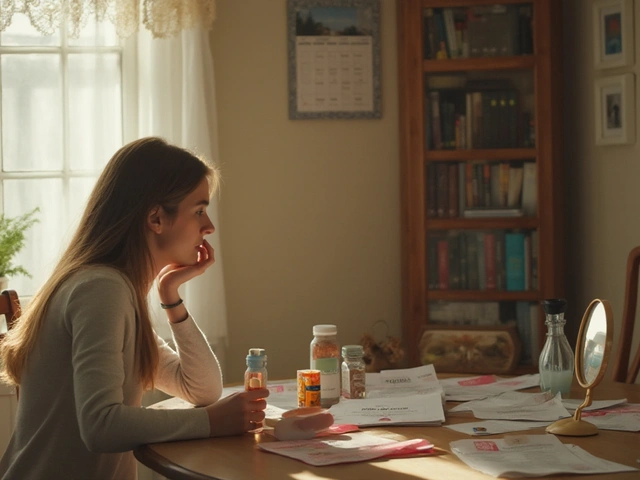
Have you ever tried to explain how you feel, only to find that the words just didn't fit? You know the sensation. The emotion is there, heavy and real, but your vocabulary feels like a leaky bucket. This is where Creative Arts Therapies are a group of therapeutic approaches that use creative expression-such as visual arts, music, dance, and drama-to improve mental health and emotional well-being. Unlike traditional talk therapy, which relies heavily on verbal communication, these methods bypass the brain’s language centers to access deeper, often subconscious, layers of experience.
In 2026, we are seeing a massive shift in how society views mental health treatment. People are tired of sitting on couches recounting their traumas for hours without feeling lighter. They want action. They want release. Creative arts therapies offer exactly that. But beyond the obvious relief of making something with your hands or moving your body, there are hidden, physiological, and neurological benefits that most people overlook. Let’s look at what actually happens when you engage in these practices.
The Science of Non-Verbal Processing
Most of us think of therapy as a conversation. It’s a Q&A session between you and a professional. While this works for many issues, it fails when the issue itself is non-verbal. Trauma, for instance, often gets stored in the body and the right hemisphere of the brain-the side responsible for images, sensations, and emotions, not words. When you try to speak about a traumatic event, you have to translate those raw feelings into linear sentences. This process can sometimes re-traumatize you because you are forcing a square peg into a round hole.
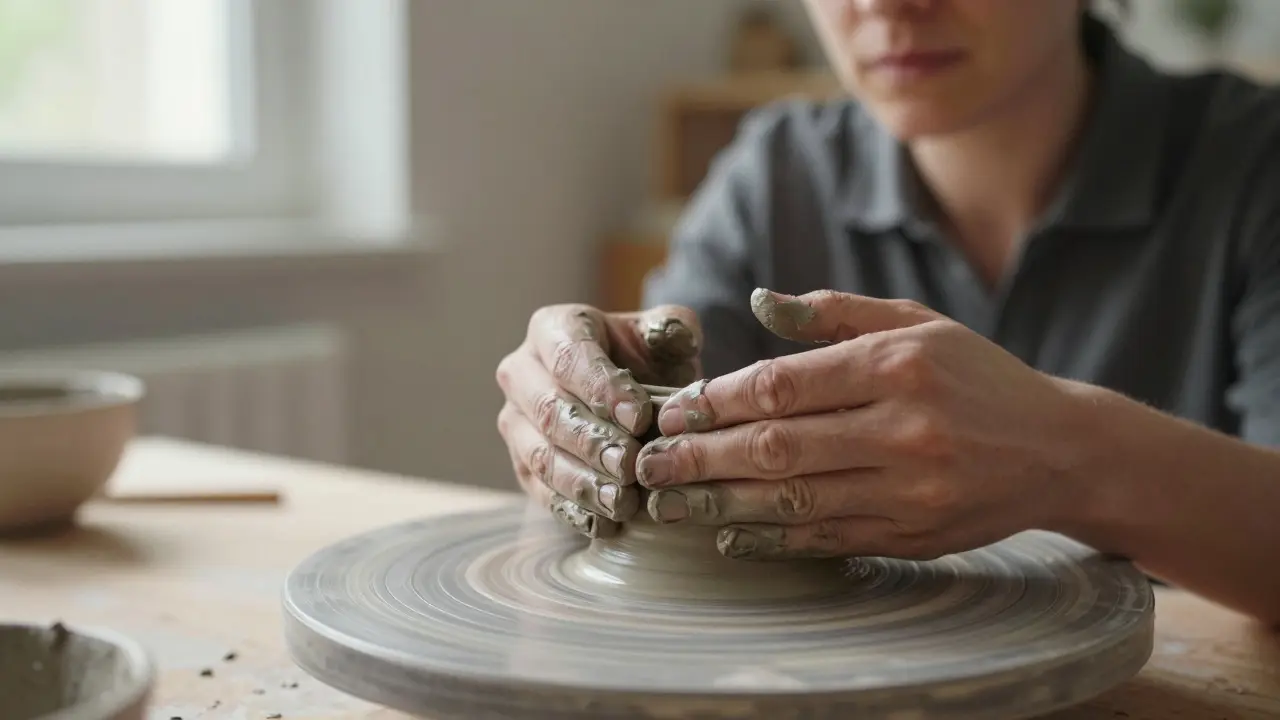
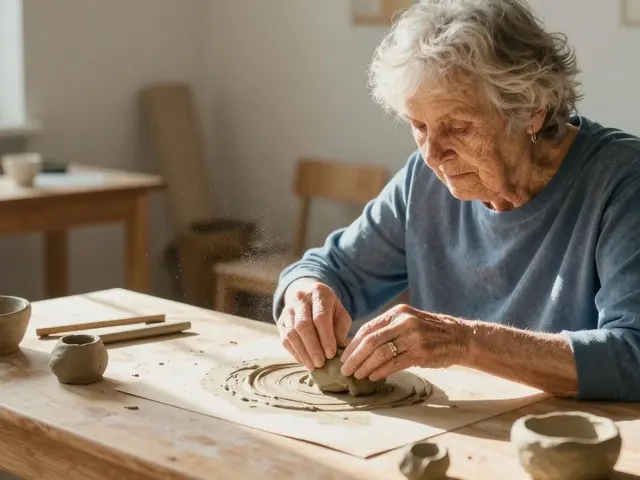
Art Therapy is a mental health profession that uses the creative process of art-making to improve and enhance the physical, mental, and emotional well-being of individuals. By using clay, paint, or charcoal, you are speaking the same language as your trauma. You don’t need to describe the anger; you can smash the clay. You don’t need to narrate the sadness; you can mix dark blues and blacks until the canvas reflects your inner state. This externalization allows the prefrontal cortex (the logical part of your brain) to observe the emotion without being overwhelmed by it. It creates a safe distance. You are looking at your pain, not drowning in it.
Research from the American Art Therapy Association suggests that this visual processing reduces cortisol levels more effectively than verbal recounting alone for patients with PTSD. The act of creating becomes a bridge between the chaotic emotional center and the rational mind, allowing for integration without the stress of finding the "right" words.
Movement as Memory Reorganization
If art is about externalizing emotion, then Dance Movement Therapy is a psychotherapeutic use of movement to promote emotional, social, cognitive, and physical integration of the individual. We carry our history in our posture. Think about how you stand when you are confident versus when you are ashamed. Your body remembers what your mind tries to forget.
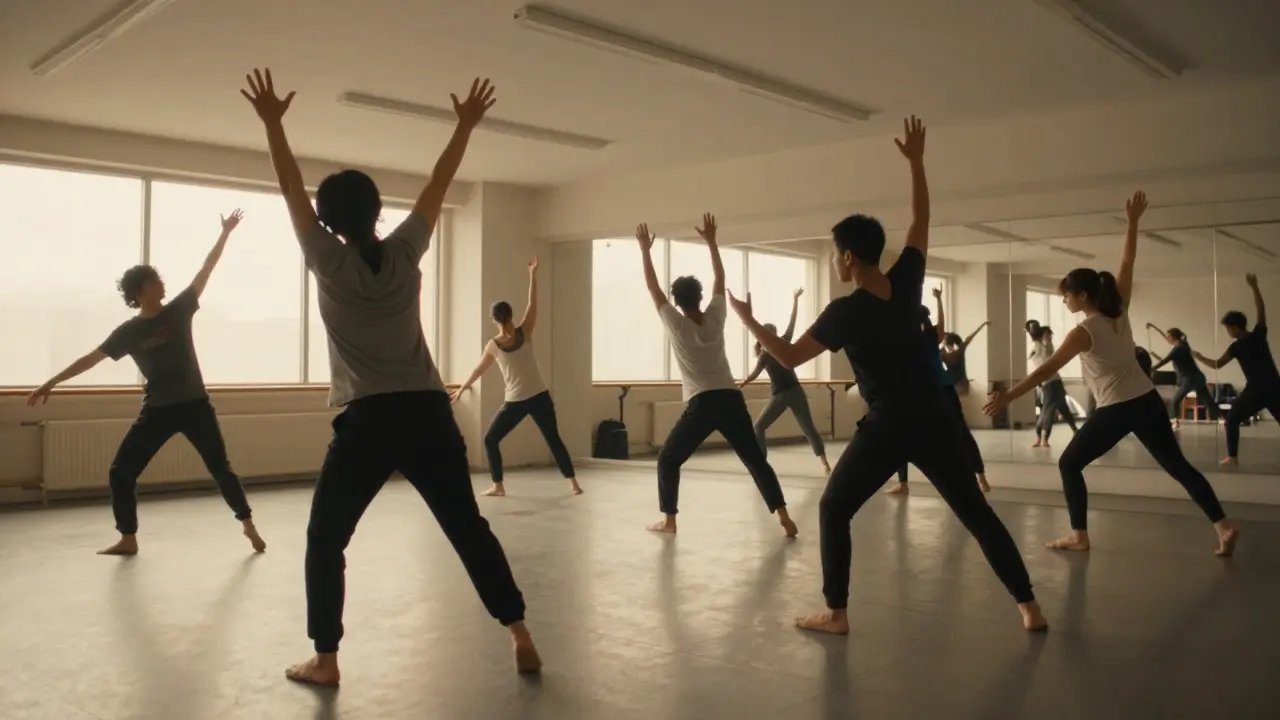
Dance Movement Therapy (DMT) operates on the premise that movement and emotion are interconnected. When you move, you change your neurochemistry. Simple rhythmic movement can regulate the autonomic nervous system. If you are stuck in a "fight or flight" mode, slow, deliberate stretching or swaying can signal safety to your vagus nerve. This isn’t just relaxation; it’s physiological recalibration.
Consider someone who suffers from chronic anxiety. Their shoulders are likely hunched, their breath shallow. In a DMT session, they aren’t told to "relax." They are guided to explore movements that feel expansive. As they physically open up their chest and extend their limbs, their brain receives new data: "I am taking up space. I am safe here." This somatic feedback loop rewires the association between body position and emotional state. It’s harder to feel small when you are literally reaching for the sky.
Rhythm and Regulation Through Music
Music hits us differently than any other art form. It bypasses conscious thought entirely. Have you ever heard a song and instantly felt a wave of nostalgia or sorrow? That’s because music activates the limbic system, the emotional core of the brain, directly. Music Therapy is the clinical and evidence-based use of music interventions to accomplish individualized goals within a therapeutic relationship by a credentialed professional.
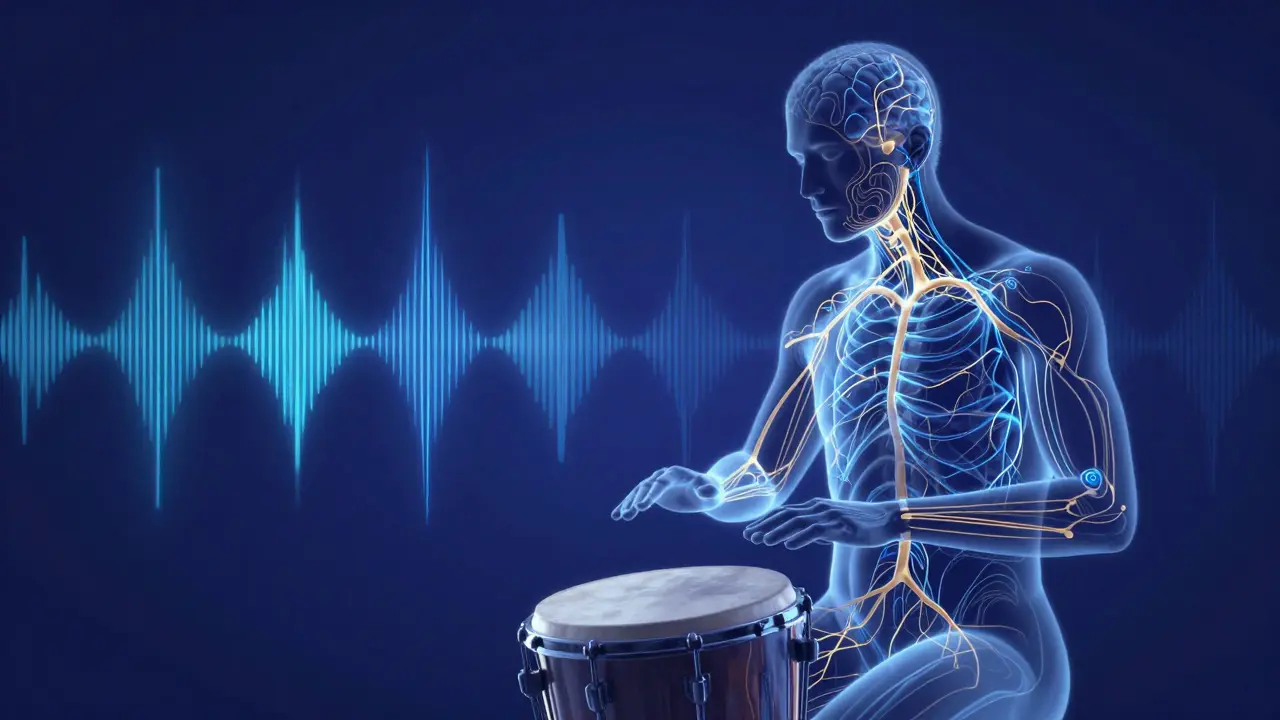
One of the most powerful hidden benefits of music therapy is entrainment. Entrainment is the phenomenon where two rhythms synchronize. Your heart rate, breathing, and brainwaves can sync with an external beat. Therapists use this to help clients with depression or agitation. If a client is agitated, the therapist might start playing a fast tempo and gradually slow it down. The client’s physiology follows suit. This is incredibly effective for conditions like autism spectrum disorder or dementia, where verbal communication is limited or fragmented.
For veterans dealing with TBI (Traumatic Brain Injury), music therapy helps rebuild neural pathways. Singing lyrics can activate areas of the brain damaged by injury, helping restore speech and motor functions. It’s not just about listening; it’s about active participation. Drumming, for example, requires coordination, timing, and focus, which engages multiple areas of the brain simultaneously, promoting neuroplasticity.
Finding New Narratives Through Drama
Sometimes, we get stuck in the roles we’ve played our whole lives. Maybe you’re always the caretaker, or the rebel, or the victim. Drama Therapy is a distinct psychotherapy modality that integrates psychodrama, role theory, and sociometry to facilitate behavioral change and personal growth. It allows you to step out of your own skin and try on new identities in a safe environment.
In drama therapy, you might reenact a difficult situation but change the ending. Or you might play a character who has the traits you wish you had-confidence, assertiveness, calmness. This isn’t acting for entertainment; it’s rehearsal for life. By embodying a different persona, you discover resources you didn’t know you had. You learn that you *can* say no. You learn that you *can* be vulnerable.
This approach is particularly useful for social anxiety. Many people fear judgment because they believe everyone is watching them critically. In a drama therapy group, everyone is "in character." The pressure drops. You practice social interaction without the stakes of your real-life reputation. Over time, these practiced behaviors bleed into reality. You become more flexible in how you present yourself to the world.
Comparing Modalities: Which One Fits You?
| Modality | Primary Medium | Best For | Key Benefit |
|---|---|---|---|
| Art Therapy | Visual media (paint, clay) | Trauma, non-verbal expression | Externalizing internal states |
| Dance Movement Therapy | Body movement | Anxiety, body image issues | Somatic regulation & integration |
| Music Therapy | Sound, rhythm, instruments | Depression, TBI, dementia | Physiological entrainment & mood lift |
| Drama Therapy | Role-play, storytelling | Social anxiety, identity crises | Behavioral rehearsal & empathy |
Choosing the right modality depends on where you feel stuck. If you feel trapped in your head, try movement. If you feel disconnected from your body, try art. If you feel isolated, try music or drama. There is no wrong choice, only different paths to the same destination: healing.
Accessibility and Integration in 2026
A common misconception is that you need to be "talented" to benefit from these therapies. This couldn’t be further from the truth. In fact, technical skill is often discouraged in the early stages. The goal is expression, not aesthetics. A scribbled line on paper is just as valid as a masterpiece if it conveys your truth. Therapists are trained to look past the artistic quality and focus on the process and the meaning behind it.
In Orlando and across the USA, insurance coverage for creative arts therapies is expanding. Many major providers now recognize board-certified art therapists (ATR-BC) and music therapists (MT-BC) as covered specialists, especially when diagnosed with specific conditions like PTSD, autism, or eating disorders. Always check with your provider, but the landscape is shifting toward holistic care.
You can also integrate these practices into daily self-care. Keep a journal for drawing, not writing. Dance in your kitchen while cooking. Hum along to music to match your mood. These micro-moments of creative engagement keep your nervous system regulated and your emotions processed. You don’t need a degree to heal; you just need to show up and create.
Overcoming Resistance
It’s normal to feel silly or awkward at first. Adults are conditioned to take themselves seriously. Making noise with a drum or squishing clay can feel childish. Acknowledge that discomfort. It’s usually a sign that you’re touching something real. The awkwardness is the ego protecting you from vulnerability. Sit with it. Let it pass. On the other side is clarity.
Another barrier is time. Creative therapies require presence. You can’t multitask while painting in therapy. You have to be there. In a world of constant distraction, this demand for full attention can feel daunting. But that’s precisely why it works. It forces you to slow down and inhabit your current moment, which is the foundation of mindfulness and mental resilience.
Do I need to be artistic to benefit from art therapy?
No. Art therapy is not about creating beautiful objects. It is about the process of creation and what emerges during that process. Technical skill is irrelevant. The therapist focuses on your feelings and thoughts related to the art, not the aesthetic quality of the piece.
Is creative arts therapy covered by insurance?
Coverage varies by provider and plan. However, many insurers now cover services provided by board-certified professionals (like ATR-BC or MT-BC) for specific diagnoses such as PTSD, autism, or depression. Check with your insurance company for details on mental health benefits.
How long does it take to see results?
Results depend on the individual and the issue. Some people feel immediate relief after a single session due to the cathartic nature of expression. Others may need several weeks or months to work through deep-seated trauma. Consistency is key.
Can creative arts therapy replace medication?
Creative arts therapy is often used as a complementary treatment alongside medication and talk therapy. It should not replace prescribed medication without consulting your healthcare provider. It addresses emotional and psychological aspects that medication cannot reach.
What should I expect in my first session?
Your first session will likely involve an intake assessment where the therapist learns about your history and goals. Then, you’ll be invited to engage in a simple creative activity. Don’t worry about performance. Just follow the therapist’s guidance and notice what comes up for you emotionally.
Oct 20 2023

Nov 24 2023