

It’s 7:30 AM. You’re running late, your coffee is cold, and you’ve got exactly three minutes before you need to be on the Zoom call. What do you grab? A sugary granola bar that promises "energy" but delivers a crash by 10 AM? Or do you take five extra minutes to build a plate that actually fuels your brain and body for the next six hours?
The way we start our mornings doesn’t just affect our hunger levels; it sets the metabolic tone for the entire day. In Christchurch, where the days can swing from bright sunshine to sudden drizzle, I’ve learned that consistency in morning nutrition is the anchor of a balanced lifestyle. It’s not about finding the perfect superfood or spending an hour in the kitchen. It’s about understanding how different food combinations interact with your body’s natural rhythms.
Why does breakfast matter so much for metabolism?
Breakfast breaks the overnight fasting period, replenishing your stores of glucose to boost your energy levels. It kickstarts your metabolism, signaling to your body that it’s time to burn calories efficiently throughout the day rather than storing them as fat.
The Science Behind Morning Fuel
Let’s strip away the marketing hype. When you wake up, your cortisol levels are naturally higher-this is your body’s way of getting you alert. However, if you pair this stress hormone with high-sugar foods, you trigger a rapid spike in insulin. This leads to a quick drop in blood sugar later, leaving you feeling sluggish, irritable, and craving more sugar. It’s a vicious cycle that derails productivity.
A truly healthy breakfast focuses on stabilizing blood glucose. This means prioritizing protein, healthy fats, and fiber over simple carbohydrates. Think of your meal as a foundation. If the foundation is shaky (sugar), the house (your day) will wobble. If it’s solid (protein and fiber), you stand firm.
Protein is the most satiating macronutrient, helping to reduce overall calorie intake later in the day by keeping hunger hormones like ghrelin in check. Aim for at least 20-30 grams of protein in your first meal. This isn’t just gym-bro advice; it’s basic physiology. Protein requires more energy to digest (thermic effect of food) and provides sustained amino acids for muscle repair and cognitive function.Building Your Plate: The Three Pillars
You don’t need a degree in nutrition to build a good breakfast. You just need three components. Let’s break them down into practical, real-world options that fit into a busy schedule.
- The Protein Anchor: Eggs, Greek yogurt, cottage cheese, tofu scramble, or a scoop of protein powder blended into fruit. Eggs are particularly efficient because they contain all nine essential amino acids and are incredibly versatile. A two-egg omelet takes less than five minutes and provides about 12 grams of protein.
- The Fiber Base: Oats, chia seeds, berries, spinach, or whole-grain toast. Fiber slows down digestion, preventing that post-meal slump. Chia seeds, for instance, absorb liquid and form a gel, which keeps you full for hours. Just one tablespoon adds significant fiber and omega-3 fatty acids.
- The Healthy Fat Layer: Avocado, nuts, seeds, or olive oil. Fats help absorb fat-soluble vitamins (A, D, E, K) and provide long-lasting energy. A quarter of an avocado on toast isn’t just trendy; it’s functional nutrition that coats the stomach lining and promotes satiety.
When you combine these three, you create a meal that digests slowly and releases energy steadily. Compare this to a plain bagel with jam. The bagel spikes your blood sugar, causing a rush of energy followed by a crash. The combined plate gives you a steady hum of focus until lunchtime.
Quick & Easy Options for Busy Mornings
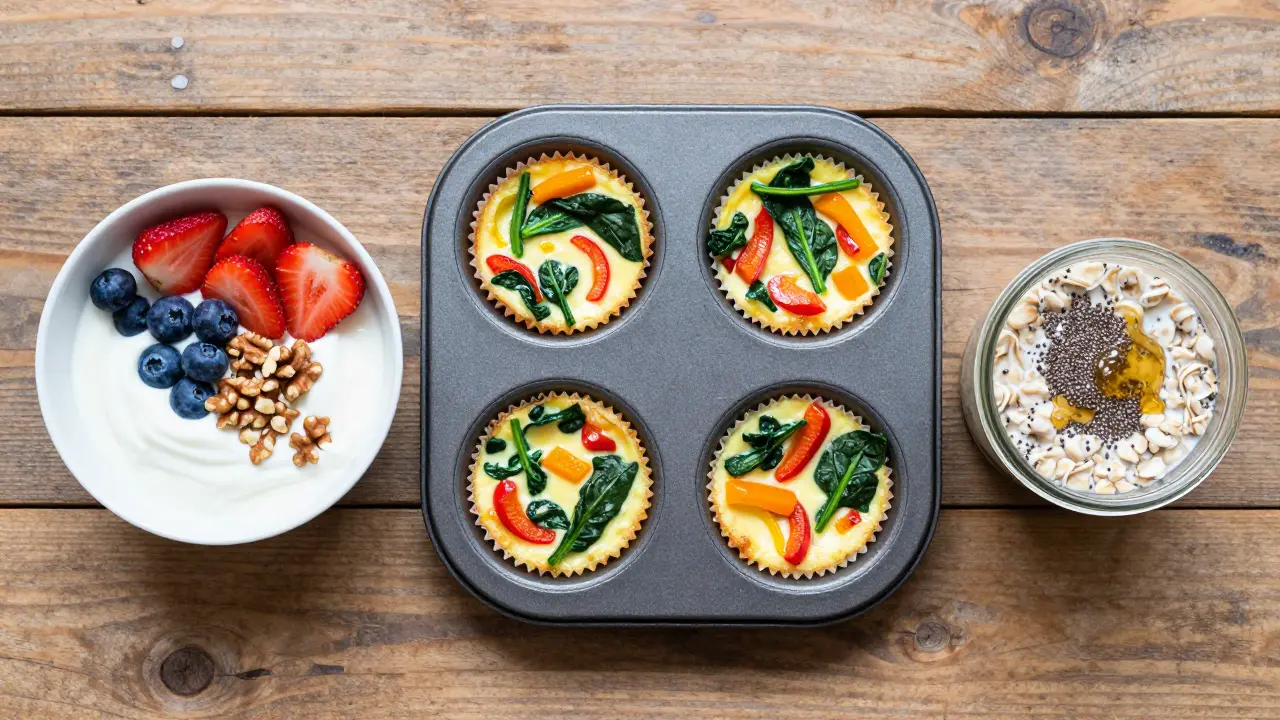
We all have those days when time is scarce. Here are three specific recipes that require minimal prep but deliver maximum nutritional value. These aren’t generic suggestions; they are tested routines that work when you’re rushing out the door.
1. The 5-Minute Greek Yogurt Bowl
Start with 150g of plain Greek yogurt. This provides roughly 15 grams of protein. Top with 1/4 cup of mixed berries (antioxidants) and 1 tablespoon of chopped walnuts (omega-3s). Add a dash of cinnamon to help regulate blood sugar. Total time: 2 minutes. No cooking required.
2. Savory Egg Muffins (Meal Prep)
On Sunday, whisk four eggs with diced spinach, bell peppers, and feta cheese. Pour into a muffin tin and bake at 180°C (350°F) for 20 minutes. Store them in the fridge. In the morning, grab two muffins and heat them for 60 seconds in the microwave. Each muffin offers a balanced mix of protein, veggies, and fat. This eliminates decision fatigue entirely.
3. Overnight Oats with a Twist
Mix 1/2 cup rolled oats with 1/2 cup milk (dairy or plant-based), 1 tablespoon chia seeds, and 1 scoop of protein powder or a dollop of peanut butter. Let it sit in the fridge overnight. In the morning, it’s ready to eat. The chia seeds swell up, creating a pudding-like texture that is satisfying and easy to digest.
| Food Item | Protein (g) | Fiber (g) | Satiety Score (1-10) | Blood Sugar Impact |
|---|---|---|---|---|
| Plain Bagel with Jam | 6 | 2 | 3 | High Spike |
| Greek Yogurt Bowl | 15 | 4 | 8 | Stable |
| Two Eggs + Toast | 14 | 3 | 9 | Low/Moderate |
| Sugary Cereal | 3 | 1 | 2 | Very High Spike |
Mistakes to Avoid
Even well-intentioned people make errors in their morning routine. Identifying these pitfalls can save you from unnecessary fatigue and weight gain.
- Skipping Breakfast Entirely: Intermittent fasting works for some, but for many, skipping the first meal leads to overeating at lunch. If you skip, ensure your first meal is substantial enough to reset your metabolism.
- Relying Only on Fruit: Fruit is healthy, but eating only apples or bananas provides mostly fructose (sugar) without protein or fat. This causes a blood sugar spike similar to processed sweets. Always pair fruit with a protein or fat source.
- Ignoring Hydration: You lose water while sleeping. Before you eat, drink a large glass of water. Dehydration often masquerades as hunger. Drinking water first aids digestion and jumpstarts your kidneys.
- Choosing "Low-Fat" Processed Foods: Low-fat yogurts and cereals often add sugar to compensate for flavor loss. Read the label. If sugar is in the top three ingredients, put it back.
Tailoring Breakfast to Your Lifestyle
Not everyone has the same needs. A student studying for exams has different fuel requirements than a construction worker or a remote worker sitting at a desk all day.
If you are physically active in the morning, you might benefit from slightly more carbohydrates to fuel your workout. A banana with almond butter is a great pre-workout snack. If you are sedentary during the morning, lean heavier on protein and fats to keep you full without excess energy that you won’t burn.
For those with digestive sensitivities, such as Irritable Bowel Syndrome (IBS), high-fiber options like raw vegetables or excessive legumes might cause discomfort. In this case, cooked oats or eggs are gentler on the gut. Listen to your body. Nutrition is personal.

The Role of Mindfulness in Eating
How you eat matters as much as what you eat. Many of us scroll through social media while shoving food into our mouths. This disconnects the brain from the stomach’s satiety signals. You might eat the same amount but feel less satisfied.
Try to spend at least five minutes eating without distractions. Chew slowly. Notice the textures and flavors. This practice, rooted in mindfulness, improves digestion and helps you recognize when you are truly full. It transforms breakfast from a chore into a moment of care for yourself.
Planning for Success
The biggest barrier to a healthy breakfast is rarely knowledge; it’s preparation. You cannot rely on willpower alone when you are tired and rushed. Systems beat motivation.
Keep your pantry stocked with staples: oats, eggs, frozen berries, nuts, and yogurt. Spend 30 minutes on Sunday prepping ingredients. Hard-boil eggs, portion out nuts, and wash fruit. When the morning comes, assembly is instant. This reduces friction and makes the healthy choice the easy choice.
Remember, a balanced lifestyle isn’t about perfection. It’s about consistency. Some days you’ll have a gourmet avocado toast. Other days, it’ll be a protein shake and a handful of almonds. Both are better than nothing. Focus on progress, not purity.
Is it okay to skip breakfast occasionally?
Yes, occasional skipping is fine for most healthy adults. However, making it a habit can lead to poor food choices later in the day due to extreme hunger. If you prefer intermittent fasting, ensure your eating window is nutrient-dense.
What is the best breakfast for weight loss?
The best breakfast for weight loss is high in protein and fiber. These nutrients increase satiety, reducing the likelihood of snacking or overeating at subsequent meals. Examples include egg whites with spinach or a high-protein smoothie with greens.
Can I drink juice instead of eating fruit?
Juice lacks the fiber found in whole fruit, leading to faster sugar absorption and less satiety. Whole fruit is always the better choice for a balanced breakfast. If you drink juice, limit it to small portions and pair it with protein.
How much protein should I aim for at breakfast?
Aim for 20-30 grams of protein. This amount has been shown to maximize muscle protein synthesis and keep hunger hormones suppressed for several hours after eating.
Are breakfast cereals healthy?
Most commercial breakfast cereals are high in added sugars and low in protein. Look for options with less than 5g of sugar per serving and at least 5g of fiber. Even then, adding milk or yogurt boosts the nutritional profile significantly.





May 26 2024